Musculoskeletal Anatomy Relevant to Remote Practice
Telehealth changes what you can see, touch and measure, so your anatomical knowledge needs to be more functional than purely structural. In a video consultation you cannot palpate, so you rely on observing movement, asking precise questions and identifying which structures are likely involved.
Key regions for remote assessment include:
- Lumbopelvic region: The lumbar spine has five motion segments. Most disc-related symptoms involve L4-5 and L5-S1, which are supplied by the L5 and S1 nerve roots. The lumbar erector spinae, multifidus, transversus abdominis and gluteal muscles form the load-transfer system that you can observe through standing and sit-to-stand tasks.
- Cervical spine and thoracic outlet: The deep neck flexors (longus colli and longus capitis) provide segmental stability. Superficial muscles such as sternocleidomastoid and upper trapezius are often overactive in people with neck pain.
- Shoulder complex: The rotator cuff (supraspinatus, infraspinatus, teres minor, subscapularis) centralises the humeral head. Scapular upward rotators and posterior tilters (serratus anterior, lower trapezius) influence subacromial space during elevation.
- Lower limb: Patellofemoral mechanics depend on quadriceps control and hip abductor strength (gluteus medius and minimus). Achilles tendon load is shared between the gastrocnemius-soleus complex and its insertion on the calcaneus.
Pathophysiology: Load, Tissue Response and Pain
Most non-traumatic musculoskeletal presentations reflect a mismatch between tissue load capacity and applied demand. Tendons, discs and muscles adapt to mechanical load through remodelling, which takes weeks to months. Tendinopathy, for example, is generally a disorder of load management: collagen turnover shifts and the tissue becomes less tolerant of repeated stress before structural failure occurs.
Pain is not a direct measure of tissue damage. Sensitisation of peripheral and central pathways can amplify symptoms, and fear-avoidance beliefs can increase disability independent of structural findings. For remote practice, this means that a patient's reported pain intensity, activity limitation and beliefs are as clinically important as imaging-based diagnoses.
Clinical Presentation and Red Flags
Typical presentations include mechanical low back pain, non-specific neck pain, rotator cuff-related shoulder pain and patellofemoral pain. Symptoms are usually aggravated by specific loads or positions and eased by rest or position change.

Screen for red flags such as cauda equina syndrome, malignancy, infection, fracture and vascular pathology at the start of every telehealth consultation.
Red flags require urgent medical referral and must be screened for at the start of every telehealth consultation:
- Cauda equina syndrome: Bilateral sciatica, saddle anaesthesia, new bladder or bowel dysfunction, or progressive lower limb weakness. This is a surgical emergency.
- Malignancy: History of cancer, unexplained weight loss, night pain unrelieved by position, or age over 50 with new onset of pain.
- Infection: Fever, chills, or recent infection with spinal pain, particularly if immunosuppressed or a recent injection or procedure.
- Fracture: Significant trauma, osteoporosis or long-term corticosteroid use.
- Vascular pathology: Cervical pain with dizziness, diplopia, dysphagia, drop attacks or unilateral limb symptoms (possible vertebrobasilar insufficiency or arterial dissection).
- Systemic inflammatory disease: Morning stiffness lasting more than 30 minutes, inflammatory pain pattern and systemic symptoms.
Remote Assessment: Observation, History and Outcome Measures
Begin with a structured history covering onset, mechanism, 24-hour symptom behaviour, aggravating and easing factors, and previous episodes. Use validated patient-reported measures alongside observation:
- Numeric Pain Rating Scale (NPRS): 0-10 scale. A change of about 2 points is generally considered clinically meaningful.
- Oswestry Disability Index (ODI), modified version: Scored 0-100%. A minimal clinically important difference is commonly cited as around 10 percentage points.
- Neck Disability Index (NDI): Scored 0-100%, with similar interpretation.
- Quick DASH or Shoulder Pain and Disability Index (SPADI): Appropriate for upper limb presentations.
- Patellofemoral Pain Questionnaire or Anterior Knee Pain Scale: For knee presentations.
Observational assessment via video should include standing posture, sit-to-stand performance, single-leg stance (aim for at least 30 seconds without loss of balance or pelvic drop), gait, and active range of motion filmed from front, side and back. Ask the patient to record repeated movements with a smartphone so you can review them later.
For objective functional measures you can often administer at home:
- 30-Second Sit-to-Stand Test: Normal values for adults aged 60-69 are typically around 12-17 repetitions for men and 11-15 for women.
- Timed Up and Go (TUG): Community-dwelling older adults typically complete it in under 10 seconds; times above 13.5 seconds are associated with increased fall risk.
- Hand grip dynamometry: Normative data from Mathiowetz et al. (1985) suggests dominant-hand grip of roughly 40-50 kg for men aged 20-29 and 25-30 kg for women in the same age group. Interpret against age and sex norms.
Be cautious with self-measured range of motion. Smartphone inclinometer apps have acceptable reliability for lumbar and shoulder measures when used carefully, but the measurement error is larger than in clinic, so document the method and interpret small changes conservatively.
Neurological and Functional Screening
A focused neurological screen can be performed remotely with the patient's assistance:
- Myotomes: Heel walk (L5), toe walk (S1), squat and rise (L3-4), and hip flexion (L2).
- Reflexes: Patellar (L4) and Achilles (S1) reflexes may be assessed if the patient can position themselves or a helper is present. Use the same reflex hammer and consistent technique; reflex asymmetry should prompt in-person referral.
- Slump test and straight leg raise (SLR): SLR is sensitive for lumbar radiculopathy but less specific. A positive crossed SLR (symptoms reproduced on the contralateral side) is more specific.
- Dermatomal sensation: Light touch with cotton wool can be described by the patient, though sensory testing is less reliable remotely.
Physiotherapy Management: Staged Progression
Management should follow a staged, graded framework rather than fixed timeframes, with progression based on symptom response and functional goals.
Stage 1: Settling and education (weeks 0-2) Provide education on pain neurophysiology, activity modification without bed rest, and reassurance about prognosis. For low back pain, encourage continued normal activity and graded walking. Introduce gentle mobility exercises tolerated within 24 hours, such as pelvic tilts, cat-camel and lumbar rotations in pain-free range.
Stage 2: Progressive loading (weeks 2-6) Introduce strengthening with a target of 2-3 sessions per week. For lumbar and hip work, use 2-3 sets of 8-12 repetitions at approximately 60-70% of perceived maximum. For tendon-related conditions, isometric holds of 30-45 seconds at 70% effort, performed 3-5 times per day, can provide analgesia while maintaining load tolerance.
Stage 3: Capacity building (weeks 6-12) Progress to higher loads and functional tasks. Heavy slow resistance training (3 sessions per week, 3 sets of 6-12 repetitions, slow 3-second eccentric phase) has shown benefit in tendinopathy over 12-week programs. Add task-specific and sport- or work-specific exercise.
Stage 4: Return to function (beyond 12 weeks) Focus on sustained performance, load monitoring and self-management. Reassess outcome measures and discharge with a written maintenance programme.
Progression criteria: Move to the next stage when pain on movement is stable or decreasing, the patient completes the current dosage without a flare-up lasting more than 24 hours, and functional scores are improving. Pain of 5/10 or higher that persists more than 24 hours after exercise suggests the load was too high.
Dosage Parameters and Home Program Design
Remote programmes must be specific, measurable and safe without supervision. Specify:
- Exercise name, starting position and cueing (written and demonstrated on video)
- Sets, repetitions, hold time and frequency
- Rest intervals (typically 60-90 seconds for strength work)
- Load progression rules (increase repetitions first, then load, then complexity)
- Stop criteria, for example: stop if new neurological symptoms occur, if pain exceeds 6/10, or if symptoms are worse the next morning
Use a simple daily symptom diary. Ask patients to record pain, exercise completed and any new symptoms. Review this at each telehealth session.
Contraindications and Safety Considerations
Telehealth is not appropriate for all patients. Refer for in-person assessment when there is progressive neurological deficit, suspected fracture or serious pathology, or when physical examination is essential for diagnosis. Avoid high-intensity loading in people with uncontrolled hypertension, recent surgery without surgical clearance, or acute inflammatory arthritis flares. Check for osteoporosis before loaded spinal flexion exercises. Confirm that the patient has a safe space and that someone is nearby if they are performing exercises involving balance or lifting.
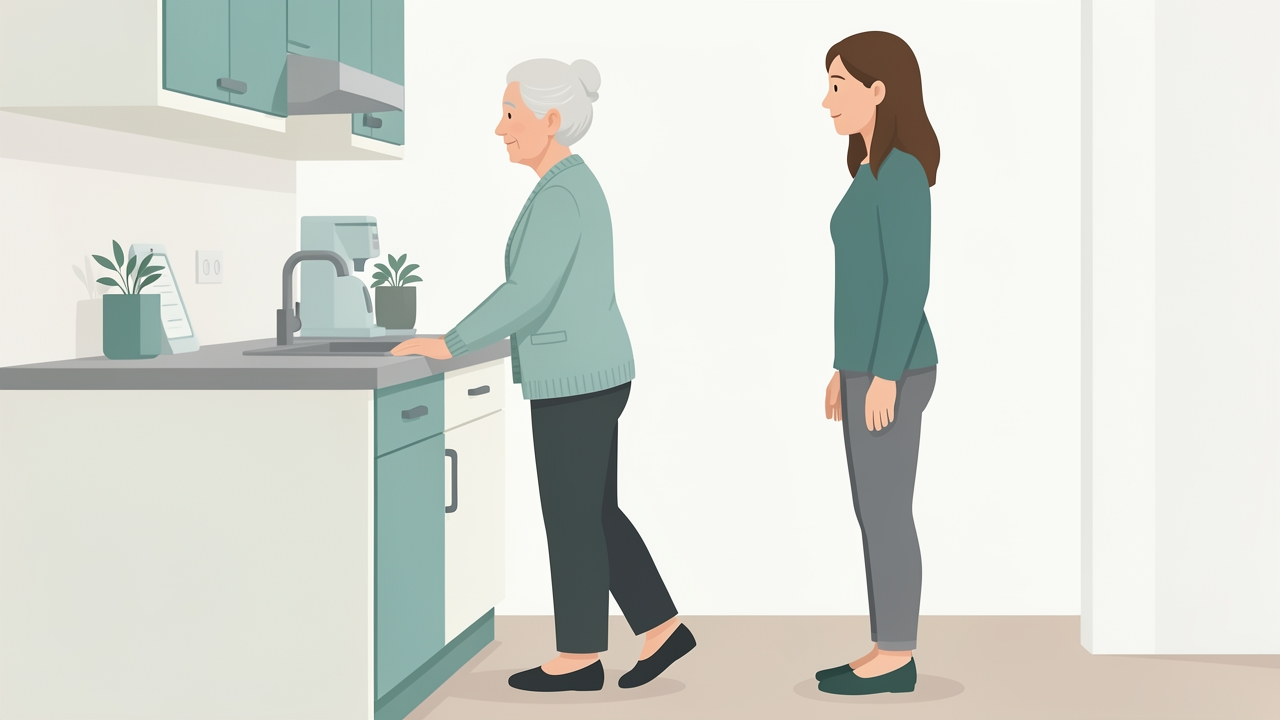
Confirm the patient has a safe space and that someone is nearby for exercises involving balance or lifting.
Evidence Summary
Clinical practice guidelines for low back pain recommend education, advice to remain active, and exercise as first-line management, with pharmacological and passive modalities used as adjuncts (Delitto et al., 2012). Global burden data confirm low back pain as the leading cause of years lived with disability, which supports early, active and accessible management (Hoy et al., 2014). Outcome measurement tools such as the ODI have established reliability and responsiveness, supporting their use in remote monitoring (Fritz & Irrgang, 2001). Shoulder function can be tracked with the Constant-Murley score, although its clinical use requires in-person elements (Constant & Murley, 1987). Evidence on telehealth outcomes for musculoskeletal conditions is growing, with generally comparable results to in-person care for many conditions, but studies vary in quality and population.
Clinical Pearls
- Always document what you could not assess remotely, and state how this affects your confidence in the diagnosis.
- Ask patients to film their symptoms during activity. Video of a provoking task is often more informative than verbal description.
- Use the patient's own functional goals (for example, "carry grandchildren" or "return to five-a-side football") to structure the programme and measure progress.
- A patient who is improving slowly but consistently is usually on track. Do not escalate treatment because of normal variation in symptoms.
- Reassess red flags at every consultation, not just the first.
Summary
Remote musculoskeletal assessment relies on structured history, validated patient-reported measures, observation via video, and carefully adapted functional tests. Understanding regional anatomy and load-tissue relationships allows you to target exercise sensibly and to recognise when a patient needs urgent or in-person review. Staged, criteria-based progression with clearly specified dosage gives patients a safe and measurable pathway to recovery. Red flag screening and clear referral thresholds remain non-negotiable.
References
Constant, C. R., & Murley, A. H. (1987). A clinical method of functional assessment of the shoulder. Clinical Orthopaedics and Related Research, (214), 160-164.
Delitto, A., George, S. Z., Van Dillen, L., Whitman, J. M., Sowa, G., Shekelle, P., Denninger, T. R., & Godges, J. J. (2012). Low back pain: Clinical practice guidelines linked to the International Classification of Functioning, Disability, and Health from the Orthopaedic Section of the American Physical Therapy Association. Journal of Orthopaedic & Sports Physical Therapy, 42(4), A1-A57.
Fritz, J. M., & Irrgang, J. J. (2001). A comparison of a modified Oswestry Low Back Pain Disability Questionnaire and the Quebec Back Pain Disability Scale. Physical Therapy, 81(2), 776-788.
Hislop, H. J., Avers, D., & Brown, M. (2013). Daniels and Worthingham's Muscle Testing: Techniques of Manual Examination and Performance Testing (10th ed.). Elsevier.
Hoy, D., March, L., Brooks, P., Blyth, F., Woolf, A., Bain, C., Williams, G., Smith, E., Vos, T., Barendregt, J., Murray, C., Burstein, R., & Buchbinder, R. (2014). The global burden of low back pain: Estimates from the Global Burden of Disease 2010 study. Annals of the Rheumatic Diseases, 73(6), 968-974.
Mathiowetz, V., Kashman, N., Volland, G., Weber, K., Dowe, M., & Rogers, S. (1985). Grip and pinch strength: Normative data for adults. Archives of Physical Medicine and Rehabilitation, 66(2), 69-74.
Bohannon, R. W. (2006). Reference values for the timed up and go test: A descriptive meta-analysis. Journal of Geriatric Physical Therapy, 29(2), 64-68.