The International Classification of Functioning, Disability and Health (ICF) gives physiotherapists a biopsychosocial framework that describes a patient's health through body functions and structures, activities, participation, and contextual factors rather than through diagnosis alone.
The ICF Model and Its Purpose
The World Health Organization endorsed the ICF in 2001 (WHA54.21) as a standard language for describing functioning and disability. It complements the ICD, which classifies the disease, by classifying what the person can do and experience with that disease. The model is interactive rather than linear. A health condition (disorder or disease) is linked bidirectionally to body functions and structures, activities, and participation, and all of these are influenced by environmental and personal factors.
Functioning is the umbrella term for body functions, body structures, activities, and participation. Disability is the corresponding umbrella for impairments, activity limitations, and participation restrictions. For example, a patient with COPD, a patient with stroke, and a patient with rheumatoid arthritis (RA) may share a diagnosis category with others yet have very different functional profiles.
Core Components and Coding
The ICF has four classified components, each with a letter prefix:
| Component | Prefix | Definition | Example |
|---|---|---|---|
| Body functions | b | Physiological functions of body systems | b730 muscle power; b710 joint mobility; b440 respiration; b280 pain |
| Body structures | s | Anatomical parts | s750 lower limb structure; s110 brain structure |
| Activities and participation | d | Task execution (activity) and involvement in life situations (participation) | d450 walking; d430 lifting and carrying; d520 caring for body parts; d850 paid employment |
| Environmental factors | e | Physical, social and attitudinal environment | e115 assistive products; e310 immediate family; e580 health services |
Personal factors (age, coping style, education, past experience) are recognised but not coded. Problems are rated with a qualifier from 0 (no problem) to 4 (complete problem), with 8 for "not specified" and 9 for "not applicable". Environmental factors can also be coded as barriers (qualifier 0–4) or facilitators (prefixed "+").
Activities and participation share a single coding list (d1–d9). Qualifiers distinguish capacity (what a person can do in a standardised environment) from performance (what they do in their real environment).
Activity Limitation Versus Impairment and Participation Restriction
The distinction between levels is the most commonly tested concept in this framework.
- Impairment is a problem in body function or structure, such as 3/5 strength (b730), reduced MCP flexion range (b710), or an FEV₁ of 45% predicted (b440).
- Activity limitation is a difficulty executing a task, such as walking, lifting a grocery bag from the floor (d430), or brushing teeth (d520).
- Participation restriction is a problem with involvement in life situations, such as being unable to return to teaching (d850) or avoiding community outings.
Applying this to the patient with RA who takes twice as long to brush her teeth: morning stiffness and MCP pain are impairments (b280, b710), slowed toothbrushing is an activity limitation (d520, with a mild qualifier because the task is still completed), and any resulting loss of work or social roles would be a participation restriction. Note that difficulty and slowness count as limitation even when the task is completed.
A useful rule is that a measured physiological or anatomical finding is an impairment, a task a patient performs or struggles to perform is an activity, and a social role is participation.
Environmental and Personal Factors
Environmental factors can be facilitators or barriers. The same factor can be both at different times.
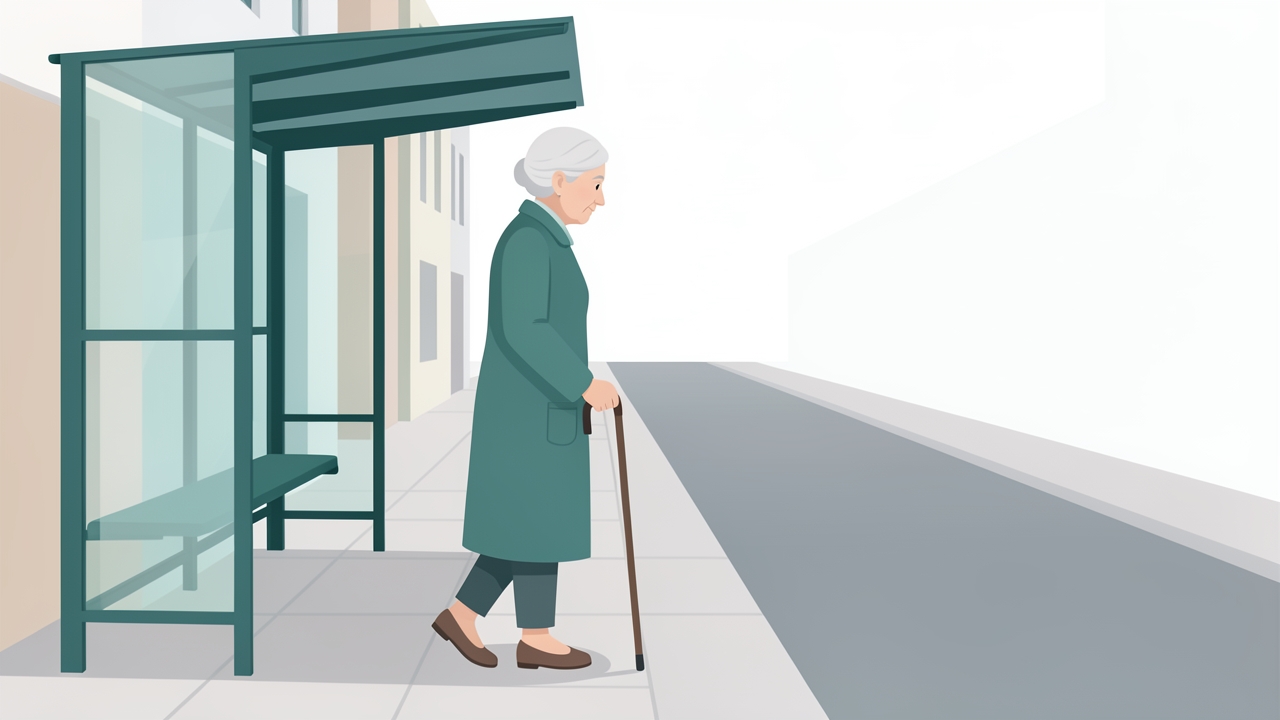
Environmental factors can be facilitators, such as a cane (e1201), or barriers, such as long outdoor distances and stairs without rails.
- Facilitators: the librarian with RA and ergonomic tools (e135/e1151), a supportive spouse (e310), a cane (e1201), and rehabilitation services (e580).
- Barriers: stairs without rails, long outdoor distances, or an unaccommodating workplace for a teacher with memory deficits.
- Personal factors: a single mother working as a nurse with anxiety about chronic low back pain, or a patient whose fear of falling leads her to avoid outdoor walking. Personal factors are not coded, but they must still inform goal setting.
Note that a supportive husband or ergonomic equipment does not change the impairment. It changes performance and participation.
Pathophysiology Across Common Health Conditions
Understanding the pathology explains which ICF domains will be affected.
- Stroke (ischaemic): Arterial occlusion causes focal infarction, with a core and a salvageable penumbra. Contralateral hemiparesis, sensory loss, and altered tone result from loss of corticospinal and somatosensory pathways. Hypertension is the major modifiable risk factor.
- Traumatic brain injury (TBI): Primary injury (contusion, diffuse axonal injury) is followed by secondary injury (oedema, ischaemia, raised intracranial pressure). Frontal and temporal vulnerability produces executive dysfunction, attention deficits, and memory impairment (b140, b144, b164).
- COPD: Chronic airway inflammation and emphysematous destruction cause expiratory flow limitation, air trapping, and dynamic hyperinflation. This produces exertional dyspnoea and reduced exercise tolerance (b455).
- RA: Autoimmune synovitis leads to pannus formation and erosion. Cytokines (TNF-α, IL-6) drive pain, swelling, and morning stiffness lasting more than 30–60 minutes.
- Multiple sclerosis (MS): Demyelination and axonal loss cause fatigue, weakness, and conduction block, which worsens with heat (Uhthoff phenomenon).
Clinical Presentation Mapped to the ICF
A 65-year-old man three weeks after left-sided ischaemic stroke with 3/5 left-sided strength illustrates the mapping:
- Structure: s110 brain (infarct).
- Function: b730 (3/5 MMT), b265 touch function (decreased sensation), b735 tone.
- Activity: d450 walking, d410 changing body position, d540 dressing.
- Participation: d920 recreation, d850 employment.
- Environment: family support, home layout, access to rehabilitation.
A 60-year-old man with COPD, FEV₁ 45% predicted (GOLD 3, severe), and dyspnoea after 50 m maps as follows. The airflow limitation is a b440 impairment, exertional dyspnoea and desaturation relate to b455, and the limited walking distance is a d450 activity limitation.
A 55-year-old woman with MS who walks indoors but avoids outdoor walking because of fear of falling has good capacity but restricted performance. Her personal factor (fear) and the environment (uneven terrain) are the main drivers, not just her strength.
Assessment: Measures and Normative Values
Select measures at each ICF level.
Body functions:
- Manual muscle testing (MRC 0–5) and handheld dynamometry.
- Goniometry for joint range. For example, normal MCP flexion is about 90° and PIP flexion about 100°.
- Grip dynamometry: women aged 45–54 average roughly 27–30 kg.
- Modified Ashworth Scale (0–4) for tone.
- Spirometry: GOLD 1 ≥80%, GOLD 2 50–79%, GOLD 3 30–49%, GOLD 4 <30% predicted FEV₁.
- Resting and exertional SpO₂: exertional desaturation to <88% or a fall of ≥4% is clinically significant.
- Borg CR10 for dyspnoea or exertion.
- Disease activity: DAS28 (<2.6 remission, >5.1 high activity) in RA.
- Cognitive screening: MoCA (<26 abnormal) in TBI.
Activity (capacity):
- 10-Metre Walk Test: <0.4 m/s household ambulator, 0.4–0.8 m/s limited community, >0.8 m/s community ambulator.
- 6-Minute Walk Test: MCID about 30 m in COPD.
- Berg Balance Scale (0–56): scores <45 indicate increased fall risk.
- Fugl-Meyer Assessment (motor, max 100).
- Timed Up and Go: >13.5 s suggests fall risk in older adults.
- Health Assessment Questionnaire Disability Index (HAQ-DI, 0–3) for RA.
- Oswestry Disability Index for chronic LBP.
- Barthel Index or Functional Independence Measure for ADLs.
Participation and environment:
- Participation Assessment with Recombined Tools–Objective (PART-O).
- Community Integration Questionnaire.
- Glasgow Outcome Scale–Extended for TBI.
- Home or workplace assessment.
- Falls Efficacy Scale–International (FES-I) for fear of falling.
Goal Setting and Staged Management
ICF-based management links each goal to a level and each intervention to a goal.
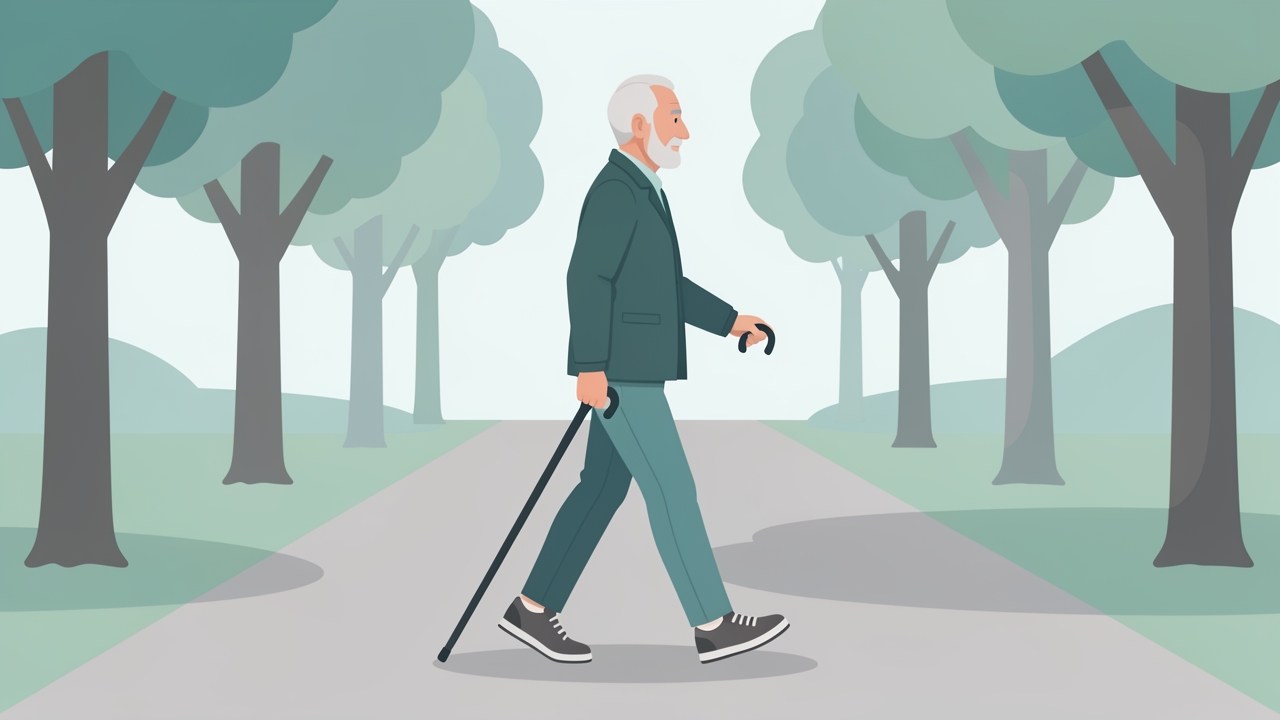
A SMART goal tagged to its ICF level: walk 100 m outdoors with a cane at 0.8 m/s or faster within 6 weeks (d450).
- Acute or early stage: Prevent secondary impairment through positioning, early mobilisation, and education. After stroke, avoid very early high-dose mobilisation within 24 hours, as AVERT showed worse outcomes at 3 months.
- Subacute stage: Restore function through task-specific, repetitive, progressive practice.
- Chronic stage: Maintain gains, address participation barriers, adapt the environment, and promote self-management.
Write goals with SMART criteria across levels, for example, "Walk 100 m outdoors with a cane at ≥0.8 m/s within 6 weeks (d450)". Revisit the plan using the same outcome measures every 4–6 weeks.
Condition-Specific Management Parameters
Stroke: Task-oriented training, with 30–60 minutes per session and 3–5 days weekly. Treadmill training at 60–80% heart rate reserve (HRR) after screening. For the upper limb with sufficient motor return (at least 20° wrist and 10° finger extension), consider constraint-induced movement therapy (EXCITE protocol: mitt for up to 90% of waking hours with 6 hours of structured practice over 2 weeks). Progressive resistance training: 2–3 sets of 8–12 repetitions at 60–80% 1-RM.
COPD: Pulmonary rehabilitation for 8–12 weeks, at least 2–3 supervised sessions weekly. Aerobic: 20–60 minutes at 60–80% peak work rate or Borg dyspnoea 4–6. Resistance: 1–3 sets of 8–12 repetitions. Teach pursed-lip breathing and energy conservation. Titrate supplemental oxygen to keep SpO₂ ≥88–90%.
RA: Joint protection principles, resting splints for acute flares, and range-of-motion exercise. Moderate aerobic exercise (30 minutes, 3 times weekly), and strengthening (2 sets of 8–12 repetitions, twice weekly, pain-limited) in non-flaring joints. Use warm-up and heat for morning stiffness. Environmental modifications include built-up handles, jar openers, and adapted toothbrushes.
TBI: Graded return to work, with cognitive strategies (diaries, reminders, chunking) and dual-task training that progresses from single to multiple tasks. Provide employer education and workplace modification. For persisting post-concussive symptoms, use sub-symptom-threshold aerobic exercise (about 80% of the heart rate at symptom exacerbation).
MS: Fatigue management using pacing, cooling strategies, and moderate exercise 2–3 times weekly. Add balance and falls-prevention training, stair training, and a fear-of-falling programme using graded outdoor exposure.
Evidence and Clinical Pearls
- Pulmonary rehabilitation reliably improves exercise capacity and dyspnoea in COPD (ATS/ERS 2013; GOLD).
- Intensive, task-specific, repetitive practice is the cornerstone of motor recovery after stroke (AHA/ASA 2016).
- EULAR recommends exercise and early disease-modifying treatment in RA, and physiotherapy complements pharmacotherapy.
- Patients with identical impairments often differ in activity and participation. Always ask "what can you do?" and "what do you actually do?".
- Capacity versus performance explains why a patient who walks well in the clinic avoids walking at home.
- Do not label environmental changes as impairment improvements. Adaptation alters performance, not body function.
Red Flags and Contraindications
- Stroke: New severe headache, rapid neurological decline, uncontrolled blood pressure, or calf swelling (suspected DVT). Withhold exercise if resting systolic BP is above 220 mmHg or if unstable.
- TBI: Seizures, worsening headache, vomiting, new focal deficit, or a drop in conscious level.
- COPD: SpO₂ <88% unresolved with rest or oxygen, chest pain, or acute exacerbation signs.
- RA: Hot, swollen, febrile joint (septic arthritis), new neurological signs, or neck pain with myelopathy (atlantoaxial instability), and sudden loss of tendon function (rupture). Avoid forceful stretching and heavy resistance on acutely inflamed joints.
- Low back pain: Cauda equina signs (saddle anaesthesia, bladder or bowel changes), unexplained weight loss, history of cancer, or night pain.
- MS: Avoid overheating during exercise, and monitor for relapse (new deficits lasting >24 hours).
Summary
The ICF organises patient care into body functions and structures, activities, participation, environmental factors, and personal factors, all in the context of a health condition. Impairments are physiological or anatomical findings, activity limitations are difficulties with tasks, and participation restrictions are problems in life roles. Environmental factors act as facilitators or barriers, and personal factors are uncoded but shape care. Each domain is measured with specific tools, from MMT and spirometry to the 10MWT, the Berg Balance Scale, and PART-O, and each intervention should be matched to a goal at the correct level. Stroke, TBI, COPD, RA, MS, and chronic low back pain are all best understood and treated this way.
References
- World Health Organization. International Classification of Functioning, Disability and Health (ICF). Geneva: WHO; 2001.
- Stucki G, Ewert T, Cieza A. Value and application of the ICF in rehabilitation medicine. Disabil Rehabil. 2002;24(17):932–938.
- Jette AM, Haley SM, Kooyoomjian JT. Are the ICF Activity and Participation dimensions distinct? J Rehabil Med. 2003;35(3):145–149.
- Global Initiative for Chronic Obstructive Lung Disease. Global Strategy for the Diagnosis, Management, and Prevention of COPD (2024 Report).
- Spruit MA, Singh SJ, Garvey C, et al. An official ATS/ERS statement: key concepts and advances in pulmonary rehabilitation. Am J Respir Crit Care Med. 2013;188(8):e13–e64.
- Winstein CJ, Stein J, Arena R, et al. Guidelines for adult stroke rehabilitation and recovery. Stroke. 2016;47(6):e98–e169.
- AVERT Trial Collaboration Group. Efficacy and safety of very early mobilisation within 24 h of stroke onset (AVERT). Lancet. 2015;386(9988):46–55.
- Wolf SL, Winstein CJ, Miller JP, et al. Effect of constraint-induced movement therapy on upper extremity function 3 to 9 months after stroke: the EXCITE randomized clinical trial. JAMA. 2006;296(17):2095–2104.