This chapter links core teaching and learning concepts (Bloom's taxonomy, learning theories, learning styles, clinical reasoning and patient adherence) to common shoulder, knee, lumbar spine and neurological presentations, so that students can both treat the patient and explain how they reasoned and learned.
Bloom's Taxonomy and Learning Theories in Clinical Education
The revised Bloom's taxonomy (Anderson and Krathwohl) orders cognitive tasks from remember and understand through apply and analyze to evaluate and create. A student asked to list the pros and cons of eccentric loading versus conventional rotator cuff strengthening for a 55-year-old tennis player is working at the analyze/evaluate level. Recalling the definition of impingement would be remember. Designing a progressive, sport-specific programme is create. Educators should match questions and assessments to the intended level.
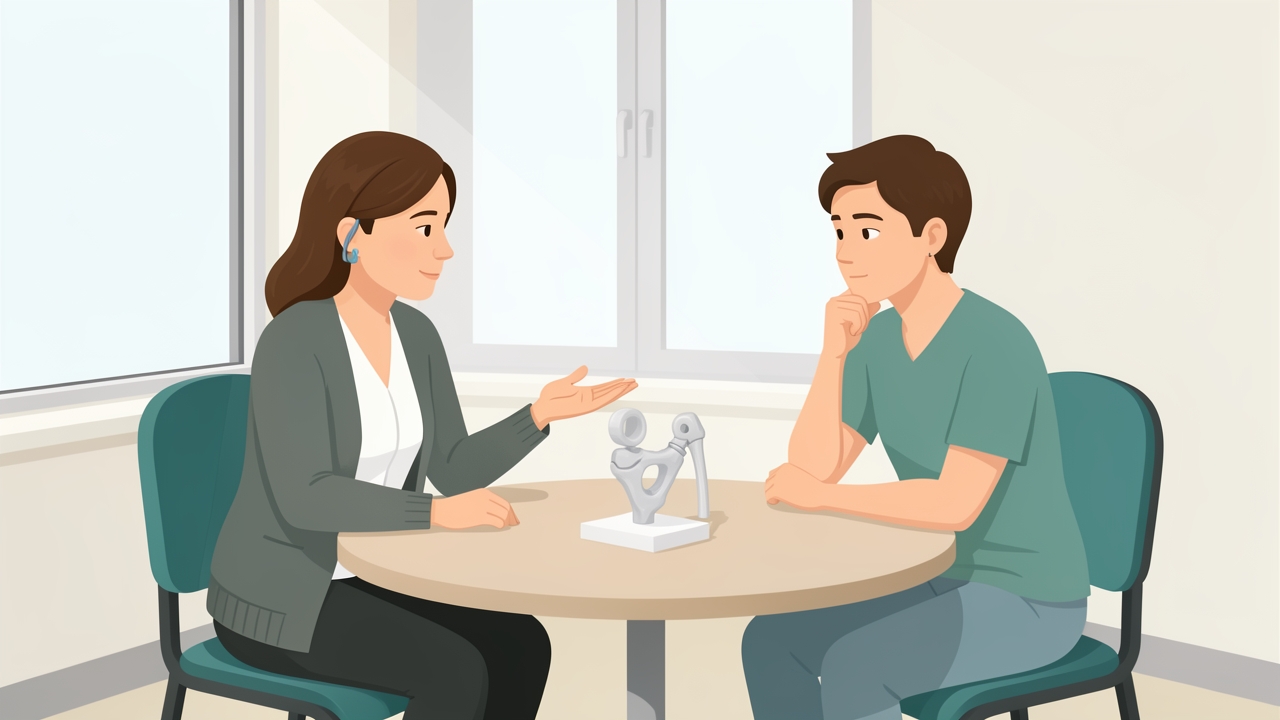
Match the question to the level: recalling a definition is 'remember', weighing two loading approaches is 'analyze/evaluate', designing a progressive programme is 'create'.
Four theoretical frameworks recur in clinical teaching:
- Behaviourism: repeated practice with reinforcement builds a skill. Examples are graded feedback during manual technique rehearsal and checklists.
- Cognitivism: learning depends on organising knowledge into schemas. Concept maps and structured questioning support this.
- Constructivism: learners build meaning from experience, supported by scaffolding within Vygotsky's zone of proximal development.
- Experiential and social learning: Kolb's cycle (concrete experience, reflective observation, abstract conceptualisation, active experimentation) and Bandura's observational learning. Andragogy (Knowles) adds that adult learners are self-directed, goal-oriented and draw on prior experience.
Learning Styles: What the Evidence Supports
Models such as VARK (visual, auditory, read/write, kinaesthetic) and Kolb's learning style inventory are popular. However, controlled studies have not shown that teaching matched to a self-reported style improves outcomes (Pashler et al., 2008). Style questionnaires are best used to prompt learners to reflect on their habits and broaden their strategies. Educators should use multimodal teaching: demonstration, hands-on practice, verbal explanation and written resources. Psychomotor skills such as palpation or joint mobilisation need supervised practice whatever the learner's stated preference.
Teaching Clinical Reasoning
Consider a third-year student treating a 45-year-old woman with chronic knee pain who cannot link classroom knowledge to the patient in front of her. This is a typical failure of knowledge transfer, not of knowledge. Useful structures include:
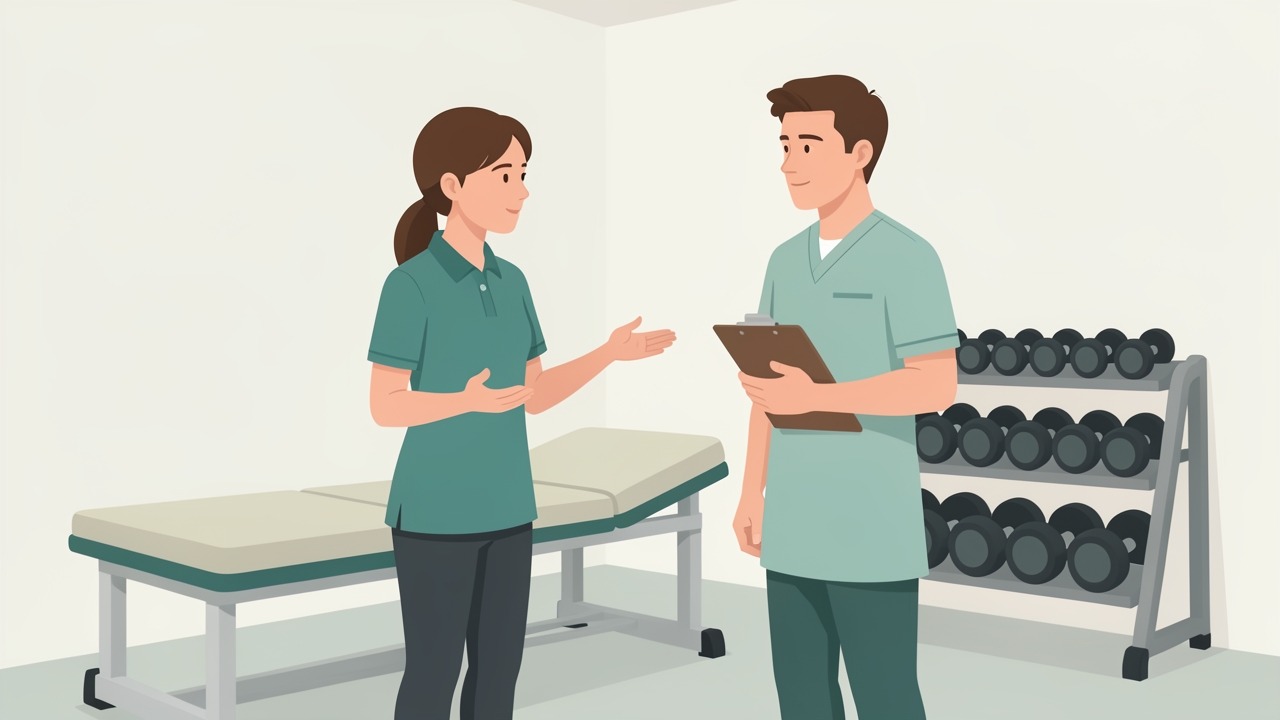
One-minute preceptor: the student commits to a working diagnosis, the educator probes it, teaches a general rule, reinforces what was right and corrects what was not.
- Clinical Reasoning Cycle: consider the situation, collect cues, process information, identify problems, establish goals, take action, evaluate outcomes and reflect.
- Hypothetico-deductive reasoning: generate two or three hypotheses early, then choose tests that discriminate between them. This suits novices.
- Pattern recognition: used by experts, and dependent on a large store of cases.
- One-minute preceptor: commit, probe, teach a general rule, reinforce, correct.
- Feedback: Pendleton's rules (student first, then educator) keep feedback balanced and learner-led.
For this patient, the educator would ask the student to commit to a working diagnosis. Likely options are knee osteoarthritis or patellofemoral pain. The student would then justify it with age, load-related pain, morning stiffness under 30 minutes, crepitus and bony enlargement, and state what finding would change the hypothesis.
Shoulder Pathophysiology and Presentation
Subacromial pain/impingement is a load-related tendinopathy of the rotator cuff, with or without bursal irritation. It typically affects overhead athletes and workers. Symptoms are a painful arc between about 60° and 120° of abduction, night pain on the affected side and pain with resisted external rotation or abduction.
Adhesive capsulitis involves capsular fibrosis and synovitis. It is more common in women aged 40–60 and is associated with diabetes and thyroid disease. A 45-year-old office worker with 3 months of non-traumatic pain, with both active and passive abduction and external rotation limited, fits this picture. The capsular pattern is external rotation > abduction > internal rotation. The stages are:
- Freezing (painful): about 2–9 months, with night pain.
- Frozen (stiff): about 4–12 months, with pain easing and stiffness dominant.
- Thawing: about 5–24 months, with gradual return of motion.
Full-thickness rotator cuff tear is likely in a 60-year-old woman after a fall on an outstretched arm (FOOSH), with difficulty elevating beyond about 60°, weakness and a positive drop arm test.
Shoulder Assessment and Normative Values
Normal range of motion:
| Motion | Normal (degrees) |
|---|---|
| Flexion | 180 |
| Abduction | 180 |
| External rotation | 90 |
| Internal rotation | about 70 |
- Impingement cluster: Neer, Hawkins-Kennedy (sensitivity about 79%, specificity about 59%) and painful arc. The tests are individually weak, so interpret them as a cluster.
- Rotator cuff tear: the drop arm test has low sensitivity (about 10–30%) but high specificity (about 90%). It is supported by the external rotation lag sign, infraspinatus strength testing and the empty-can test. Grade strength with MRC 0–5. Use ultrasound or MRI to confirm a tear.
- Screen the cervical spine (Spurling's test, cervical rotation under 60° towards the painful side) and neurological status (C5–T1 myotomes, biceps C5–6, triceps C7 reflexes, dermatomes).
- Outcome measures: SPADI (0–100), DASH, Constant-Murley score and the numeric pain rating scale (NPRS, minimum clinically important difference about 2 points).
- Red flags: trauma with deformity (fracture or dislocation), unexplained weight loss, constant non-mechanical pain, fever, and arm or neck pain with chest symptoms (cardiac referral).
Shoulder Management
Impingement/rotator cuff tendinopathy
- Education on load management and temporary modification of overhead activity.
- Scapular and cuff exercises, such as side-lying external rotation, prone Y and T, and serratus punches, at 3 sets of 10–15 repetitions, 3–5 days per week.
- Eccentric loading follows the Jonsson-type approach: 3 sets of 15 repetitions, performed once or twice daily for about 12 weeks. It is a reasonable option for the tennis player when pain is tolerable (about 3/10).
- Progress to plyometrics and tennis-specific loading, such as serve mechanics and kinetic chain training.
- Evidence suggests that supervised exercise performs as well as surgery for most patients with subacromial pain. For the student, both options are valid, so their relative merits should be compared against the patient's goals and adherence.
Adhesive capsulitis (Kelley et al., 2013)
- Painful stage: education, Grade I–II mobilisations, pain-limited range of motion and a short course of intra-articular corticosteroid.
- Stiff stage: Grade III–IV mobilisations, sustained low-load stretching (30–60 seconds, 3–5 repetitions, daily) and home exercises.
- Refer if there is no progress after 3–6 months, when hydrodilatation, manipulation under anaesthesia or capsular release may be considered.
Suspected full-thickness traumatic tear: rule out fracture and dislocation, protect the shoulder with a sling for comfort only and refer for imaging. Early surgical opinion is appropriate for acute tears in active patients. Conservative care starts with pain-free isometrics and progressive deltoid and scapular strengthening.
Knee Assessment: Acute Ligament Injury
A 30-year-old soccer player twists his knee, hears a pop and develops swelling within hours. A haemarthrosis (2+ effusion) with a positive Lachman and anterior drawer indicates an anterior cruciate ligament (ACL) rupture. A negative McMurray test lowers the likelihood of a meniscal tear, but associated meniscal and medial collateral injuries are common.
- Lachman test: grade by translation: 1+ (3–5 mm), 2+ (5–10 mm), 3+ (over 10 mm), with endpoint quality (firm or soft). Pooled sensitivity is about 85% and specificity about 94%. It is the most accurate clinical test.
- Anterior drawer: sensitivity about 92% and specificity about 91% in chronic injury, but less accurate acutely because of guarding.
- Pivot shift: sensitivity is low (about 24%) but specificity is very high (about 98%).
- Instrumented laxity: a side-to-side difference of over 3 mm on KT-1000 is abnormal.
- Ottawa Knee Rules guide radiography after trauma: age 55 or over, isolated patellar tenderness, fibular head tenderness, inability to flex to 90°, or inability to bear weight for four steps.
- Normal range: extension 0° (up to 5–10° hyperextension) and flexion 135–140°.
- Outcome measures: KOOS, IKDC subjective form, Lysholm and Tegner activity scale.
Knee Management: ACL Rehabilitation
Rehabilitation is criteria-based, not time-based, whether the patient is treated operatively or non-operatively.
- Phase 1 (pre-op or early): reduce effusion, restore full extension and 120° or more of flexion, and achieve a straight-leg raise without lag. Use neuromuscular electrical stimulation if quadriceps activation is poor.
- Phase 2 (strength): closed-chain exercise, such as squats and leg press, plus open-chain knee extension in a protected range. Progress at 3–4 sets of 8–12 repetitions, 2–3 sessions per week.
- Phase 3 (running and agility): begin when there is no effusion, the limb symmetry index (LSI) for quadriceps strength is 80% or more, and pain is minimal.
- Phase 4 (return to sport): typically no earlier than 9 months. Criteria are an LSI of 90% or more for quadriceps strength and hop tests, plus psychological readiness. Grindem et al. (2016) found that each month of delay until 9 months reduced reinjury by 51%.
Lumbar Spine: Acute and Chronic Presentations
An acute, non-radiating low back pain episode after lifting, with paravertebral spasm and restricted flexion, is most consistent with acute non-specific mechanical low back pain, such as a muscle strain or facet irritation. Typical normal ranges are flexion about 60°, extension about 25° and lateral flexion about 25°. Schober's test should show an increase of at least 5 cm over 10 cm.
Screening for serious pathology: age over 50 or under 20, major trauma, cancer history, unexplained weight loss, fever, steroid use, or cauda equina features (saddle anaesthesia, urinary retention, bilateral leg symptoms). These require urgent referral.
Neurological screen: myotomes L2 (hip flexion), L3–4 (knee extension, ankle dorsiflexion), L5 (great toe extension) and S1 (plantarflexion). Reflexes are patellar (L4) and Achilles (S1). A positive straight leg raise reproducing leg pain at 30–70° suggests lumbar radiculopathy. Upper motor neuron signs (hyperreflexia, clonus, Babinski) point to central pathology.
Outcome measures: Oswestry Disability Index (MCID about 10 points), Roland-Morris Questionnaire (MCID about 5 of 24), NPRS, STarT Back tool for risk stratification and the Fear-Avoidance Beliefs Questionnaire.
Management of acute pain: reassurance, advice to stay active, heat, and short-term manual therapy (e.g. Grade III–IV mobilisation) combined with exercise. Imaging is unnecessary without red flags.
Management of chronic pain (George et al., 2021): exercise therapy, cognitive-behavioural approaches and graded activity. Core stabilisation targets transversus abdominis and multifidus:
- Abdominal drawing-in, 10 repetitions of 10-second holds, building to functional positions.
- Bird-dog and side bridge, 3 sets, 10–30 second holds.
- Frequency: 3–5 days per week for 8–12 weeks.
Observing and then practising manual techniques follows a Peyton-style progression: demonstrate, explain, student narrates, student performs. This builds the psychomotor competencies assessed at the apply level.
Patient Adherence
A construction worker with chronic low back pain who is not performing his core programme presents an adherence problem, not a prescription failure. Non-adherence to home exercise ranges from 30% to 70%. The WHO model describes five dimensions: patient, condition, therapy, health-system and socioeconomic factors. Strategies include:
- Explore his beliefs and fears (fear avoidance, catastrophising) and use motivational interviewing.
- Agree goals jointly (e.g. return to heavy lifting at work) and build self-efficacy (Bandura) with early, achievable successes.
- Limit the programme to 2–4 exercises of 10–15 minutes that fit his routine, and provide illustrated handouts or an app.
- Use exercise diaries, scheduled follow-up and review of technique.
- Address barriers such as shift work, fatigue and pain flare-ups, and give a flare-up plan.
Evidence and Clinical Pearls
- Match the test to the question. Lachman and pivot shift are strongest for ruling an ACL tear in, and tests with low sensitivity cannot rule a condition out.
- Both active and passive range of motion are limited in adhesive capsulitis. If only active motion is limited, suspect cuff weakness or pain inhibition.
- Examine the neck and thoracic spine in all shoulder presentations.
- Ask educational questions at a higher Bloom's level than the student's current performance, with support.
- Learning-style matching is not evidence-based, whereas deliberate practice, feedback and reflection are.
- Document baseline outcome measures (SPADI, KOOS, ODI) so progress is measurable.
Summary
Effective musculoskeletal practice and effective clinical teaching depend on the same skill: structured reasoning. Differentiate shoulder impingement, adhesive capsulitis and rotator cuff tears using pattern of motion loss, mechanism and special tests. Combine the Lachman, anterior drawer and effusion findings to identify ACL injury, and rehabilitate it by criteria. Screen the lumbar spine for red flags and neurological deficits, then apply exercise-based care while addressing adherence. In education, use Bloom's taxonomy and learning theory to pitch tasks appropriately, scaffold reasoning with frameworks such as the Clinical Reasoning Cycle, and give feedback that supports reflection.
References
- Anderson LW, Krathwohl DR, eds. A Taxonomy for Learning, Teaching, and Assessing: A Revision of Bloom's Taxonomy of Educational Objectives. New York: Longman; 2001.
- Levett-Jones T, Hoffman K, Dempsey J, et al. The 'five rights' of clinical reasoning: an educational model to enhance nursing students' ability to identify and manage clinically 'at risk' patients. Nurse Educ Today. 2010;30(6):515–520.
- Pashler H, McDaniel M, Rohrer D, Bjork R. Learning styles: concepts and evidence. Psychol Sci Public Interest. 2008;9(3):105–119.
- Benjaminse A, Gokeler A, van der Schans CP. Clinical diagnosis of an anterior cruciate ligament rupture: a meta-analysis. J Orthop Sports Phys Ther. 2006;36(5):267–288.
- Grindem H, Snyder-Mackler L, Moksnes H, Engebretsen L, Risberg MA. Simple decision rules can reduce reinjury risk by 84% after ACL reconstruction: the Delaware-Oslo ACL cohort study. Br J Sports Med. 2016;50(13):804–808.
- Kelley MJ, Shaffer MA, Kuhn JE, et al. Shoulder pain and mobility deficits: adhesive capsulitis. J Orthop Sports Phys Ther. 2013;43(5):A1–A31.
- George SZ, Fritz JM, Silfies SP, et al. Interventions for the management of acute and chronic low back pain: revision 2021. J Orthop Sports Phys Ther. 2021;51(11):CPG1–CPG60.
- Jonsson P, Wahlström P, Öhberg L, Alfredson H. Eccentric training in chronic painful impingement syndrome of the shoulder: results of a pilot study. Knee Surg Sports Traumatol Arthrosc. 2006;14(1):76–81.