Clinical case presentation is how physiotherapists turn a patient encounter into shared reasoning. A good presentation tells a colleague, examiner, or funder what the patient has, why you think so, what you did, and what happened. This chapter introduces the core purpose, audiences, and formats of case presentation, using a single worked example throughout: a 54-year-old carpenter with subacromial shoulder pain.
Pathophysiology of the Worked Example
Subacromial pain syndrome describes shoulder pain arising from the subacromial space, where the supraspinatus tendon, subacromial bursa, and long head of biceps pass beneath the coracoacromial arch. Pain typically follows repeated overhead loading, and the mechanism is usually a mix of extrinsic compression and intrinsic tendon degeneration. Neer (1983) described external impingement from the acromion and coracoacromial ligament, while Hawkins and Kennedy (1980) described the impingement test that bears their names. Tendon overload produces reactive tendinopathy, then degenerative change, and eventually a possible partial or full-thickness tear in older adults.
For your presentation, the pathophysiology must explain the presenting features. In this patient, pain is worst in the 60–120° elevation arc (the painful arc), night pain occurs on lying on the affected side, and load tolerance is poor in overhead work. Each finding should connect to a plausible mechanism rather than appearing as an isolated list of signs.
Presenting the Case: Purpose and Audience
The primary purpose of a case presentation is clinical reasoning made visible. A written note records what was done. A presentation explains why, and it must be structured so that the listener can test your reasoning. Three audiences are common in physiotherapy:
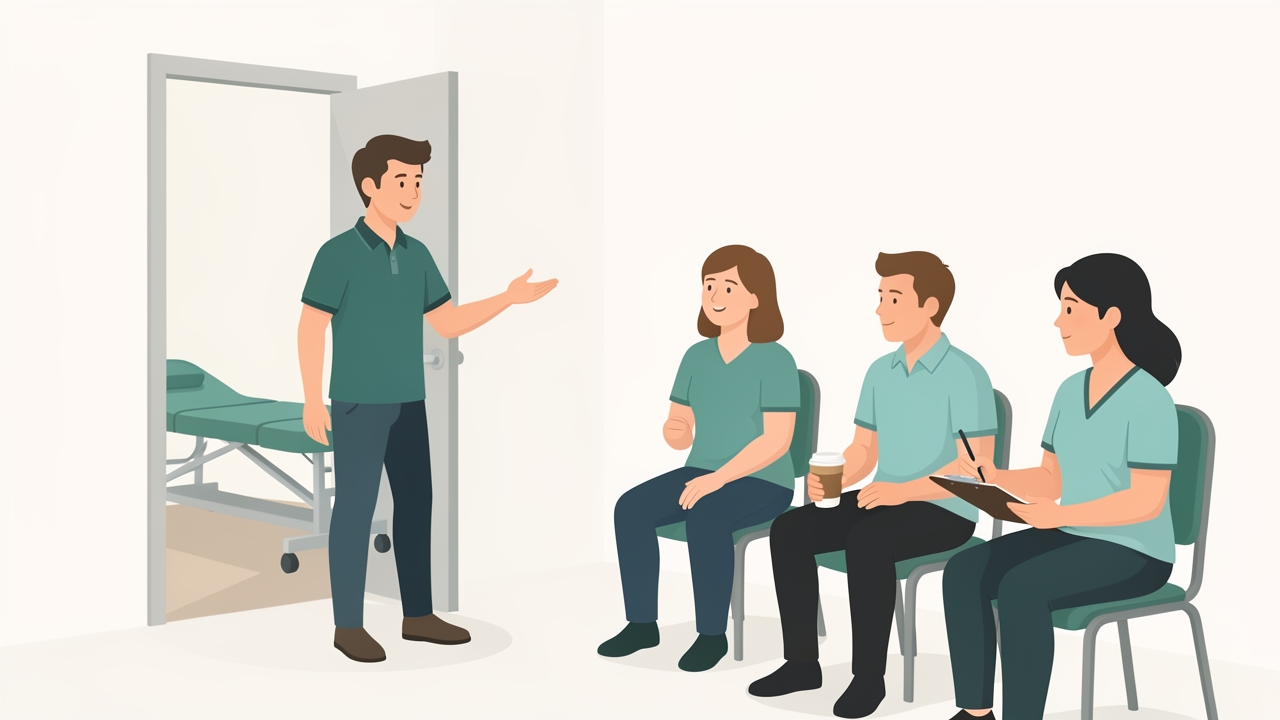
Peers and clinical teams need concise hypotheses, a working diagnosis and the plan for the next review. Funders need functional goals and outcome measures.
- Peers and clinical teams need concise hypotheses, working diagnosis, and the plan for the next review.
- Students and educators need the reasoning chain, including differentials considered and rejected.
- Funders, insurers, and referrers need functional goals, outcome measures, and justification for the episode length.
The same case is therefore presented differently to each group. For a peer team, you might say: "Subacromial pain with a probable rotator cuff involvement; painful arc and positive Jobe test; baseline SPADI 62%; plan is three-phase loading with review at six weeks." For an insurer, the same content would foreground functional limitation, expected recovery time, and measurable goals.
Red flags must be screened and stated explicitly in any presentation. For this patient, screening excludes cervical radiculopathy (no dermatomal symptoms, normal Spurling test), inflammatory arthropathy (no morning stiffness over 30 minutes), malignancy (no unexplained weight loss, night pain unresponsive to position change), and infection (afebrile, no warmth or swelling). Contraindications to loading, such as an acute full-thickness tear with significant weakness, should be documented before any progression.
Assessment: Tests, Measures, and Normative Values
A defensible assessment combines special tests, range of motion, strength grading, and validated patient-reported outcome measures.
Special tests should be reported with their results and their limitations. Neer and Hawkins-Kennedy tests are sensitive but not specific for subacromial pathology. The Jobe (empty can) test, described by Jobe and Moynes (1982), assesses supraspinatus involvement; a positive test with pain and weakness at 90° abduction and internal rotation is typical. The external rotation lag sign is a stronger indicator of a full-thickness tear, and a lag of more than 10° at 0° abduction is considered clinically significant. Combining tests into clusters improves diagnostic confidence.
Range of motion should be measured with a goniometer and recorded for both sides. Reference values for adults are approximately 180° flexion, 180° abduction, 90° external rotation at 90° abduction, and 70° internal rotation at 90° abduction. A deficit of more than 10° relative to the contralateral side is commonly considered meaningful, though the threshold should be interpreted in context.
Strength should be graded using the Medical Research Council scale (0–5) or handheld dynamometry (HHD) in newtons. Document the position, the method, and whether the result was pain-limited. Reporting "4/5 with pain" is more informative than "weak."
Patient-reported measures provide the functional picture. The Shoulder Pain and Disability Index (SPADI), developed by Roach et al. (1991), has a pain subscale (5 items) and a disability subscale (8 items), scored 0–100 with higher scores indicating greater impairment. The Constant-Murley score (Constant and Murley, 1987) combines pain, activities of daily living, range, and strength into a 100-point total, with normal values for adults in the 80s to 90s depending on age and sex. The Quick DASH is useful for work-related upper-limb presentations. Pain is recorded on a numerical rating scale (0–10), and baseline values should be reported with the reference period (for example, "average pain over the past week").
Management: Staged Protocol and Dosage
Management should be described in phases with explicit criteria for progression. Kuhn et al. (2013) reported outcomes from a multicenter cohort of physiotherapy for atraumatic rotator cuff tears, supporting structured loading programs as a first-line option for many patients. A typical staged approach for this patient is as follows.
Phase 1: Pain modulation and load management (weeks 0–2). Activity modification avoids sustained overhead work. Isometric rotator cuff exercises at 30–50% of maximal voluntary contraction, with five repetitions held for 45 seconds, are performed three times per day. Scapular setting and pain-free range exercises are added. Progression criterion: pain at or below 3/10 during and after exercise, with no night pain disrupting sleep.
Phase 2: Strength and control (weeks 2–6). Isotonic exercises are introduced: external rotation with elastic band, scapular retraction, serratus anterior activation, and prone row. A typical dose is three sets of 10–15 repetitions, three to four days per week, performed to 2–3 repetitions in reserve. Progression criterion: SPADI reduction of at least 13 points (the minimal clinically important difference reported in several shoulder cohorts) and pain-free active elevation to 150°.
Phase 3: Loaded function and return to work (weeks 6–12). Load increases toward occupational demands, including overhead lifting with graded weights, plyometric-style tasks if appropriate, and sport- or trade-specific drills. Dosage moves toward three sets of 6–8 repetitions at higher load, with a focus on endurance at work-relevant positions. Discharge criteria include Constant-Murley score above 80, SPADI below 20%, and symptom-free completion of a full working shift.
Each phase should be reported with the actual dose delivered, not only the intended dose. Adherence and any deviation from the plan are clinically important, and omitting them weakens an otherwise sound presentation.
Presentation Formats
Three formats dominate clinical teaching and communication. A verbal case presentation, typically 5–10 minutes, uses a structure of summary, key findings, working hypothesis, plan, and questions for discussion. A written case report follows an extended SOAP or problem-based format and should include the rationale for measures chosen. A poster or conference format condenses the case into a visual summary with a clear clinical question, key outcome data, and one or two take-home messages.
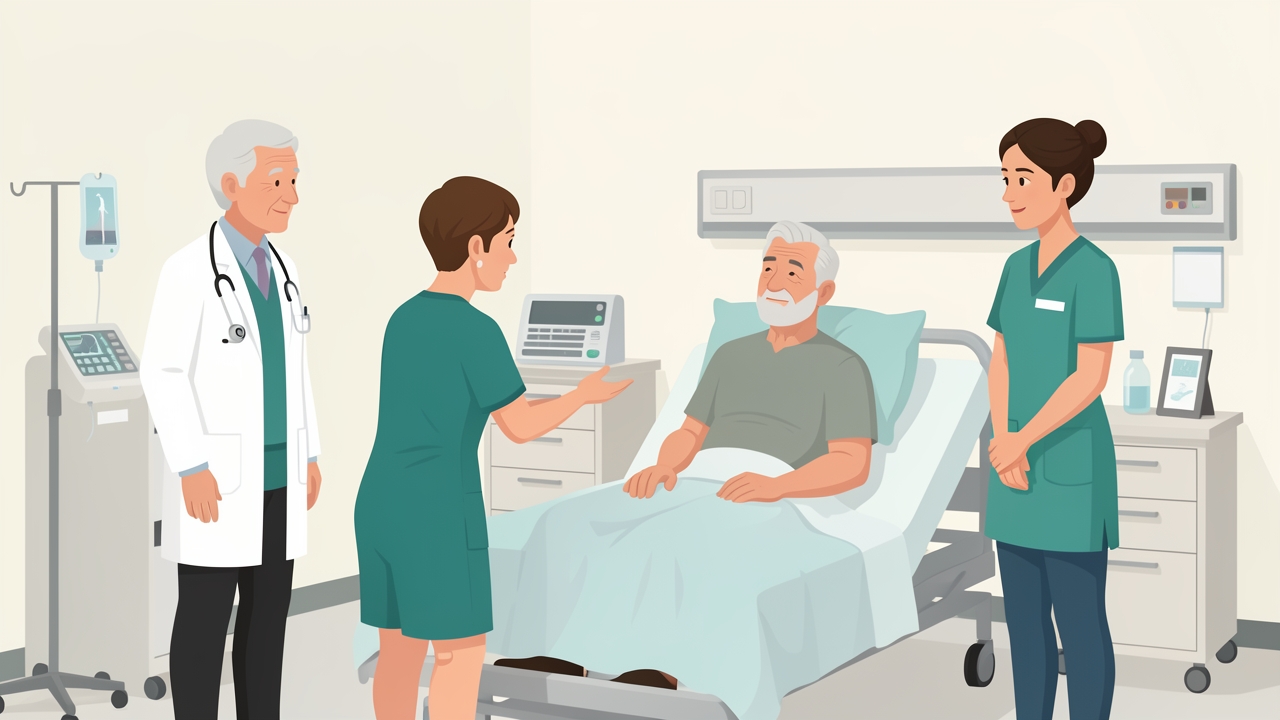
A verbal case presentation typically runs 5–10 minutes: summary, key findings, working hypothesis, plan, and questions for discussion.
Regardless of format, lead with the clinical question. Listeners should know within the first minute what problem you are solving. Avoid reciting every finding in the order it was collected; instead, select findings that discriminate between hypotheses.
Clinical Pearls
- Present the reasoning, not the transcript. A listener cannot evaluate forty measurements, but can evaluate three hypotheses and the evidence for and against each.
- State the outcome measure baseline and the change. "SPADI improved from 62% to 34% over six weeks" is far more useful than "pain improved."
- Name your uncertainty. Special tests have imperfect accuracy; saying "the Jobe test was positive, but the lag sign was negative, so a full-thickness tear is less likely" demonstrates good judgment.
- Match detail to audience. Use technical language with peers and plain language with patients and funders, without changing the facts.
- Document contraindications and red flags explicitly, even when they are absent. Their absence is part of the diagnostic argument.
- Record the dose delivered. Adherence data distinguish a failed treatment from a treatment that was never fully applied.
Summary
Case presentation translates clinical reasoning into a form others can evaluate. Its purpose is to communicate a working diagnosis, the evidence behind it, and the plan and its outcomes. The audience determines the emphasis: peers need hypotheses and plans, students need reasoning chains, and funders need function and measurable change. Strong presentations integrate pathophysiology with the presenting features, report assessment findings with normative values and validated measures, describe staged management with explicit dosage and progression criteria, and acknowledge uncertainty. Format is secondary to structure, and a clear clinical question at the start is the single most effective feature of any presentation.
References
- Neer CS 2nd. Impingement lesions. Clin Orthop Relat Res. 1983;(173):70–77.
- Hawkins RJ, Kennedy JC. Impingement syndrome in athletes. Am J Sports Med. 1980;8(3):151–158.
- Jobe FW, Moynes DR. Delineation of diagnostic criteria and a rehabilitation program for rotator cuff injuries. Am J Sports Med. 1982;10(6):336–339.
- Constant CR, Murley AH. A clinical method of functional assessment of the shoulder. Clin Orthop Relat Res. 1987;(214):160–164.
- Roach KE, Budiman-Mak E, Songsiridej N, Lertratanakul Y. Development of a shoulder pain and disability index. Arthritis Care Res. 1991;4(4):143–149.
- Kuhn JE, Dunn WR, Sanders R, et al. Effectiveness of physical therapy in treating atraumatic full-thickness rotator cuff tears: a multicenter prospective cohort study. J Shoulder Elbow Surg. 2013;22(10):1371–1379.