Clinical learning ·
5 Hippocrates Quotes on Rehab for Physios
Five lines attributed to Hippocrates on use, walking, manual therapy, timing and dosage, and what each one means for physiotherapy practice today.

physioai
Instagram post
1/10
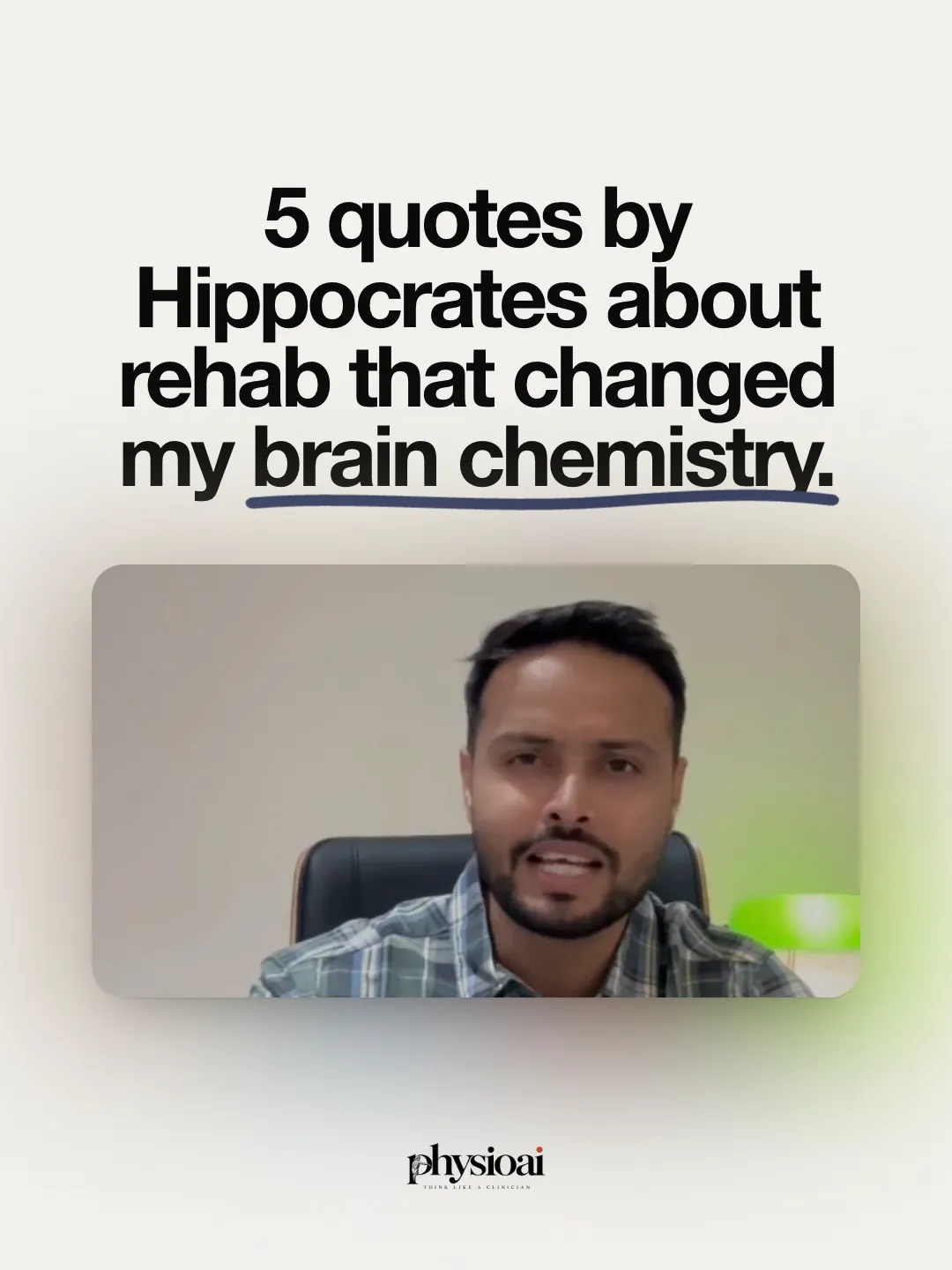
Hippocrates is called the father of medicine, but read him as a physiotherapist and he seems to be describing our job: move the body, use your hands, respect timing and get the dose right. This article looks at five lines linked to him and what each means for rehabilitation today.
Key takeaways
- The idea of "use it or lose it" is around 2,400 years old.
- Walking remains one of the simplest things a physiotherapist can prescribe.
- Manual therapy was part of the healer's skill set from the start.
- Rehabilitation has windows: knowing when matters as much as knowing what.
- Dosage, "not too little and not too much", is the hardest part of every exercise prescription.
A note on sources
Not every line here can be quoted word for word from the Hippocratic texts. The first quote is a paraphrase from On Joints. The third is from the Hippocratic Corpus. The fourth is from Precepts. The second and fifth are popularly attributed to Hippocrates rather than traced to a specific text. Each is labelled below.
1. Use it or lose it
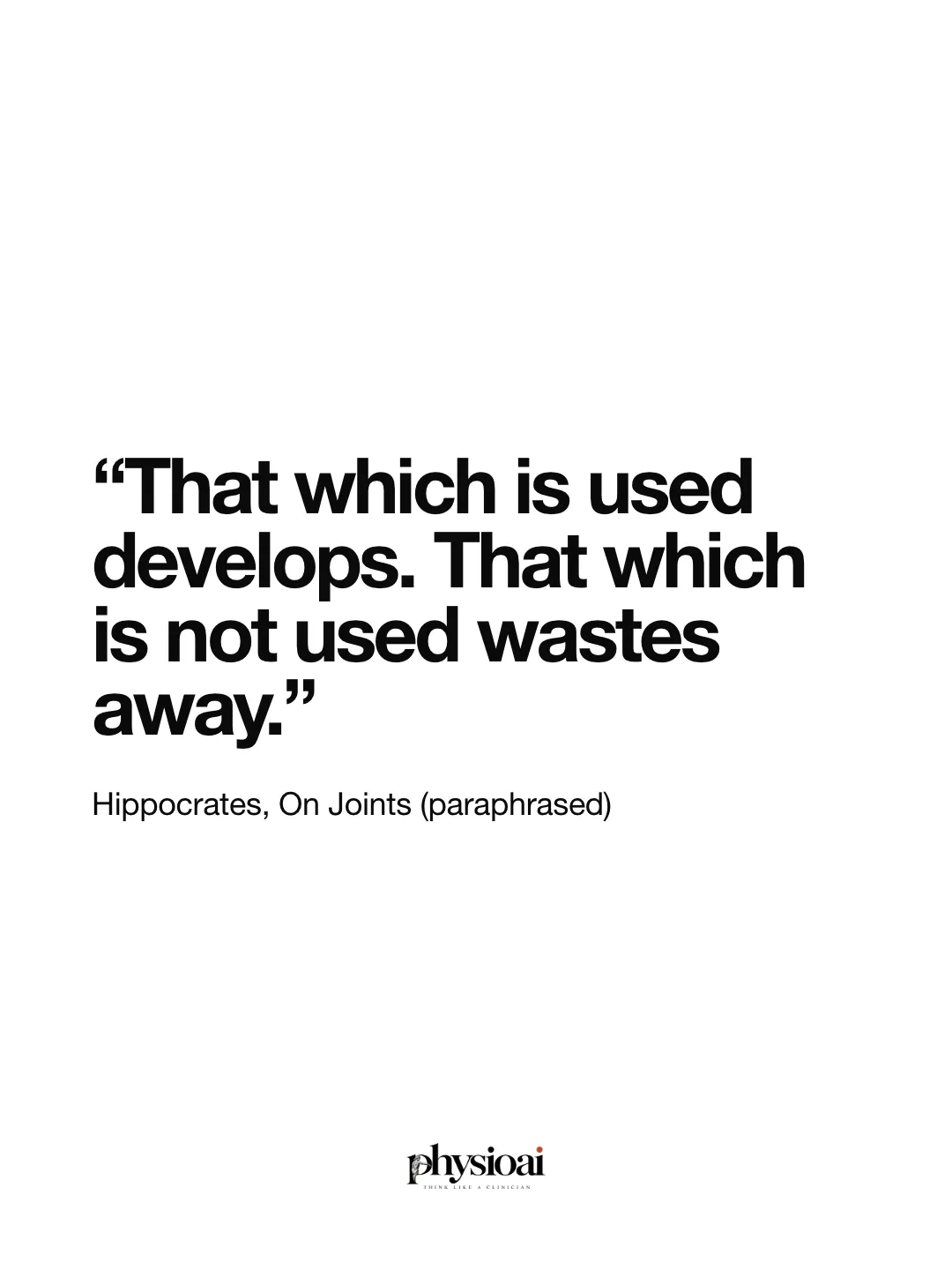
"That which is used develops. That which is not used wastes away."
Hippocrates, On Joints (paraphrased)
This is the principle of "use it or lose it", long before it was a slogan. Every physiotherapist sees it in practice. Muscles lose size and strength after a period of immobilisation. Joints stiffen when they are not moved. Bone and connective tissue adapt to the loads placed on them, and they lose capacity when those loads are taken away.
The clinical lesson is that rest has a cost. Protection after injury or surgery is sometimes necessary, but the longer a tissue goes unused, the more rehabilitation it will need later. Graded, early movement, within safe limits, is how we limit that loss.
2. Walking
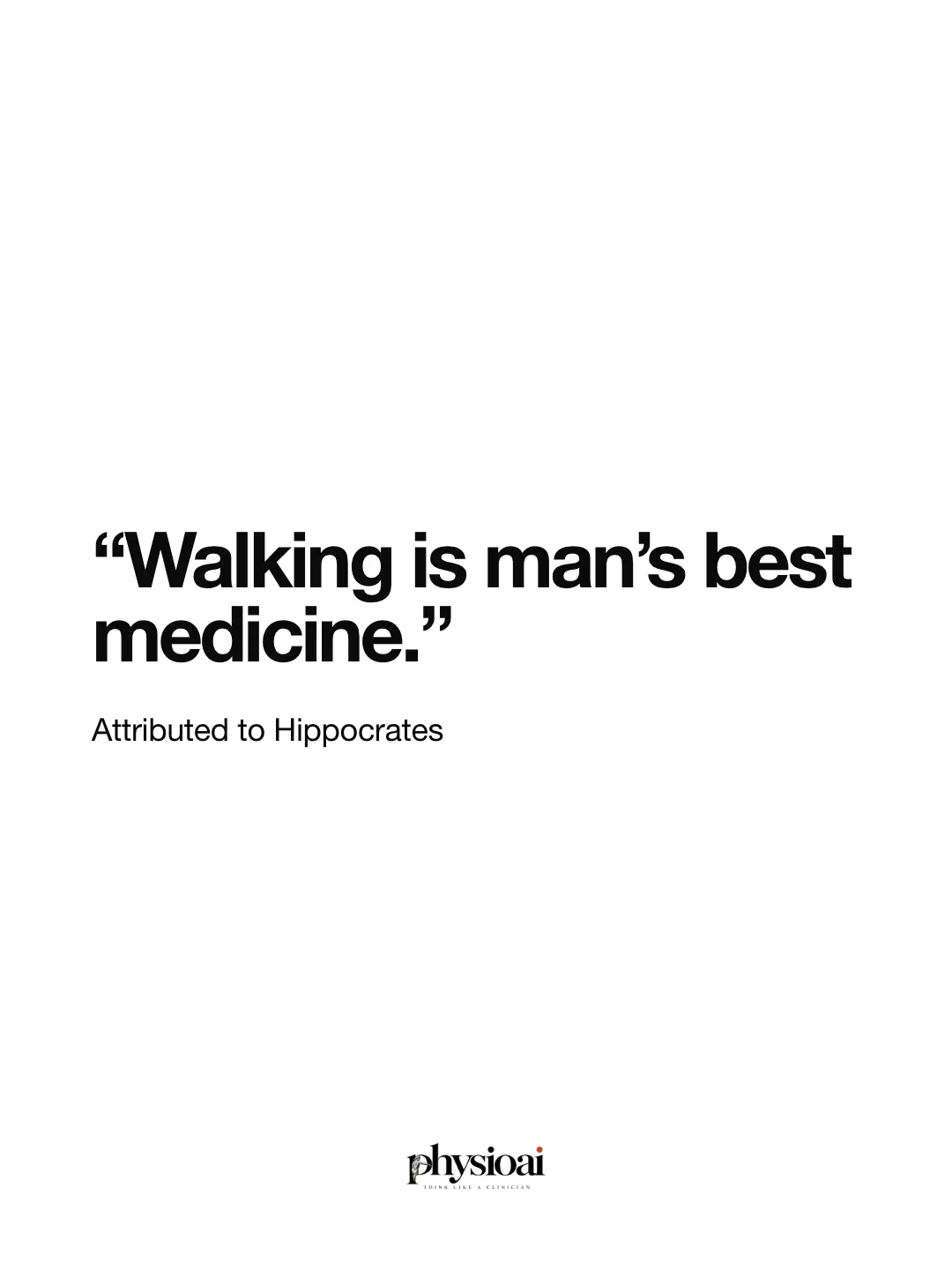
"Walking is man's best medicine."
Attributed to Hippocrates
Walking is still one of the simplest things we can prescribe. It needs no equipment, most patients can do it, and the dose is easy to adjust by time, distance, speed or terrain. It is a familiar part of rehabilitation across many areas, from musculoskeletal and cardiorespiratory care to neurological and older-adult programmes.
Its simplicity is also why it gets overlooked. A walking programme still needs a starting point, a progression and a reason the patient understands.
3. Hands-on skill
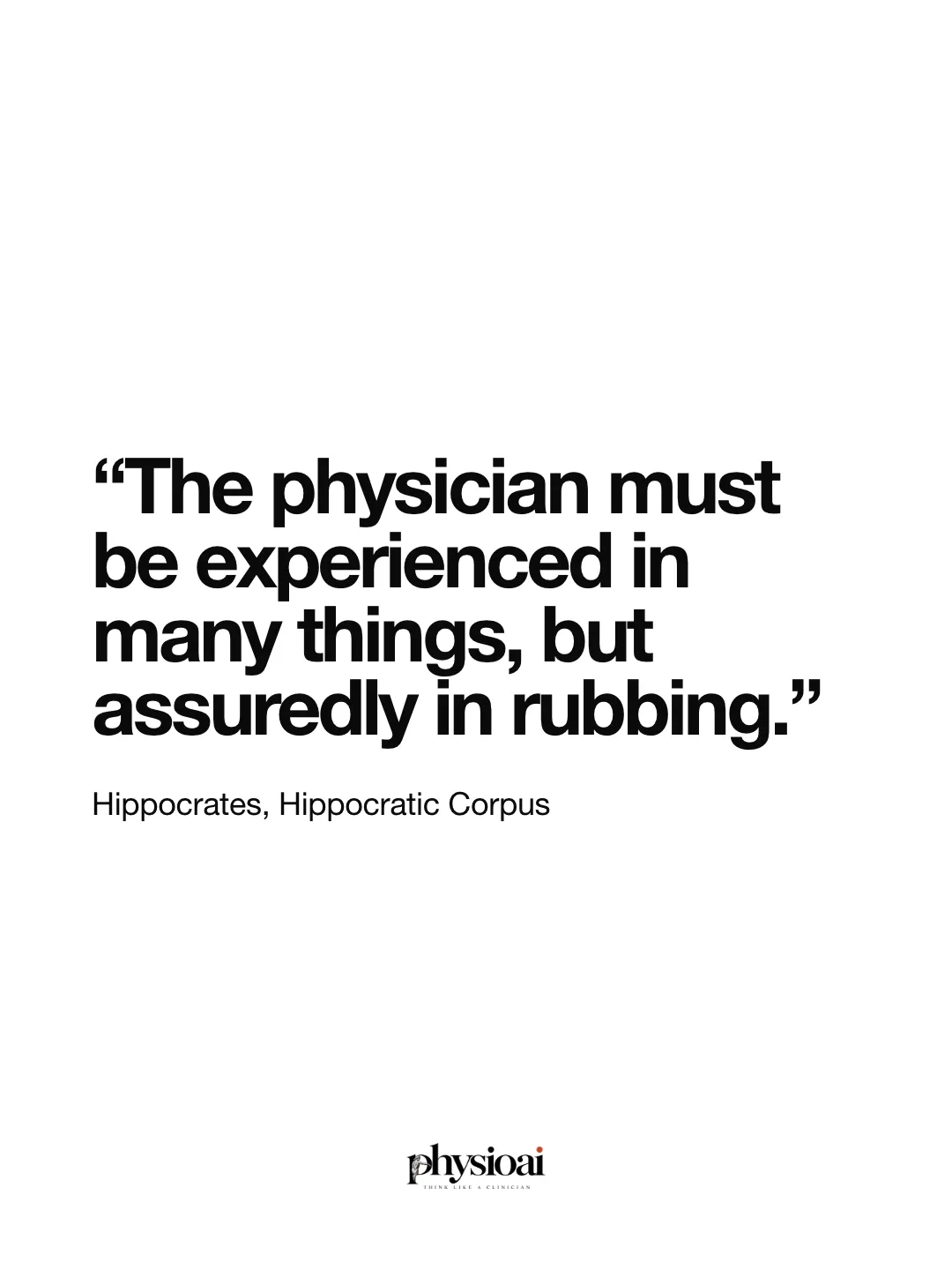
"The physician must be experienced in many things, but assuredly in rubbing."
Hippocrates, Hippocratic Corpus
Manual therapy was on the list from day one. "Rubbing" here refers to the hands-on treatment that later traditions developed into massage and other manual techniques.
For physiotherapists, the point is not that hands-on work replaces exercise or education. It is that skilled touch has been part of the healer's role for as long as there has been a written record of medicine, and that it is a skill worth learning properly.
4. Timing
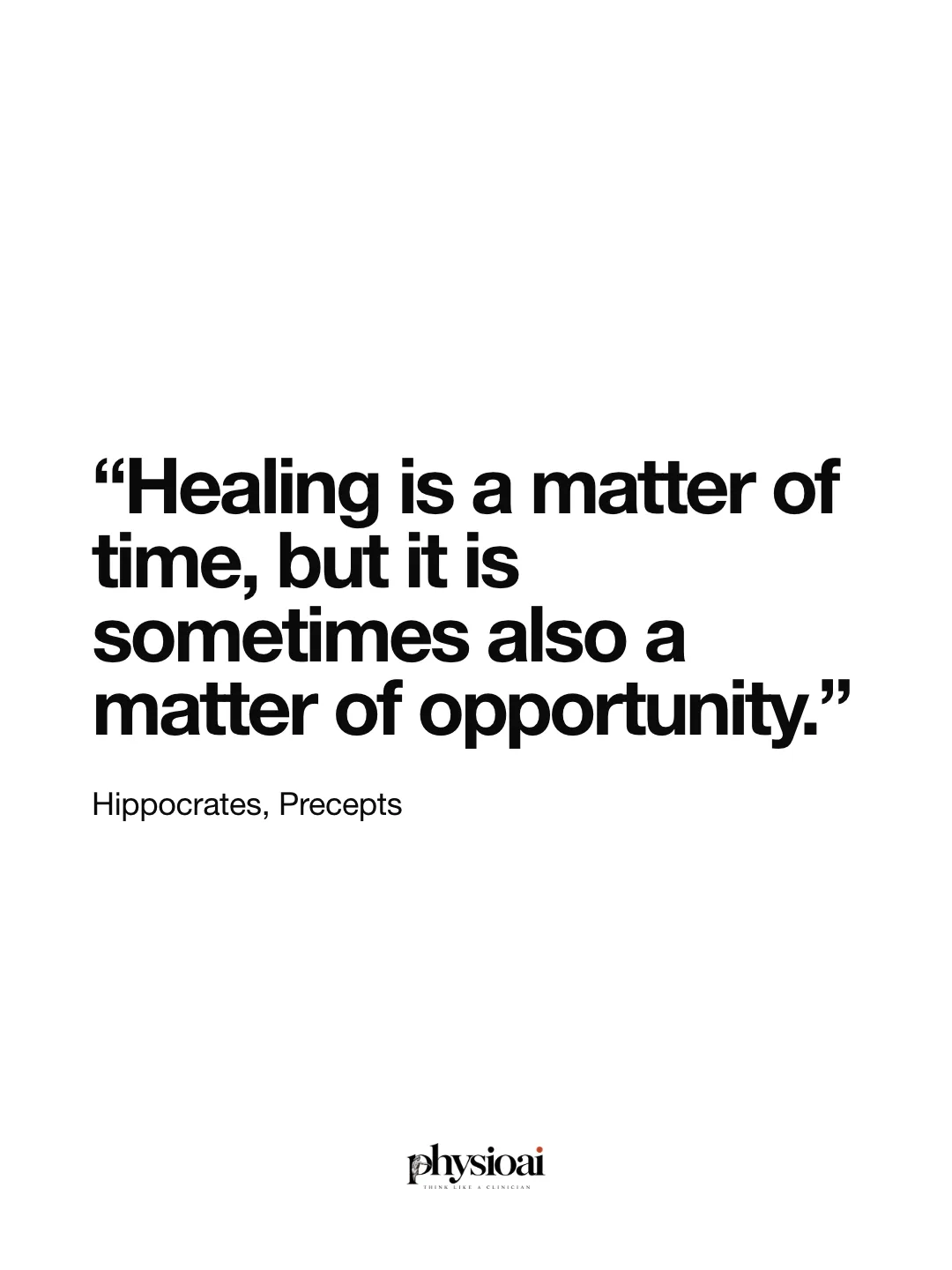
"Healing is a matter of time, but it is sometimes also a matter of opportunity."
Hippocrates, Precepts
Rehabilitation has windows. Knowing when to act matters as much as knowing what to do.
Tissue healing moves through recognised phases, and what is appropriate in one phase can be too much, or too little, in another. Loading a healing tissue too early can set recovery back. Waiting too long can let stiffness, weakness and fear of movement settle in. Good timing is a clinical judgement, made by matching the intervention to the stage of healing and to how the patient is responding.
5. Dosage
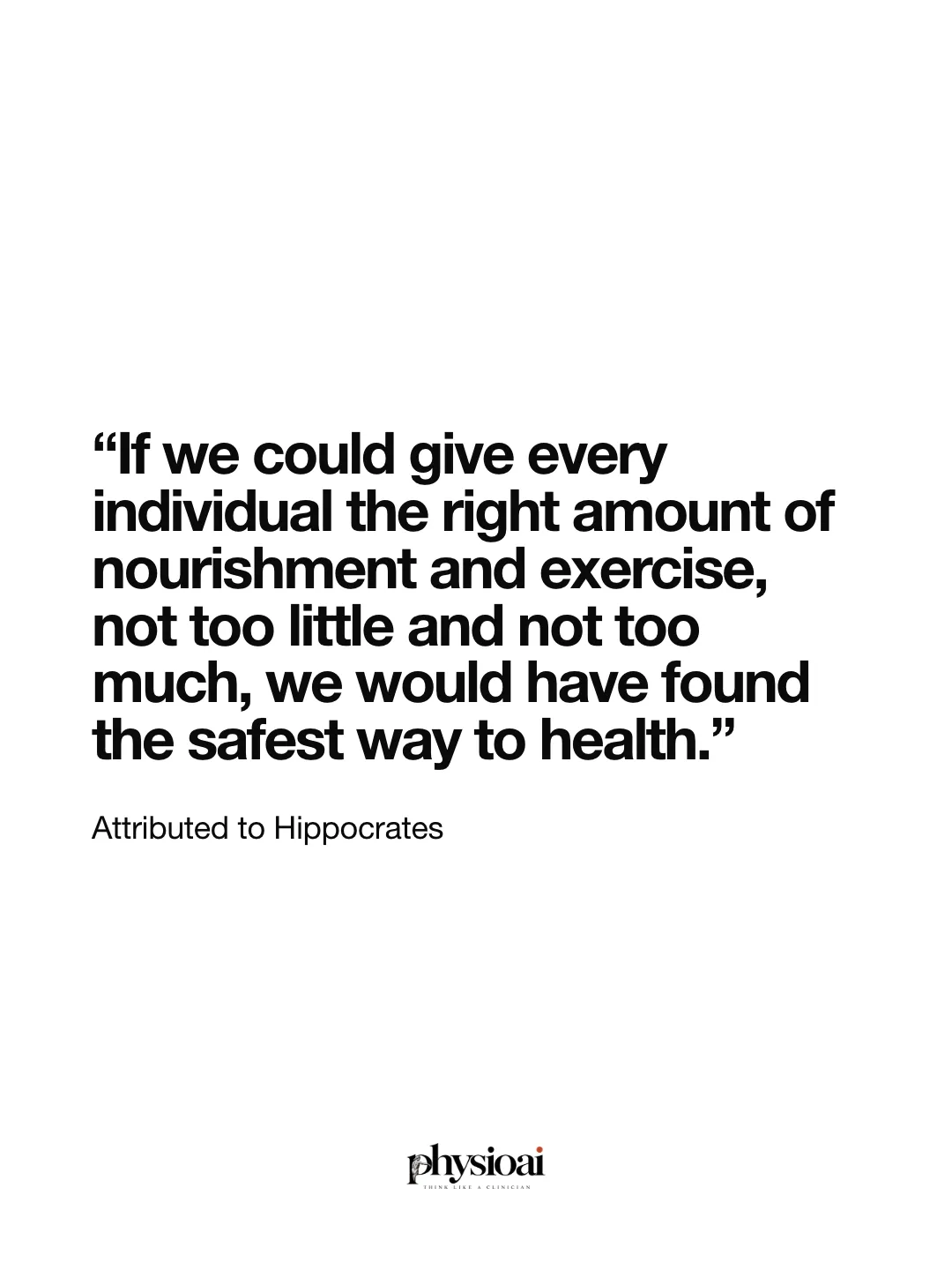
"If we could give every individual the right amount of nourishment and exercise, not too little and not too much, we would have found the safest way to health."
Attributed to Hippocrates
"Not too little and not too much" is dosage, the hardest part of every exercise prescription.
Choosing the right exercise is only half of the decision. The other half is how much: sets, repetitions, load, frequency, rest and progression. Too little and the tissue has no reason to adapt. Too much and pain, flare-ups or injury follow. The words "every individual" matter as well. There is no single correct dose. It depends on the person in front of you.
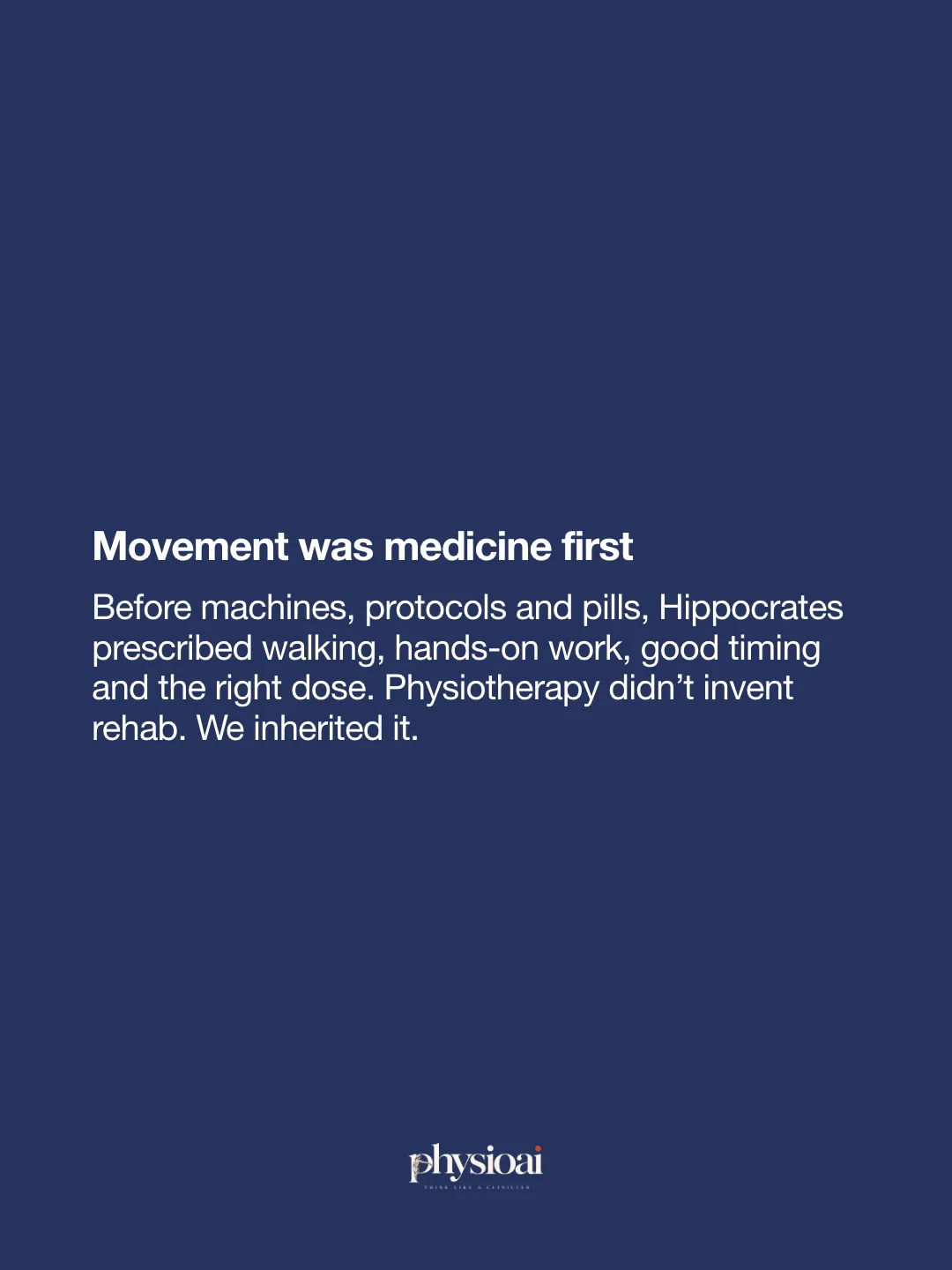
Movement was medicine first
Before machines, protocols and pills, Hippocrates prescribed walking, hands-on work, good timing and the right dose. Read together, the five lines describe the core of modern rehabilitation:
- Use the body, or it wastes away.
- Walking is a prescription in its own right.
- Hands-on skill belongs in the clinician's toolkit.
- Timing decides whether the right treatment helps.
- Dose decides whether it is safe.
Physiotherapy did not invent rehabilitation. We inherited it.
Learn the principles in depth
If you want to go deeper into exercise prescription and manual therapy, PhysioAI's clinical courses, such as Core Concepts of Exercise Rehab, cover these topics module by module, with lessons, flashcards and quizzes. Module 1 of every course is free. Browse the course catalogue.