Research roundup ·
Back Pain Dose, Knee OA, PRP and Dynamometry Research
Six 2026 studies on exercise dose for back pain, knee OA training, PRP pathways, handheld dynamometers, head impact markers and weekend warriors.

physioai
Instagram post
1/9
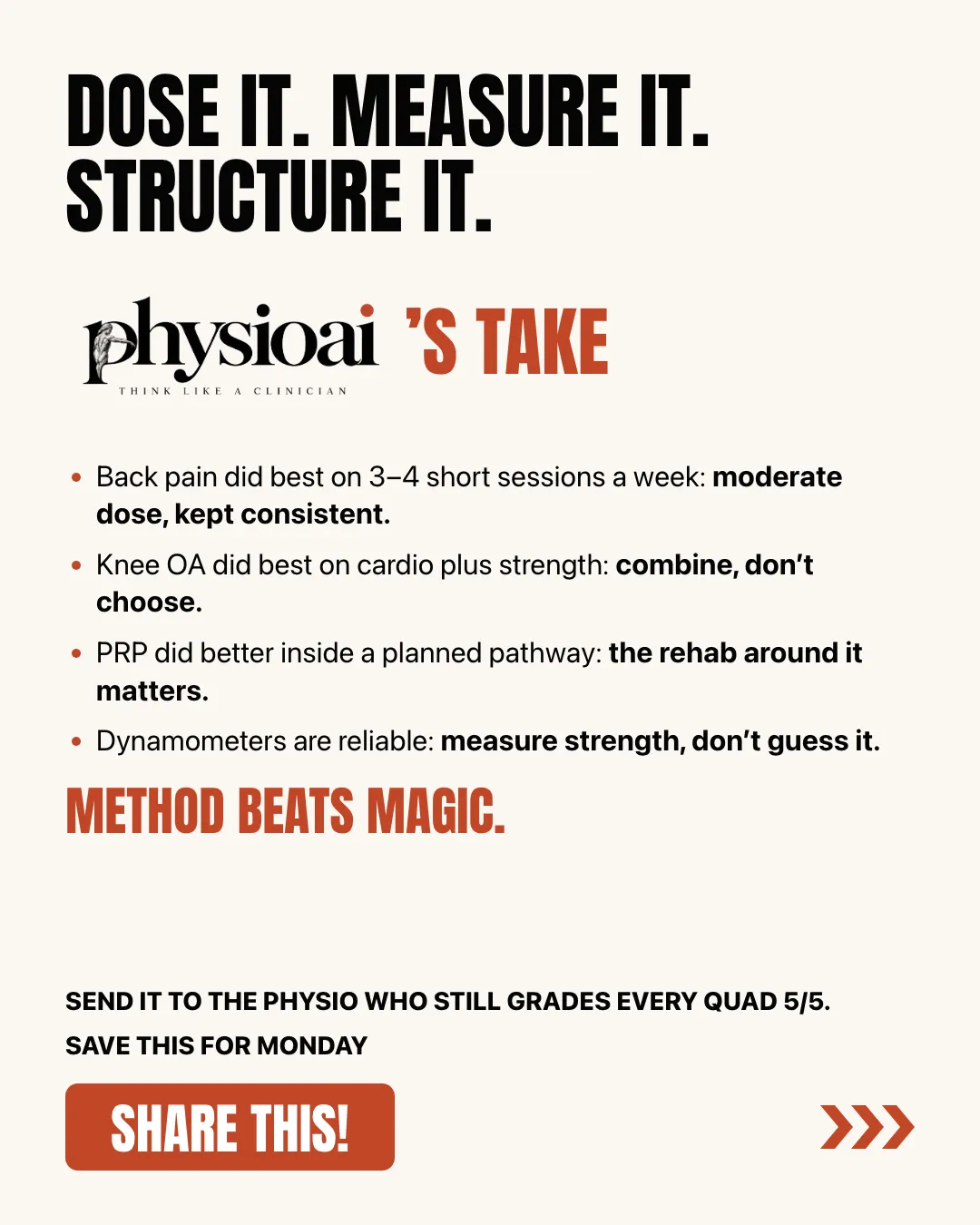

This roundup covers six sports medicine studies published in 2026: exercise dose for chronic low back pain, exercise type for knee osteoarthritis (OA), a structured platelet-rich plasma (PRP) pathway, handheld dynamometer reliability, blood markers after head impacts, and the "weekend warrior" activity pattern. The shared message is to dose exercise sensibly, measure outcomes objectively and plan care as a structured pathway.
Key takeaways
- For chronic low back pain, about three to four exercise sessions a week of 25–30 minutes was the best predicted dose; higher doses added little.
- In knee OA, combined aerobic and resistance training had the largest short-term effect on pain, function and quality of life.
- A structured PRP pathway with staged rehabilitation beat physician-directed PRP, but the trial had no placebo group.
- Handheld dynamometers were reliable for most knee and ankle strength tests, especially when strapped.
- Weekend warriors showed no clear mortality difference compared with people active across the week, on very low-certainty evidence.
Exercise dose for chronic low back pain
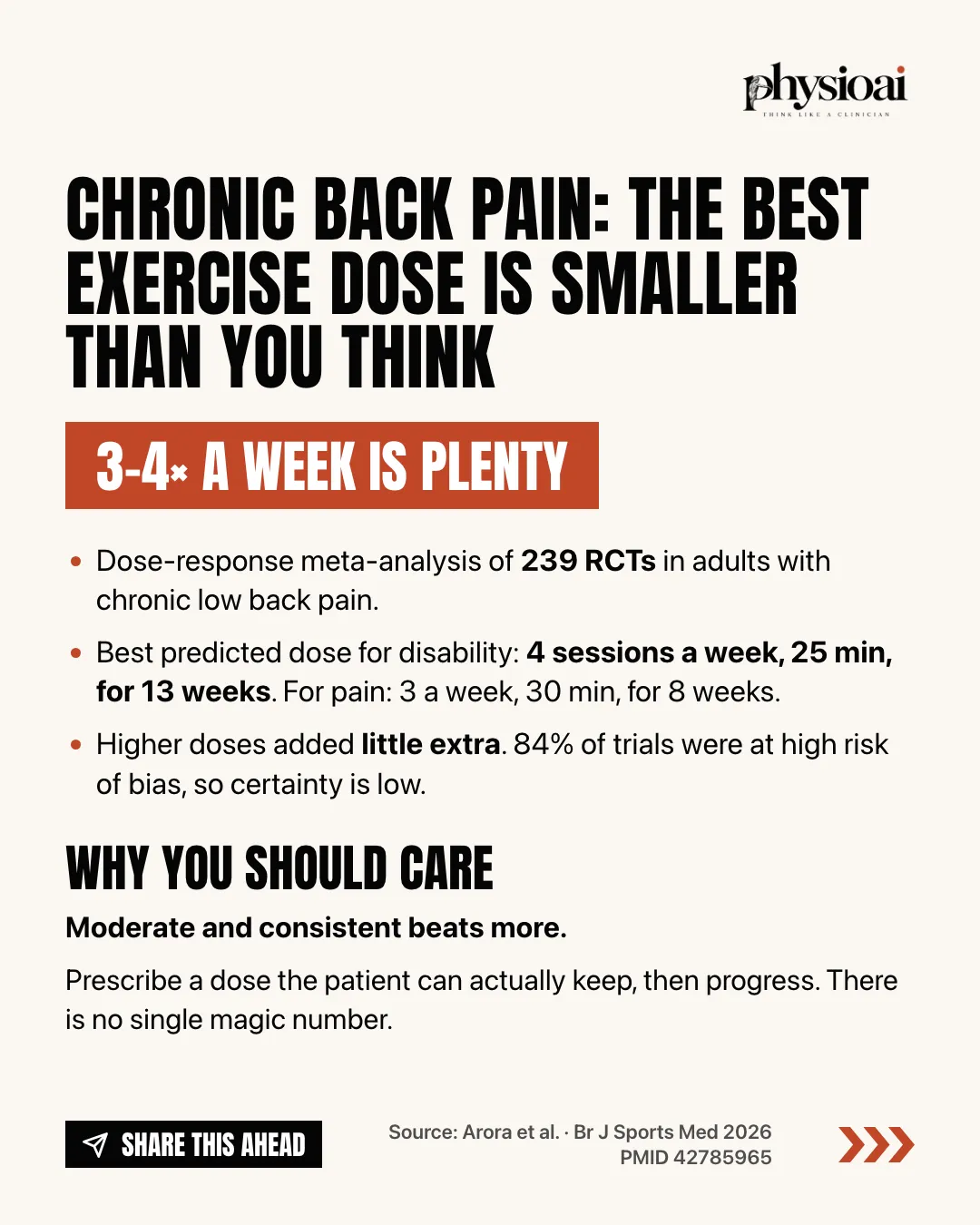
A dose-response network meta-analysis included 239 randomised trials in adults with chronic low back pain. The best predicted dose for reducing disability was four sessions a week of 25 minutes for 13 weeks. For pain, it was three sessions a week of 30 minutes for 8 weeks. Higher doses added little extra benefit. Of the included trials, 84% were at high risk of bias, so certainty is low.
What it means in the clinic: moderate, consistent exercise appears to be enough. Prescribe a dose the patient can keep up, then progress it. There is no single magic number.
Source: Arora et al., British Journal of Sports Medicine 2026 (PMID 42785965).
Knee OA: combined cardio and strength training
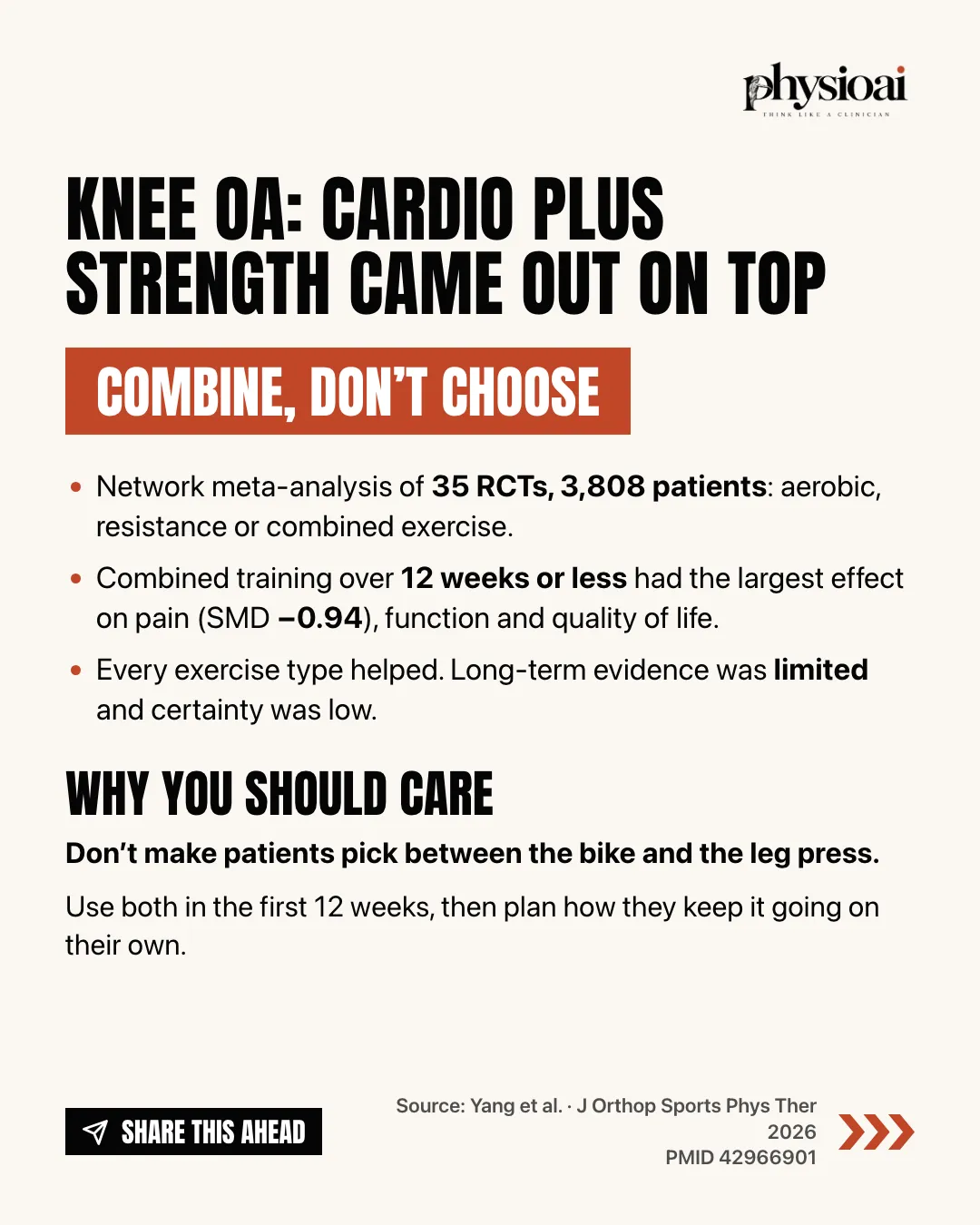
A Bayesian network meta-analysis of 35 randomised trials with 3,808 patients compared aerobic, resistance and combined exercise for knee OA. Combined training lasting 12 weeks or less had the largest effect on pain (standardised mean difference −0.94), function and quality of life. Every exercise type helped. Long-term evidence was limited and certainty was low.
What it means in the clinic: patients do not need to choose between the bike and the leg press. Use both in the first 12 weeks, then plan how the patient will keep exercising independently.
Source: Yang et al., Journal of Orthopaedic and Sports Physical Therapy 2026 (PMID 42966901).
PRP for knee OA: a structured pathway vs usual practice
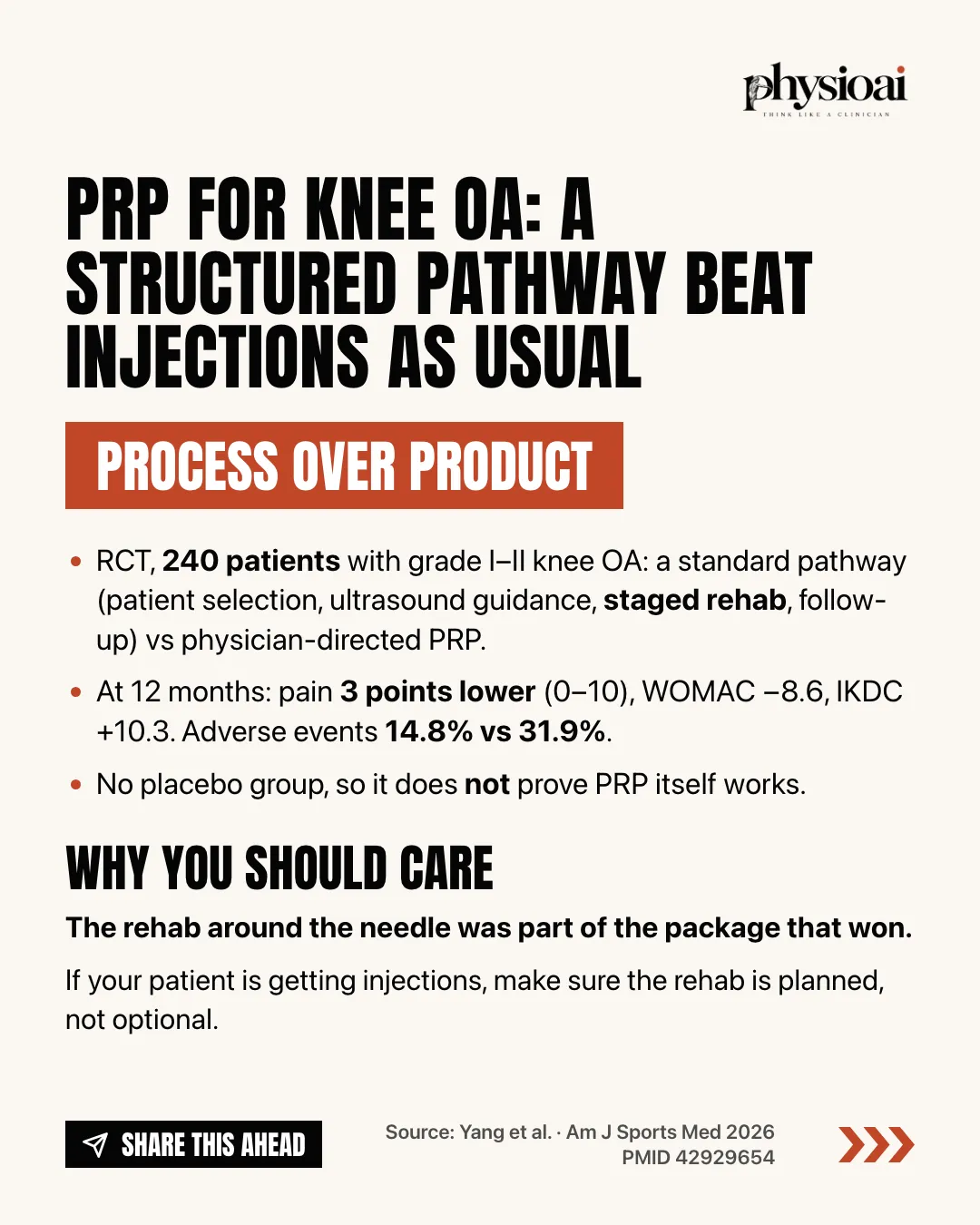
A multicentre randomised trial enrolled 240 patients with Kellgren-Lawrence grade I–II knee OA. One group followed a standardised clinical pathway: patient selection, ultrasound-guided injection, staged rehabilitation and planned follow-up. The other received physician-directed PRP as usual. At 12 months, the pathway group had pain scores 3 points lower on a 0–10 scale, a WOMAC score 8.6 points better and an IKDC score 10.3 points higher. Adverse events occurred in 14.8% of the pathway group and 31.9% of the usual-care group. There was no placebo group, and the pathway bundled several components, so the trial does not show that PRP itself works.
What it means in the clinic: the rehabilitation around the injection was part of the package that performed better. If a patient is having injections, make sure the rehab is planned rather than optional.
Source: Yang et al., American Journal of Sports Medicine 2026 (PMID 42929654).
Handheld dynamometers are reliable enough for clinic use
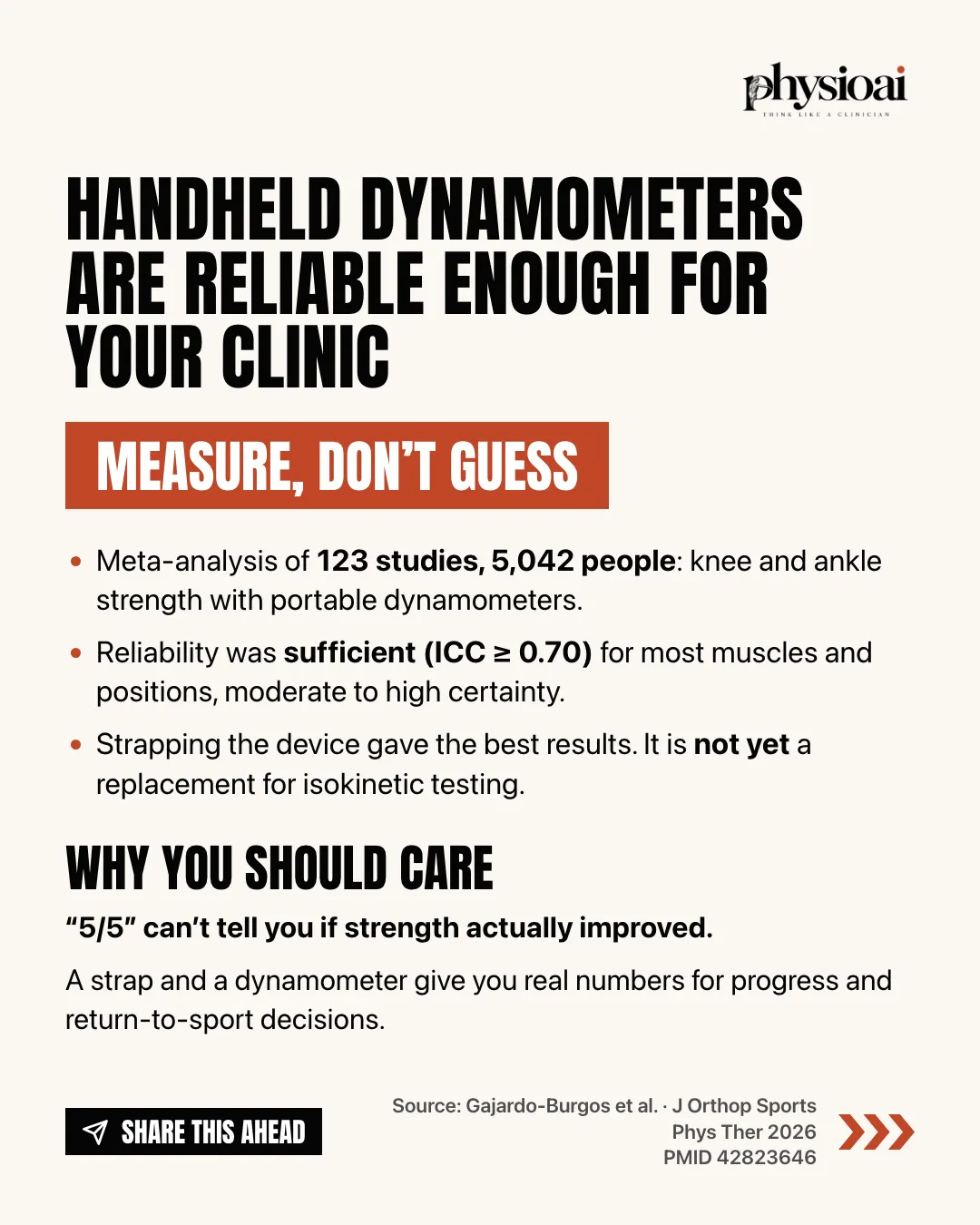
A meta-analysis of 123 studies with 5,042 people, using the COSMIN methodology, assessed portable dynamometers for knee and ankle strength. Reliability was sufficient (intraclass correlation coefficient of at least 0.70) for most muscles and test positions, with moderate to high certainty. Strapping the device to stabilise it gave the best results. Portable dynamometry is not yet a replacement for isokinetic testing.
What it means in the clinic: a manual muscle test grade of 5/5 cannot show whether strength has actually improved. A dynamometer and a strap give real numbers for tracking progress and supporting return-to-sport decisions.
Source: Gajardo-Burgos et al., Journal of Orthopaedic and Sports Physical Therapy 2026 (PMID 42823646).
Head impacts and blood markers of neural damage
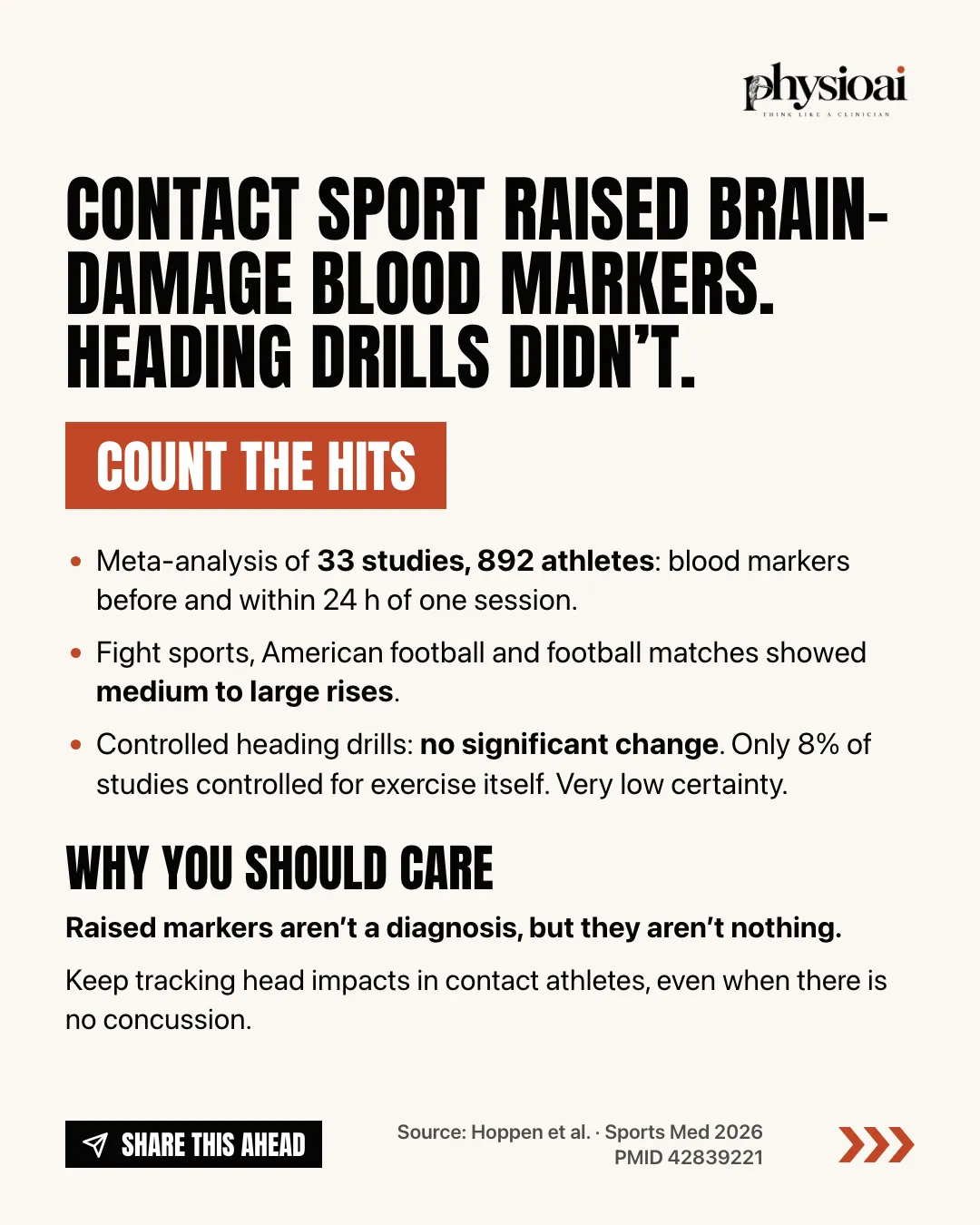
A meta-analysis of 33 studies with 892 athletes measured blood biomarkers of neural damage before and within 24 hours of a single session of contact sport. Combat sports, American football and football (soccer) matches showed medium to large increases. Controlled heading drills showed no significant change. Only 8% of studies controlled for the effect of exercise itself, and the certainty of evidence is very low.
What it means in the clinic: raised biomarkers are not a diagnosis, but they are worth noting. Keep monitoring head impact exposure in contact athletes, even when there is no diagnosed concussion.
Source: Hoppen et al., Sports Medicine 2026 (PMID 42839221).
Weekend warriors vs regularly active adults
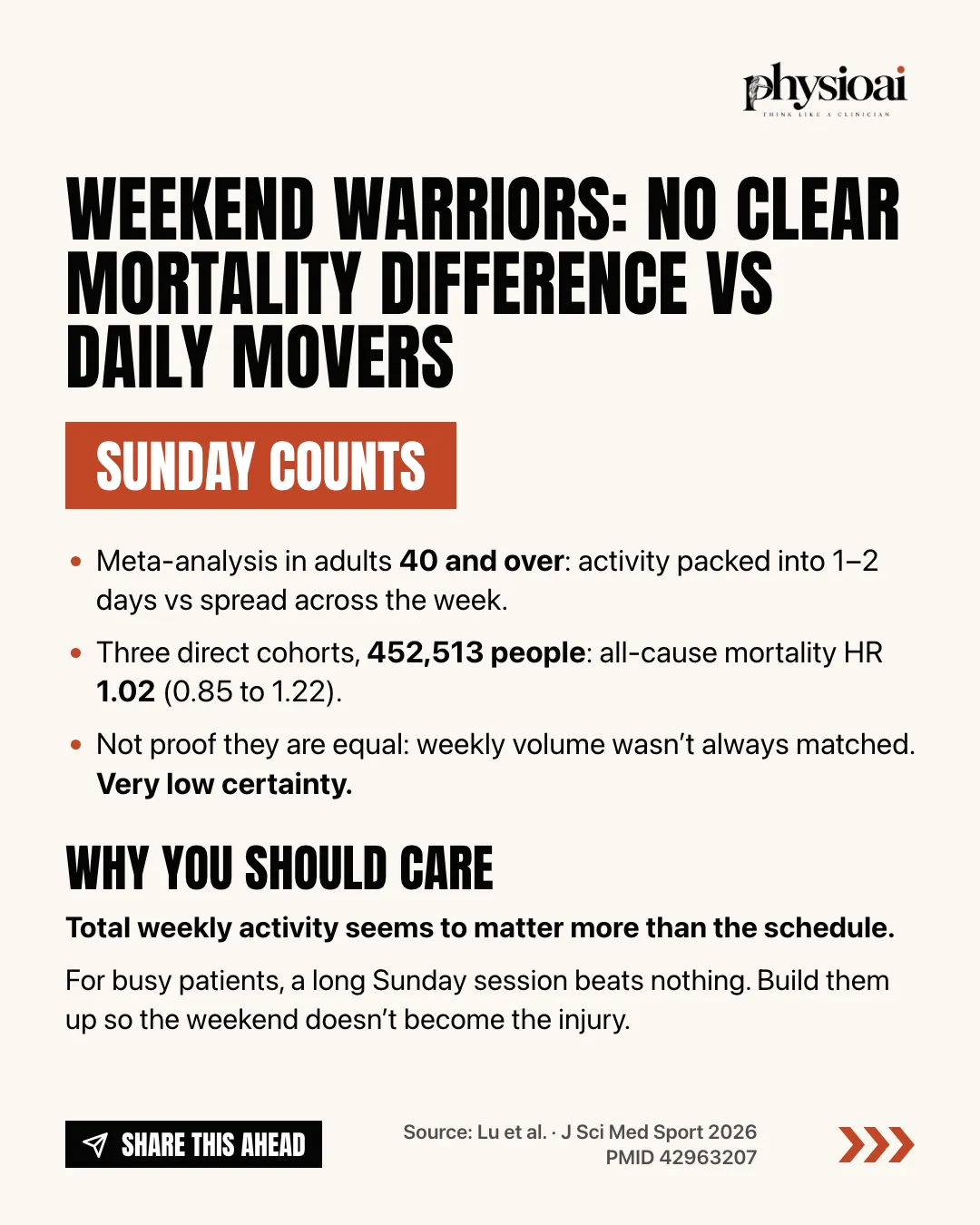
A meta-analysis in adults aged 40 and over compared people who concentrated their physical activity into one or two days a week with those who spread it across the week. In three cohorts that compared the patterns directly, covering 452,513 people, there was no clear difference in all-cause mortality (hazard ratio 1.02, interval 0.85 to 1.22). This does not prove the patterns are equivalent: weekly activity volume was not always matched, and certainty is very low.
What it means in the clinic: total weekly activity appears to matter more than how it is scheduled. For busy patients, one longer weekend session is better than none. Build their capacity gradually so the weekend session does not become the cause of injury.
Source: Lu et al., Journal of Science and Medicine in Sport 2026 (PMID 42963207).
The pattern across these studies
Back pain responded best to a moderate, consistent dose. Knee OA did best with combined training. PRP performed better inside a planned pathway with rehabilitation, and strength can be measured reliably in an ordinary clinic. The practical lesson: dose it, measure it, and structure it.
Follow the evidence with PhysioAI
PhysioAI's Advances feed and Review of Literature help you keep up with new physiotherapy research. Filter papers by specialty and evidence type, read AI summaries grounded in each abstract, and turn a clinical question into a screened, cited review built from real papers. Always verify key findings against the original studies.