Research roundup ·
Spinal Cord Stimulation and Back Pain: Rehab Research
Seven rehab studies on spinal cord stimulation, brain-spine interfaces, exoskeleton dosing and low back pain, and what each means for physiotherapists.

physioai
Instagram post
1/10


This roundup covers seven rehabilitation studies: three on spinal cord stimulation after spinal cord injury (SCI), one on exoskeleton training dose, and three on low back pain. The common thread is that technology and simple interventions both depend on well-designed, physiotherapist-led training to produce results.
Key takeaways
- Epidural and brain-spine stimulation let people with paralysis stand and walk, but the gains came from stimulation combined with structured neurorehabilitation.
- Non-invasive stimulation over the neck, delivered during therapy, improved hand strength and function in chronic cervical SCI.
- A progressive walking program with education nearly doubled the time before low back pain came back.
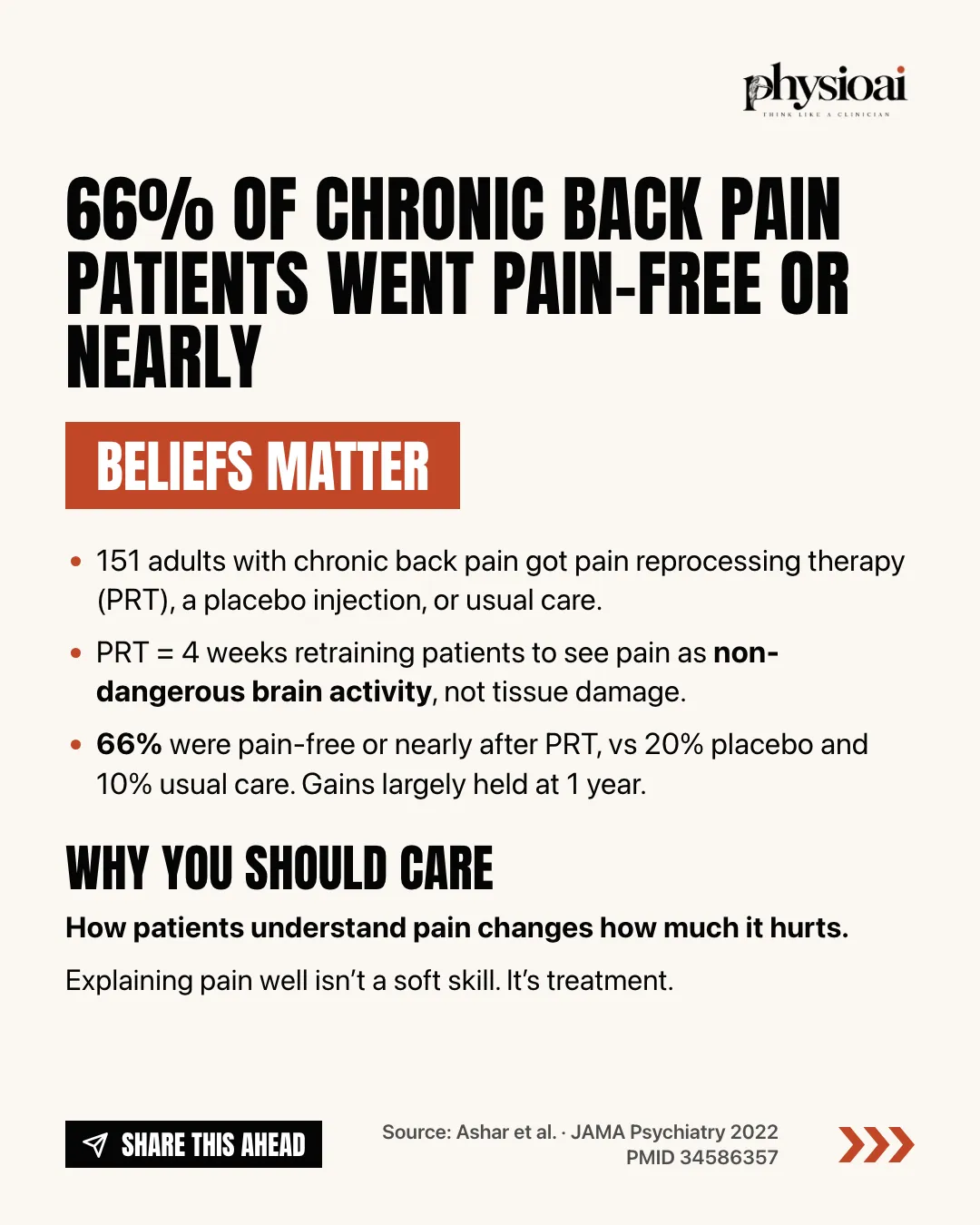
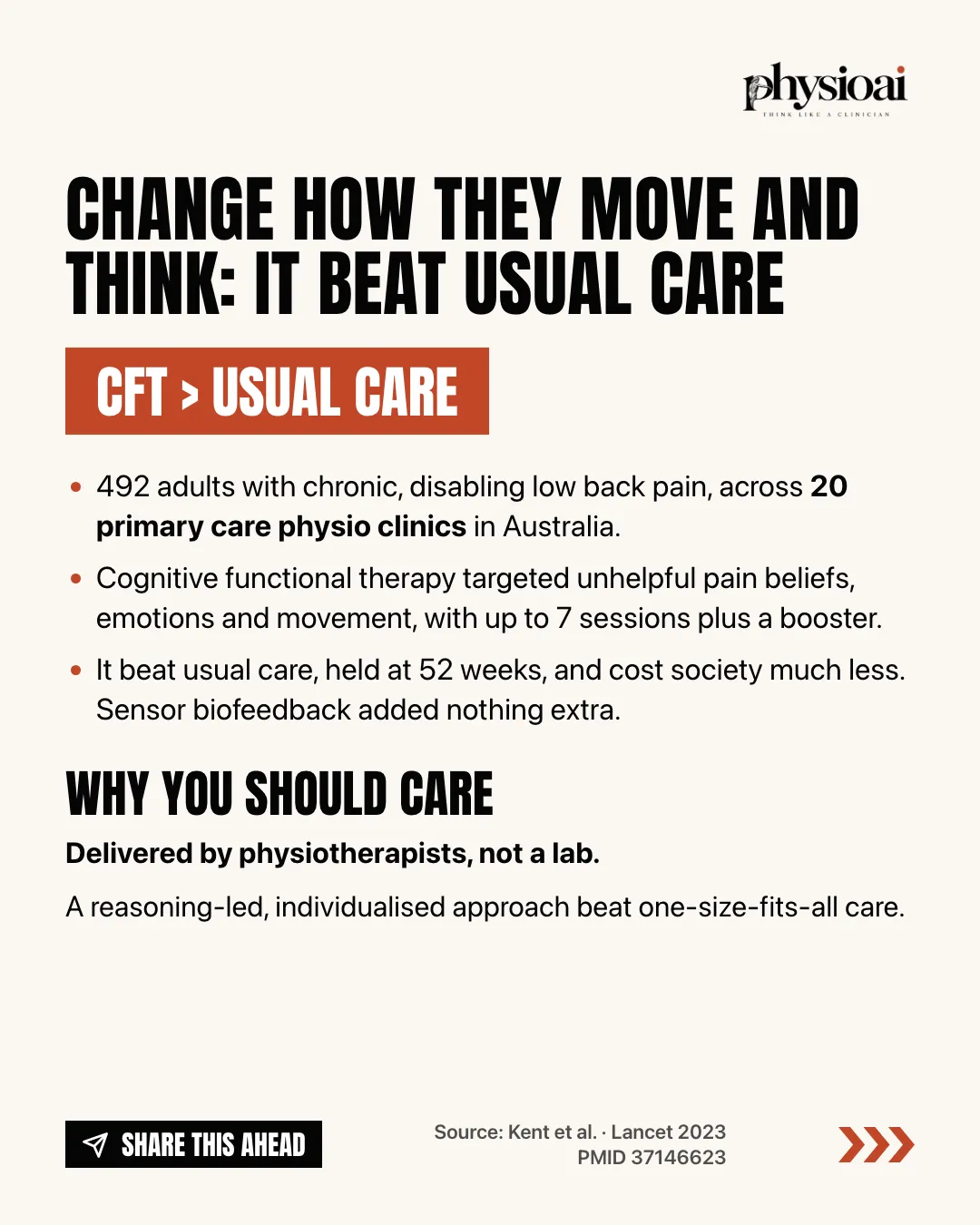
- Pain reprocessing therapy and cognitive functional therapy both beat usual care for chronic back pain, which shows how much pain beliefs matter.
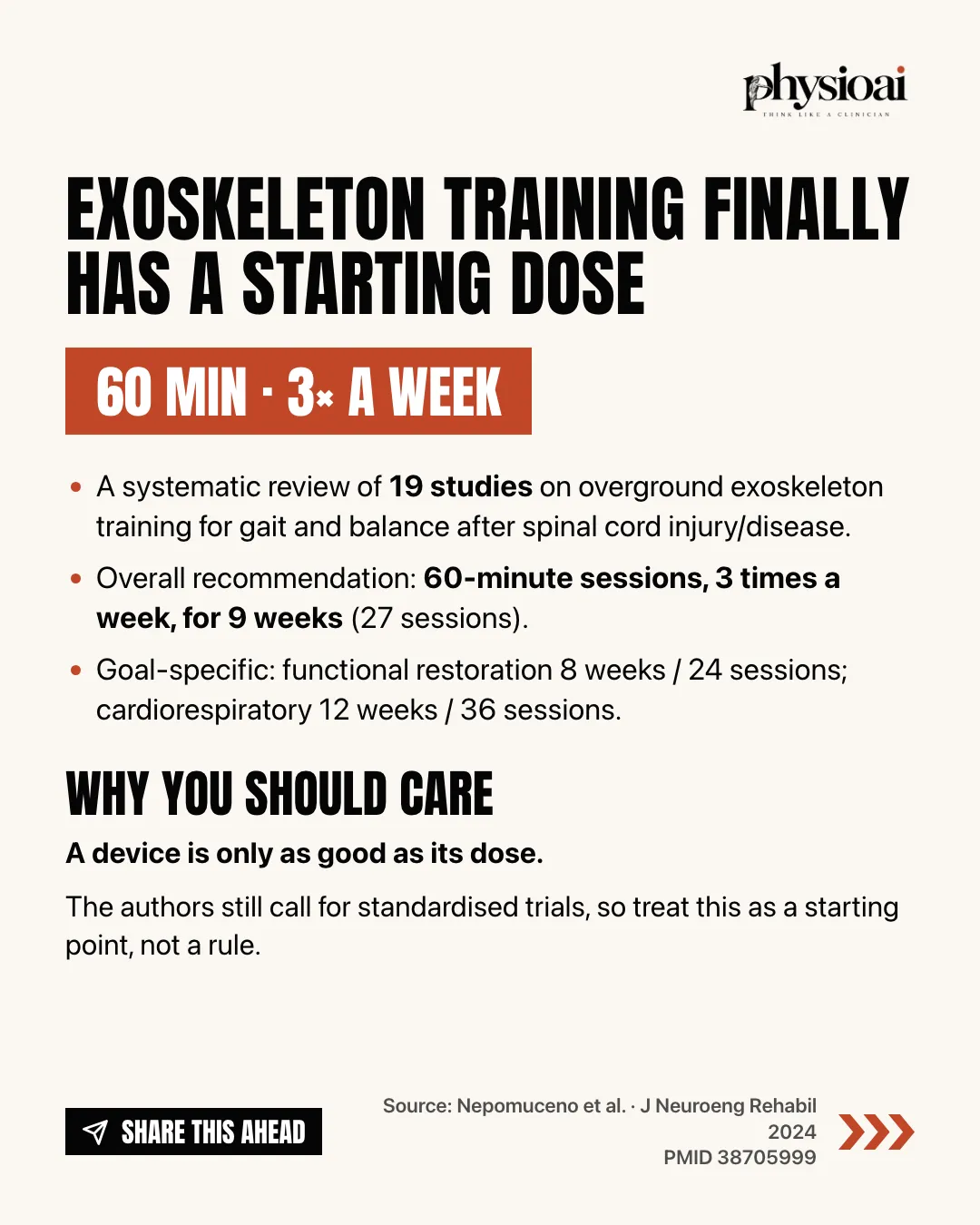
- A systematic review suggests a starting dose for overground exoskeleton gait training after SCI, but the authors call for standardised trials.
Spinal stimulation let people with complete paralysis stand and walk
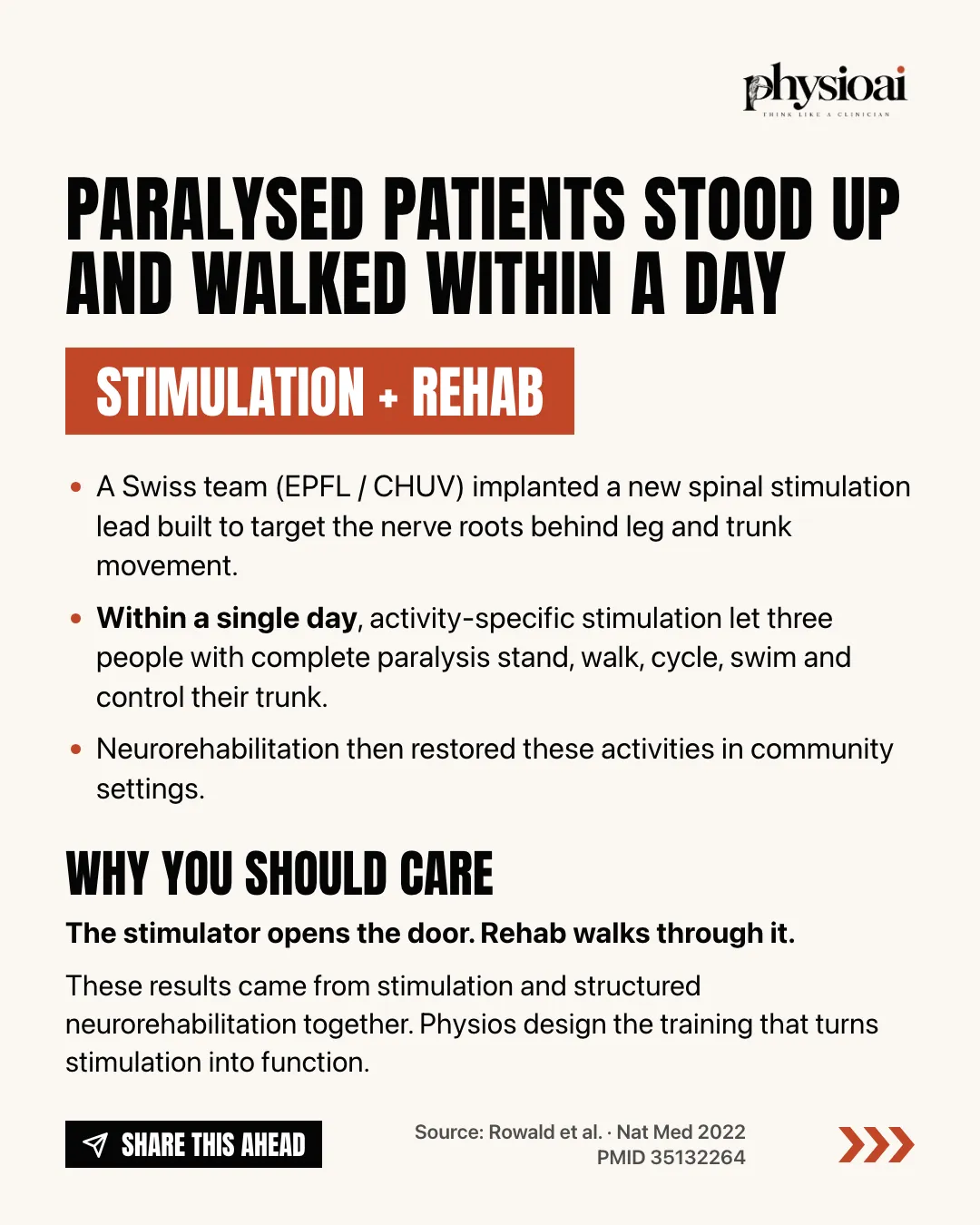
A Swiss team at EPFL and CHUV implanted a new epidural stimulation lead designed to target the nerve roots involved in leg and trunk movement. Using activity-specific stimulation programs, three people with complete paralysis were able to stand, walk, cycle, swim and control their trunk within a single day. Neurorehabilitation then restored these activities in community settings.
What it means in the clinic: the stimulator makes movement possible, but the training turns it into function. Physiotherapists design that training.
Source: Rowald et al., Nature Medicine 2022 (PMID 35132264).
A brain-spine interface restored natural walking control
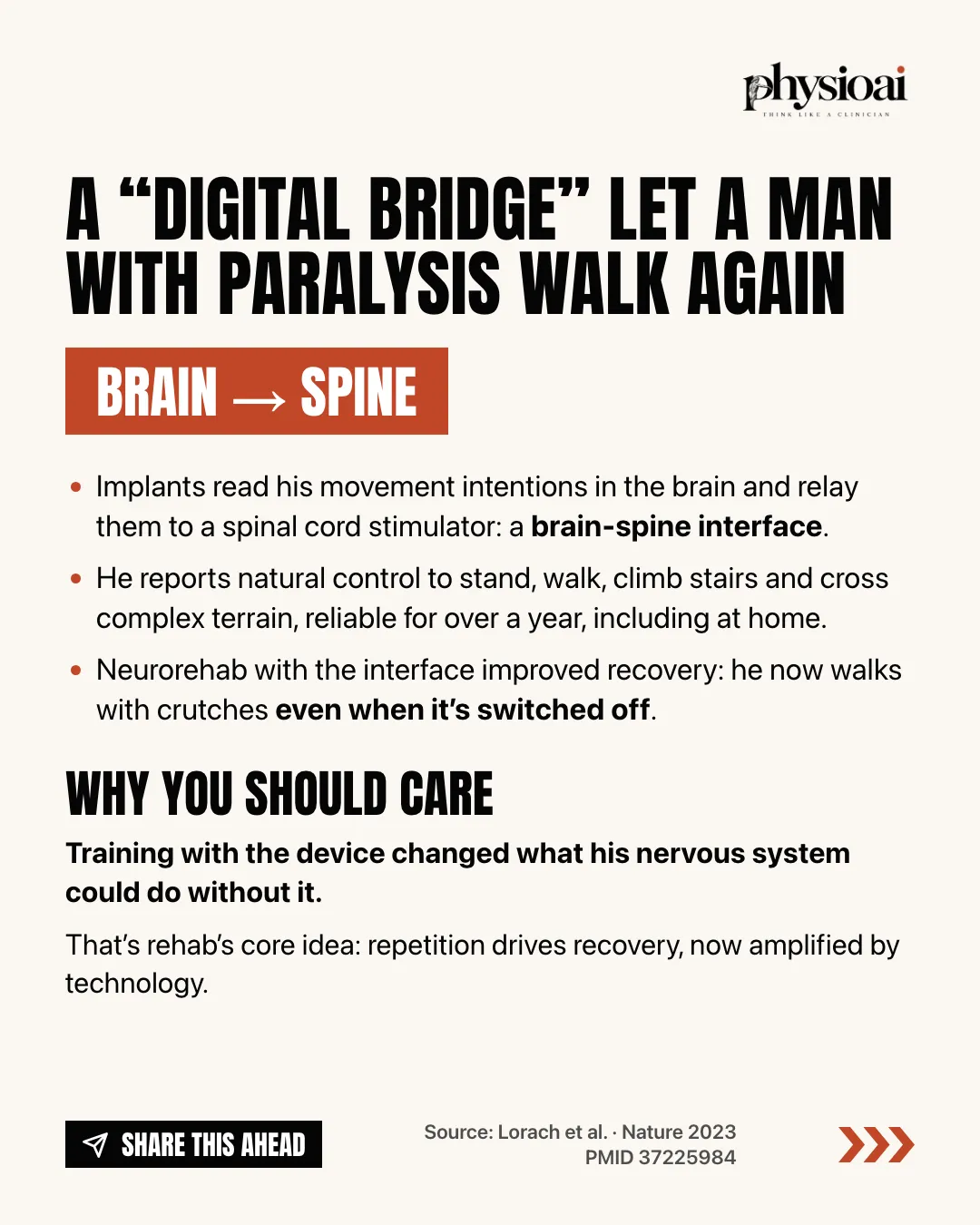
In this study, implants recorded a man's movement intentions in the brain and relayed them wirelessly to a spinal cord stimulator, creating what the authors describe as a "digital bridge". He reported natural control to stand, walk, climb stairs and cross complex terrain, and the system stayed reliable for over a year, including at home. Neurorehabilitation with the interface also improved recovery: he was able to walk with crutches even when the interface was switched off.
What it means in the clinic: training with the device changed what his nervous system could do without it. That is the core principle of neurorehabilitation, repetitive task-specific practice driving recovery, now supported by technology.
Source: Lorach et al., Nature 2023 (PMID 37225984).
Non-invasive stimulation improved hand function in chronic cervical SCI
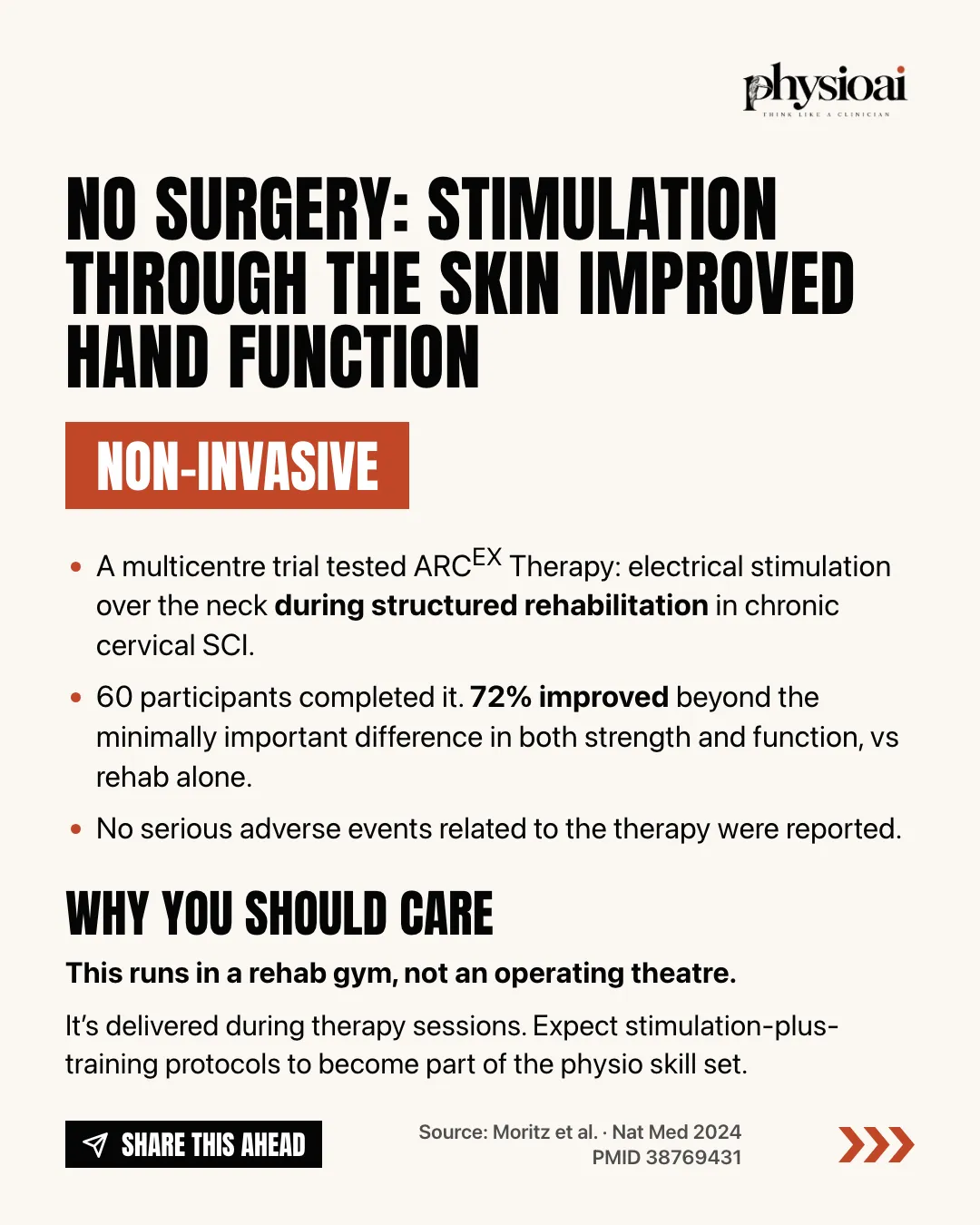
A multicentre trial (Up-LIFT) tested ARC-EX therapy: transcutaneous electrical stimulation over the cervical spine, delivered during structured rehabilitation, in people with chronic cervical SCI. Sixty participants completed the trial. Of these, 72% improved beyond the minimally important difference in both strength and function. No serious adverse events related to the therapy were reported. The device received FDA De Novo clearance in December 2024 as an adjunct to rehabilitation.
What it means in the clinic: this happens in a rehab gym, not an operating theatre, and it is delivered during therapy sessions. Expect stimulation-plus-training protocols to become part of the physiotherapy skill set.
Source: Moritz et al., Nature Medicine 2024 (PMID 38769431).
A walking program delayed the return of low back pain
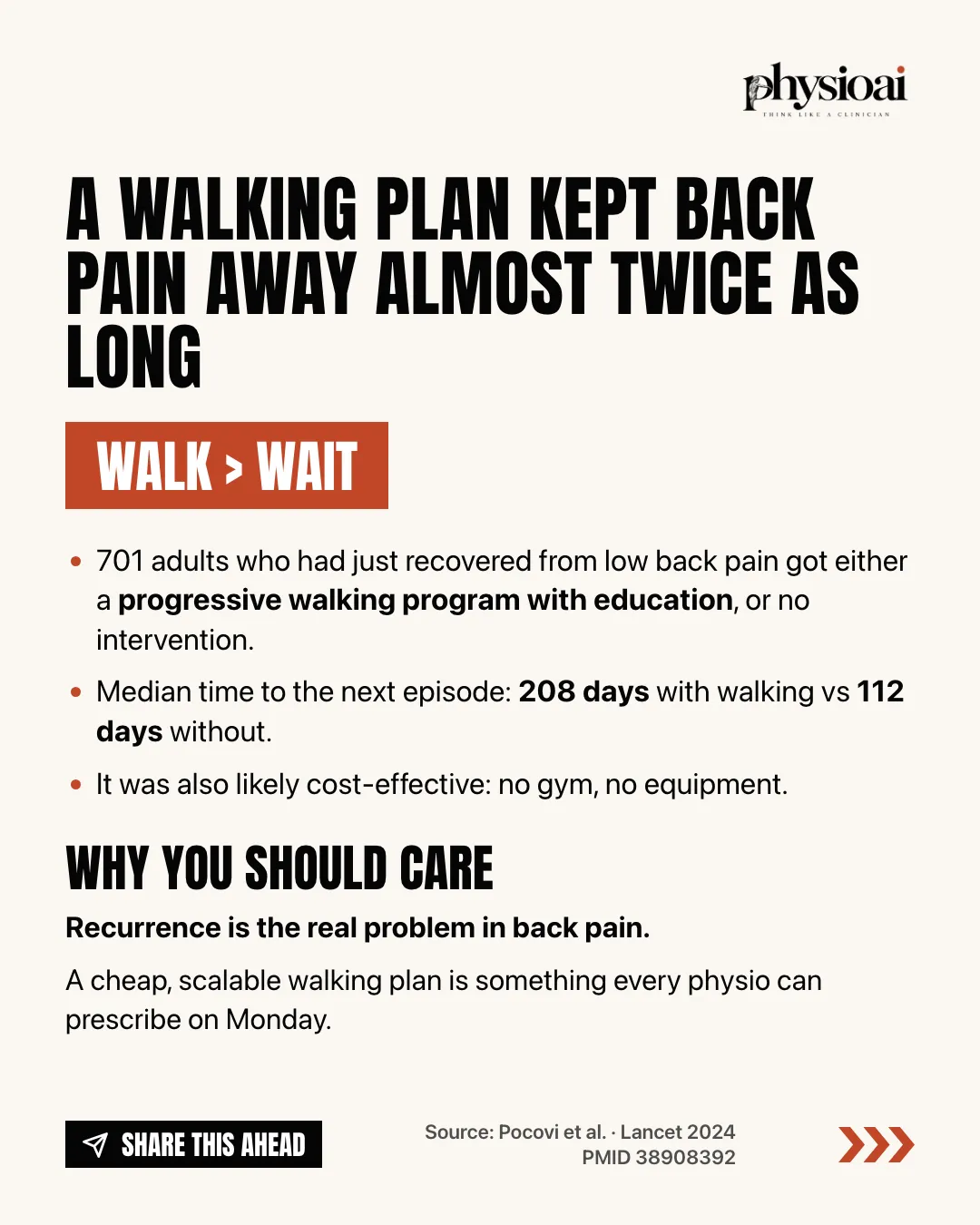
The WalkBack trial enrolled 701 adults who had recently recovered from an episode of low back pain. They received either an individualised, progressive walking program with education, or no intervention. The median time to the next episode was 208 days in the walking group and 112 days in the control group. The program was also likely to be cost-effective, needing no gym or equipment.
What it means in the clinic: recurrence is one of the biggest problems in back pain. A walking plan is cheap, scalable and something any physiotherapist can prescribe after an episode settles.
Source: Pocovi et al., The Lancet 2024 (PMID 38908392).
Pain reprocessing therapy for chronic back pain
In this trial, 151 adults with chronic back pain received pain reprocessing therapy (PRT), a placebo injection, or usual care. PRT ran over four weeks and taught patients to reappraise their pain as non-dangerous brain activity rather than a sign of tissue damage. After treatment, 66% of the PRT group were pain-free or nearly pain-free, compared with 20% in the placebo group and 10% with usual care. The gains were largely maintained at one year.
What it means in the clinic: how patients understand their pain changes how much it hurts. Explaining pain well is part of treatment, not a soft extra.
Source: Ashar et al., JAMA Psychiatry 2022 (PMID 34586357).
Cognitive functional therapy beat usual care
The RESTORE trial included 492 adults with chronic, disabling low back pain, treated across 20 primary care physiotherapy clinics in Australia. Cognitive functional therapy (CFT) targeted unhelpful pain beliefs, emotional responses and movement behaviour, delivered in up to seven sessions plus a booster. CFT produced larger improvements in disability than usual care, the effect held at 52 weeks, and it cost society much less. Adding sensor-based movement biofeedback gave no extra benefit.
What it means in the clinic: this was delivered by physiotherapists in ordinary clinics. A reasoning-led, individualised approach outperformed one-size-fits-all care.
Source: Kent et al., The Lancet 2023 (PMID 37146623).
A starting dose for exoskeleton gait training after SCI
A systematic review of 19 studies looked at overground exoskeleton training for gait and balance in people with spinal cord injury or disease. The overall recommendation was 60-minute sessions, three times a week, for nine weeks (27 sessions). The suggested dose varied by goal: about 8 weeks (24 sessions) for functional restoration and 12 weeks (36 sessions) for cardiorespiratory outcomes. The authors still call for standardised trials.
What it means in the clinic: powered exoskeletons allow upright, high-repetition stepping practice, but a device is only as useful as its dose. Treat these numbers as a starting point, not a fixed rule.
Source: Nepomuceno et al., Journal of NeuroEngineering and Rehabilitation 2024 (PMID 38705999).
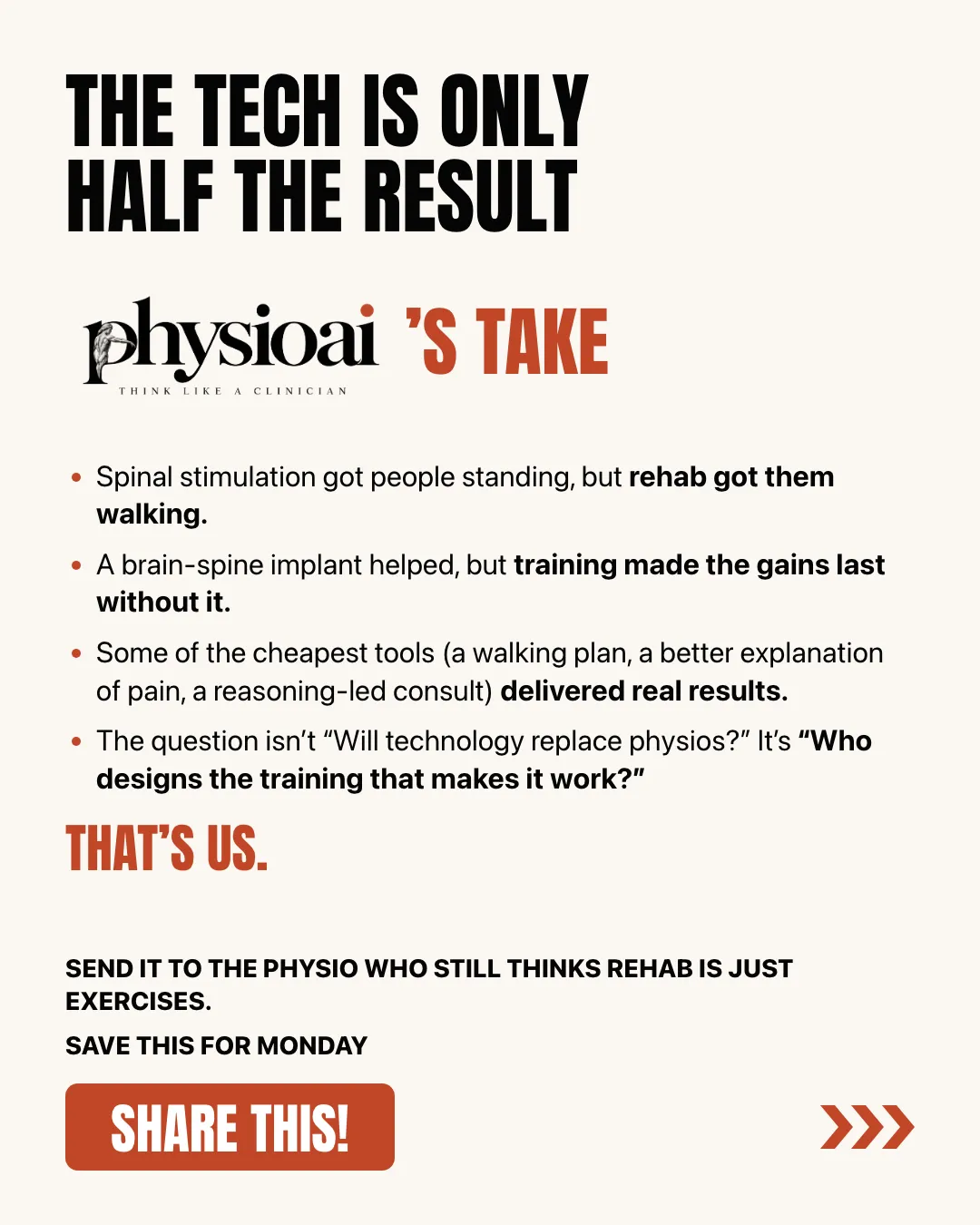
The pattern across these studies
Spinal stimulation got people standing, but rehabilitation got them walking. A brain-spine implant helped, but training made gains that lasted when it was switched off. Some of the cheapest tools in this list, a walking plan, a clear explanation of pain and a reasoning-led consultation, delivered real results. The useful question for the profession is not whether technology will replace physiotherapists, but who designs the training that makes the technology work.
Follow the research with PhysioAI
PhysioAI's Advances feed and Review of Literature let you follow new physiotherapy research by specialty, filter by evidence type, and turn a clinical question into a screened, cited summary built from real papers. It is a learning aid: always check key findings against the original studies.