Product ·
DrugsRx: a free drug library for physiotherapists
DrugsRx is PhysioAI's free library of 3,000+ drugs, written for physios: what each drug changes in your session, what to watch for, and exam pearls.

physioai
Instagram post
1/16

DrugsRx is a library of more than 3,000 drugs inside the PhysioAI app, free for every PhysioAI user. It explains what each drug on a patient's chart changes about your assessment and treatment, so you can practise more safely and revise pharmacology for exams.
Key takeaways
- DrugsRx covers 3,000+ drugs and is free for PhysioAI users.
- Each drug page has a section written for physiotherapists, signs to watch during sessions, timing advice, a short full guide and exam pearls.
- You can search by generic name, browse by ward, by how the drug is given, or by drug class, or scan a medicine strip with your camera.
- Content is built from sources such as openFDA, NLM RxClass, India's NLEM 2022 and the WHO Essential Medicines List, and every page lists its sources.
- DrugsRx is for learning and therapy planning. Doses and prescribing stay with the treating doctor.
Why physiotherapists need a drug library
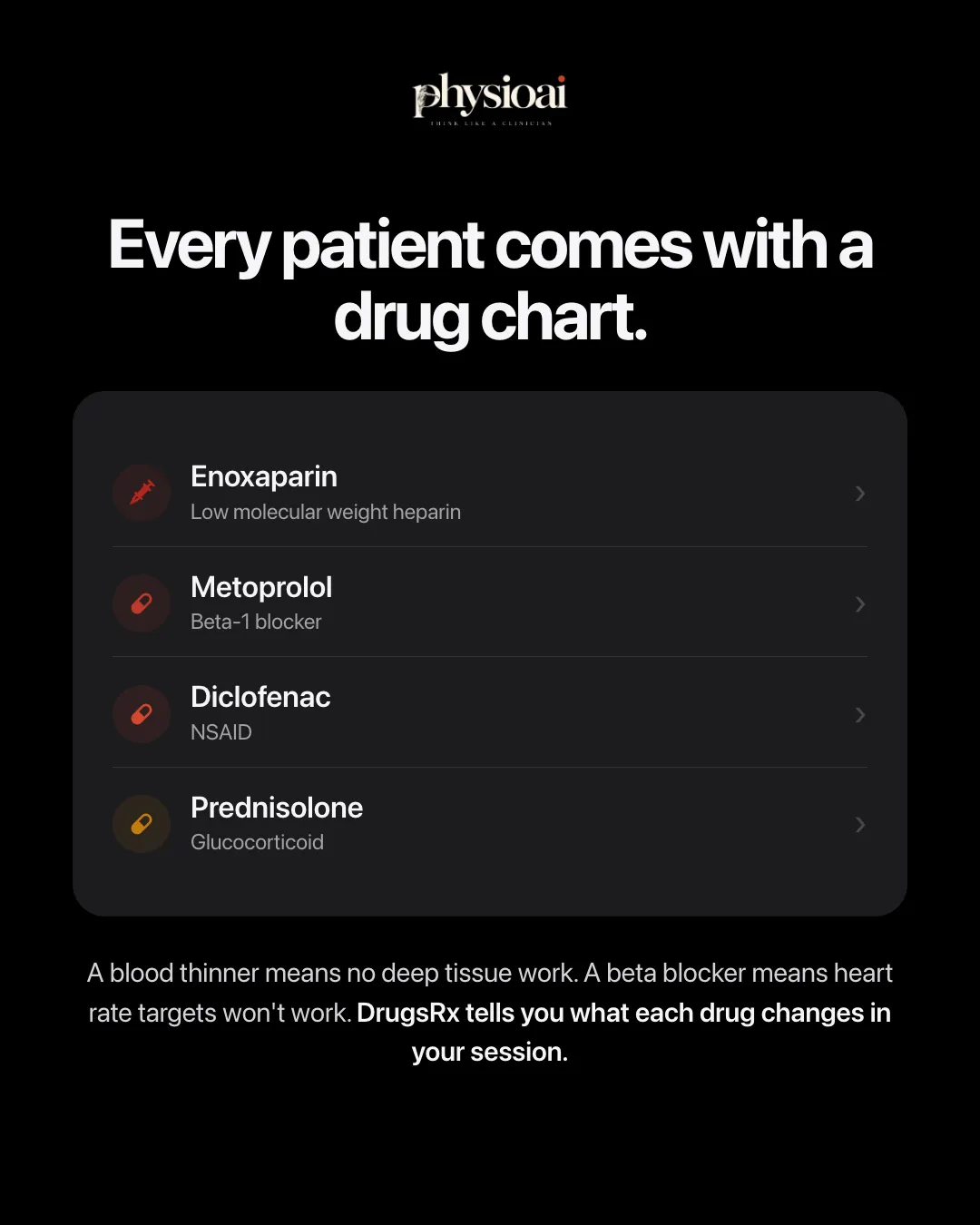
Every patient comes with a drug chart. On a ward posting it might read enoxaparin, metoprolol, diclofenac and prednisolone. Each of those changes what you should do in the session.
A blood thinner means no deep tissue work. A beta blocker means heart rate targets won't work. DrugsRx tells you what each drug changes in your session, in language written for physiotherapists rather than prescribers.
Find any drug in seconds
The DrugsRx home screen gives you several ways in:
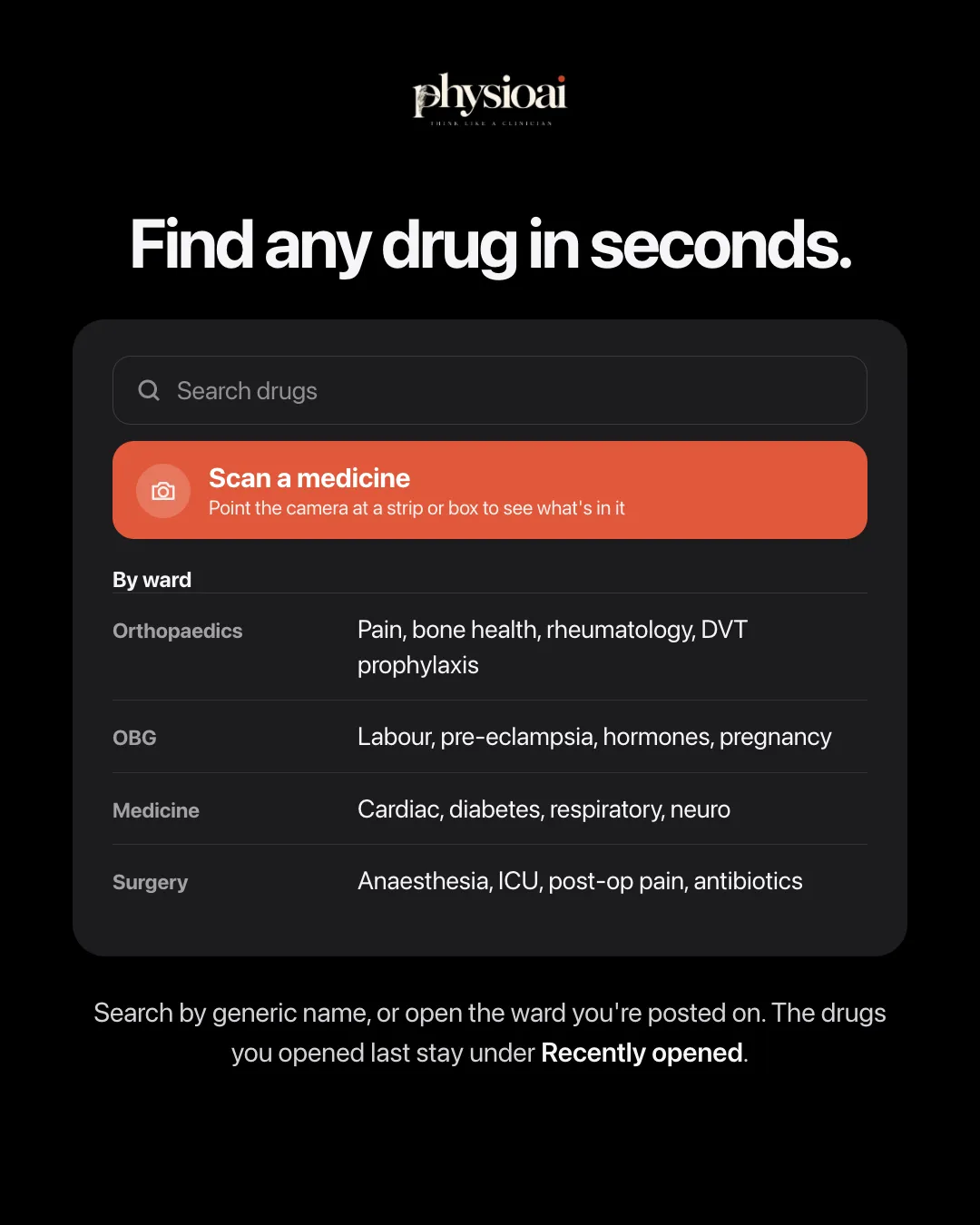
- Search by generic name.
- By ward: Orthopaedics (pain, bone health, rheumatology, DVT prophylaxis), OBG (labour, pre-eclampsia, hormones, pregnancy), Medicine (cardiac, diabetes, respiratory, neuro) and Surgery (anaesthesia, ICU, post-op pain, antibiotics). Open the ward you are posted on.
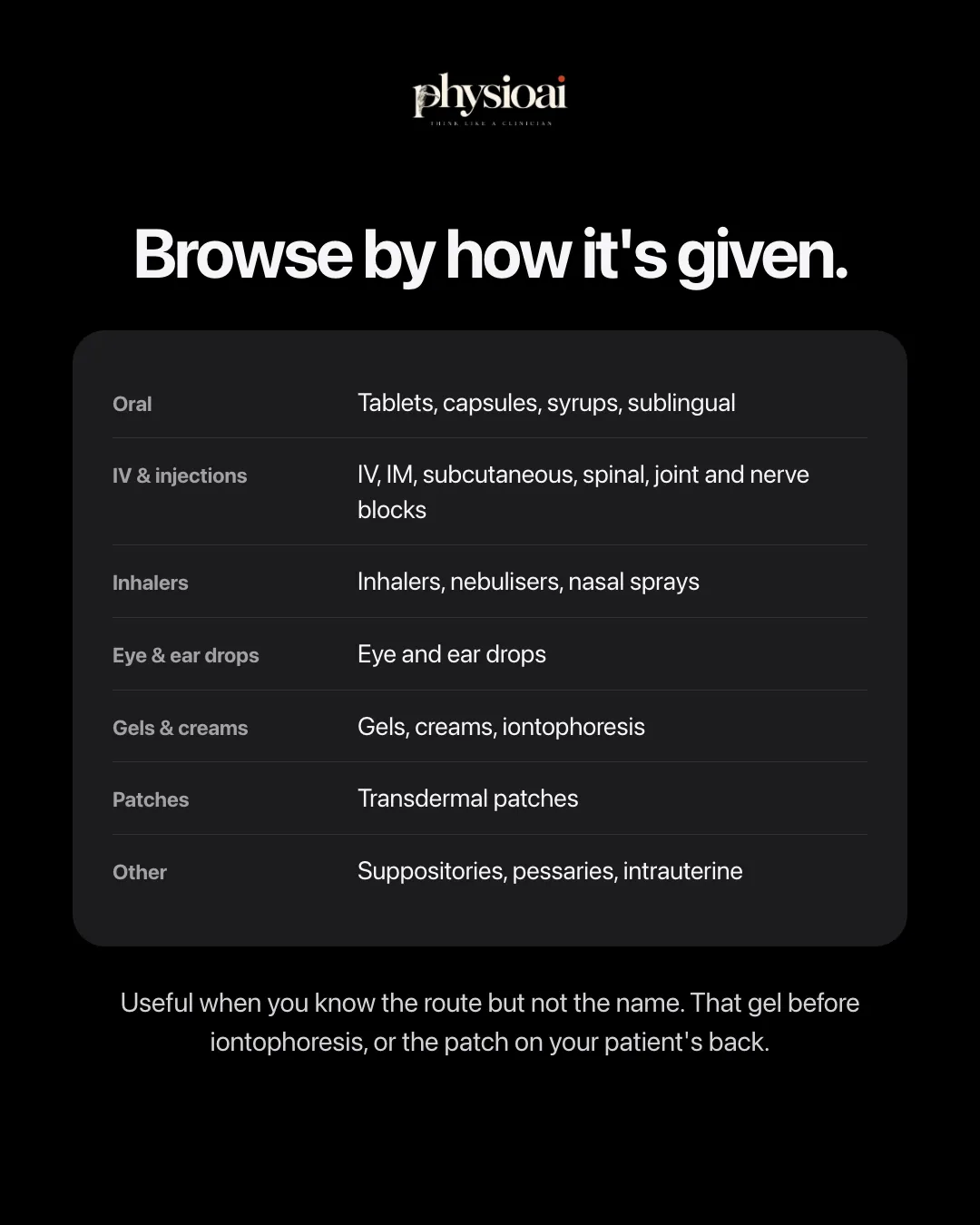
- By form: oral, IV and injections, inhalers, eye and ear drops, gels and creams, patches, and other routes. This helps when you know the route but not the name, such as the gel before iontophoresis or the patch on your patient's back.
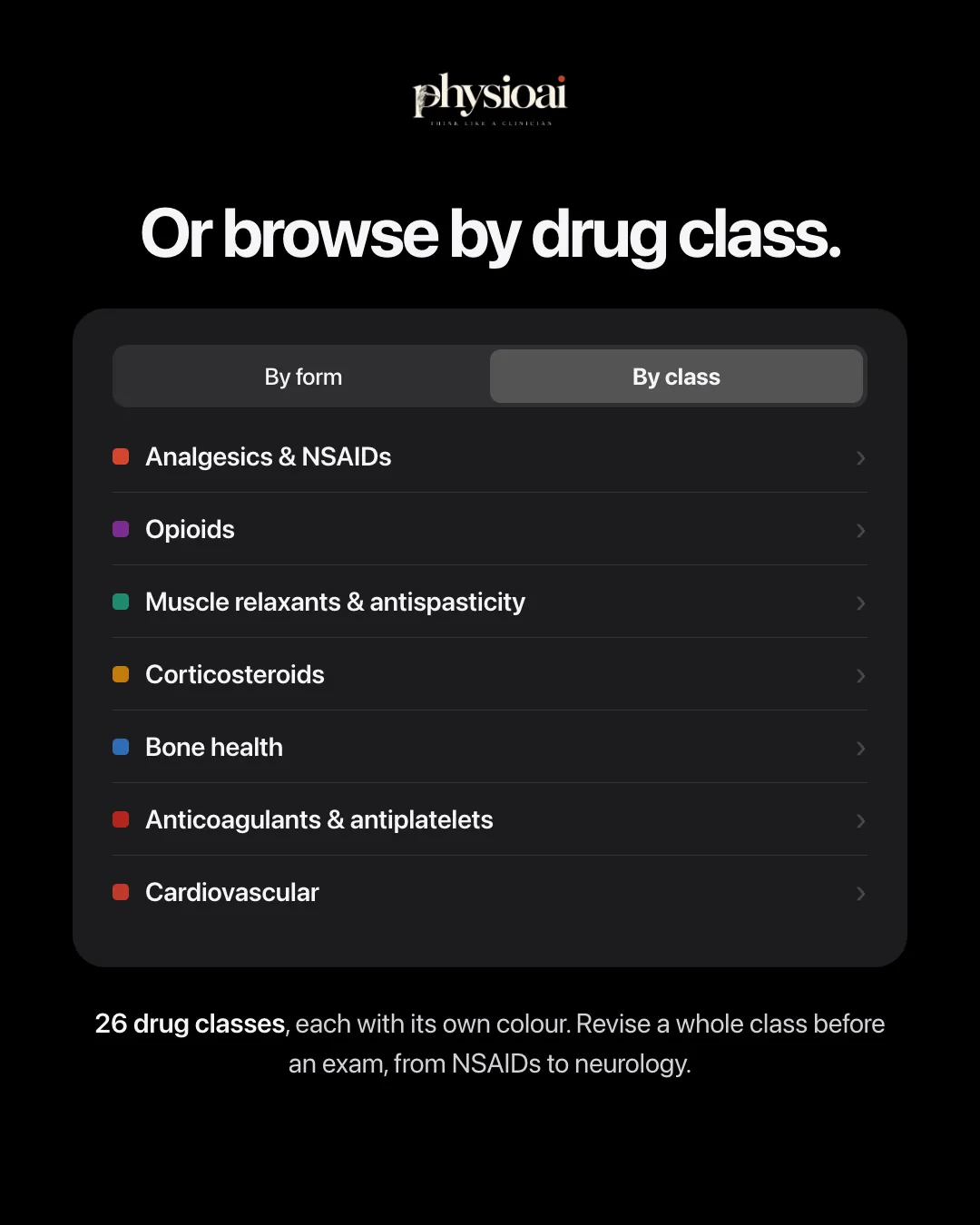
- By class: 26 drug classes, each with its own colour, from analgesics and NSAIDs to opioids, muscle relaxants, corticosteroids, bone health, anticoagulants and cardiovascular drugs. Useful for revising a whole class before an exam.
The drugs you opened last stay under Recently opened.
Scan a medicine strip
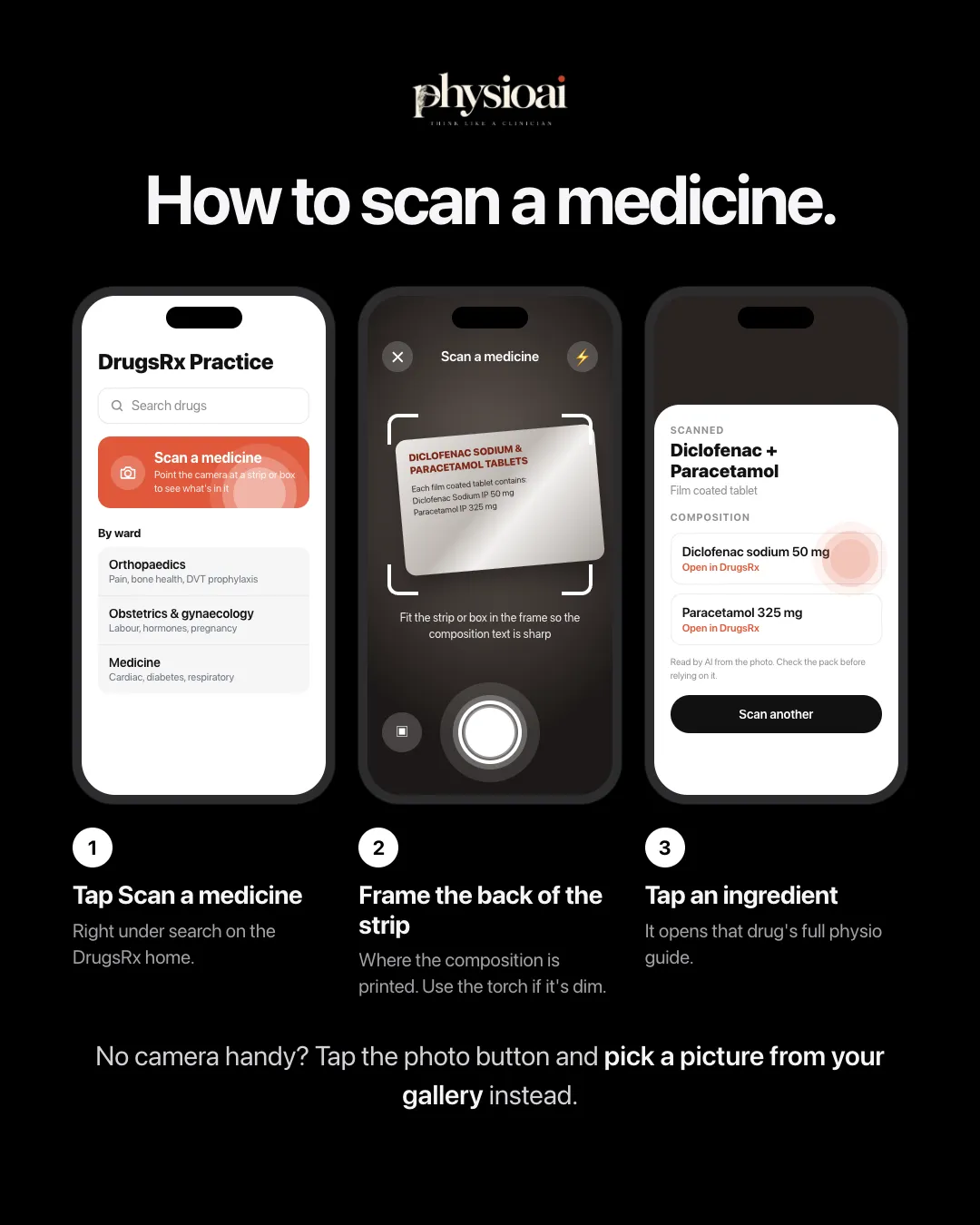
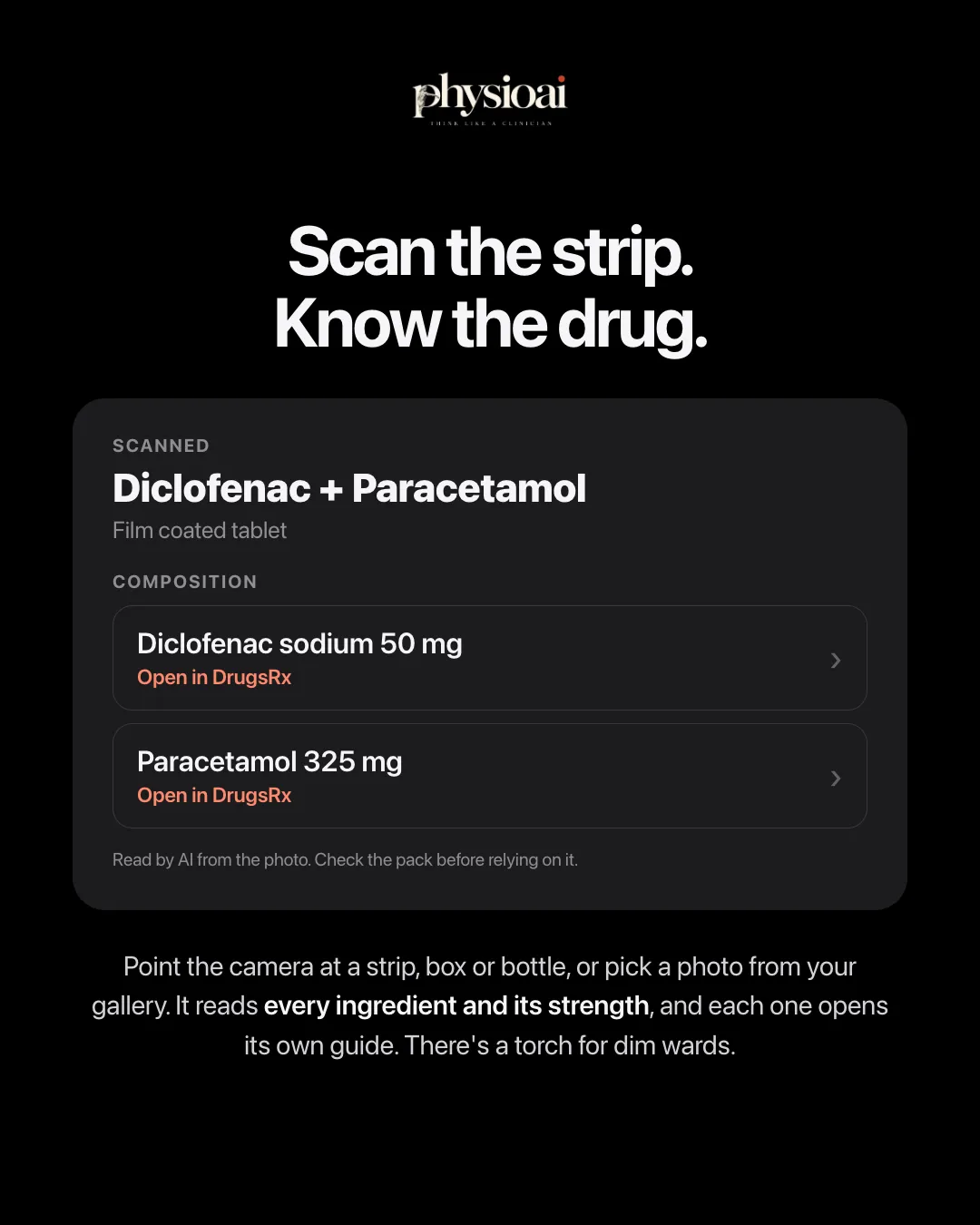
Tap "Scan a medicine", just under the search bar, and point the camera at the back of a strip, box or bottle where the composition is printed. There is a torch for dim wards, or you can pick a photo from your gallery. DrugsRx reads every ingredient and its strength, for example diclofenac sodium 50 mg and paracetamol 325 mg in a combination tablet, and each ingredient opens its own guide.
The scan is read by AI from the photo. Check the pack before relying on it.
What a drug page shows
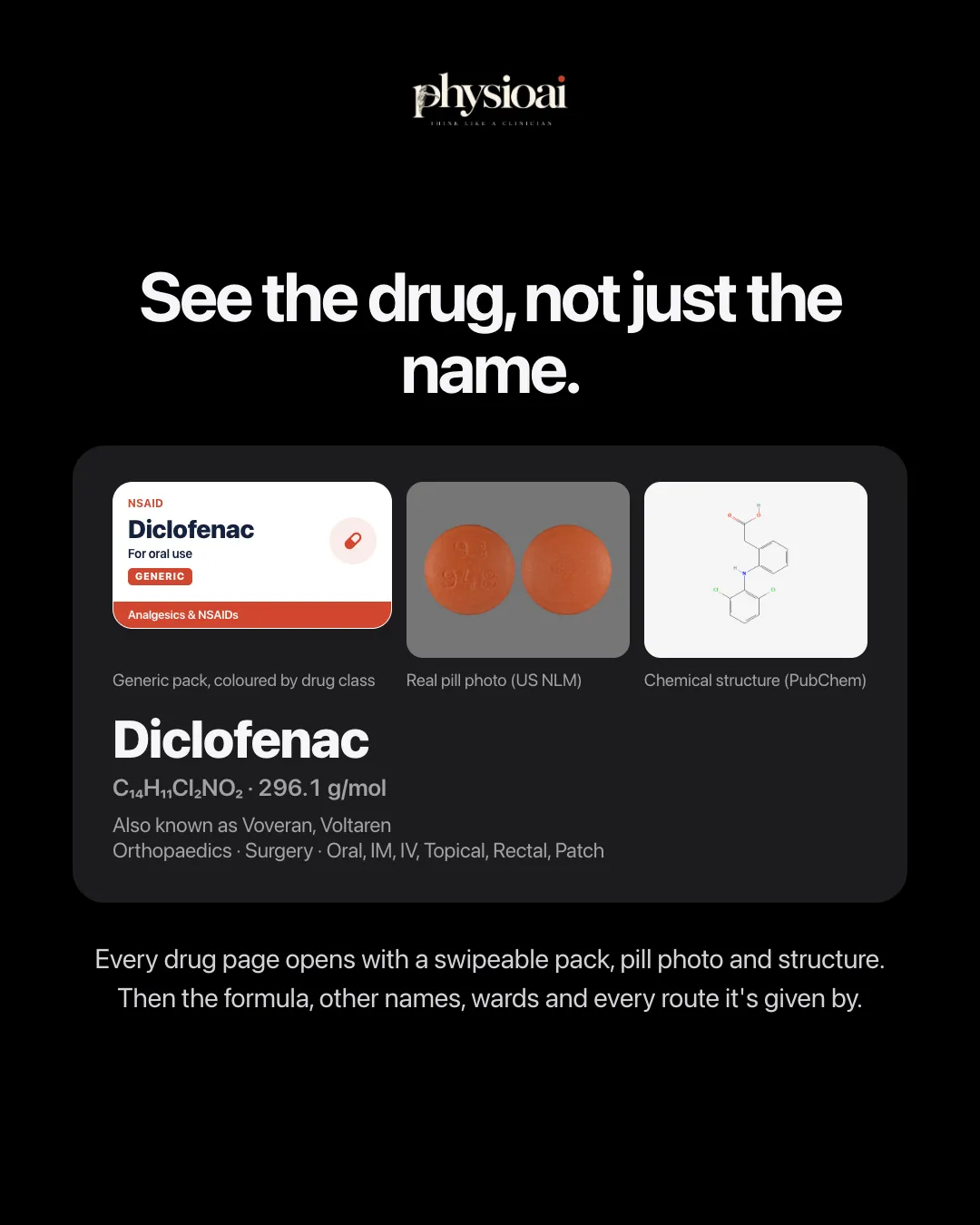
Each page opens with a generic pack coloured by drug class, a real pill photo from the US National Library of Medicine and the chemical structure from PubChem. Then come the formula, other brand names, the wards where it is used and every route it is given by.
For physiotherapists
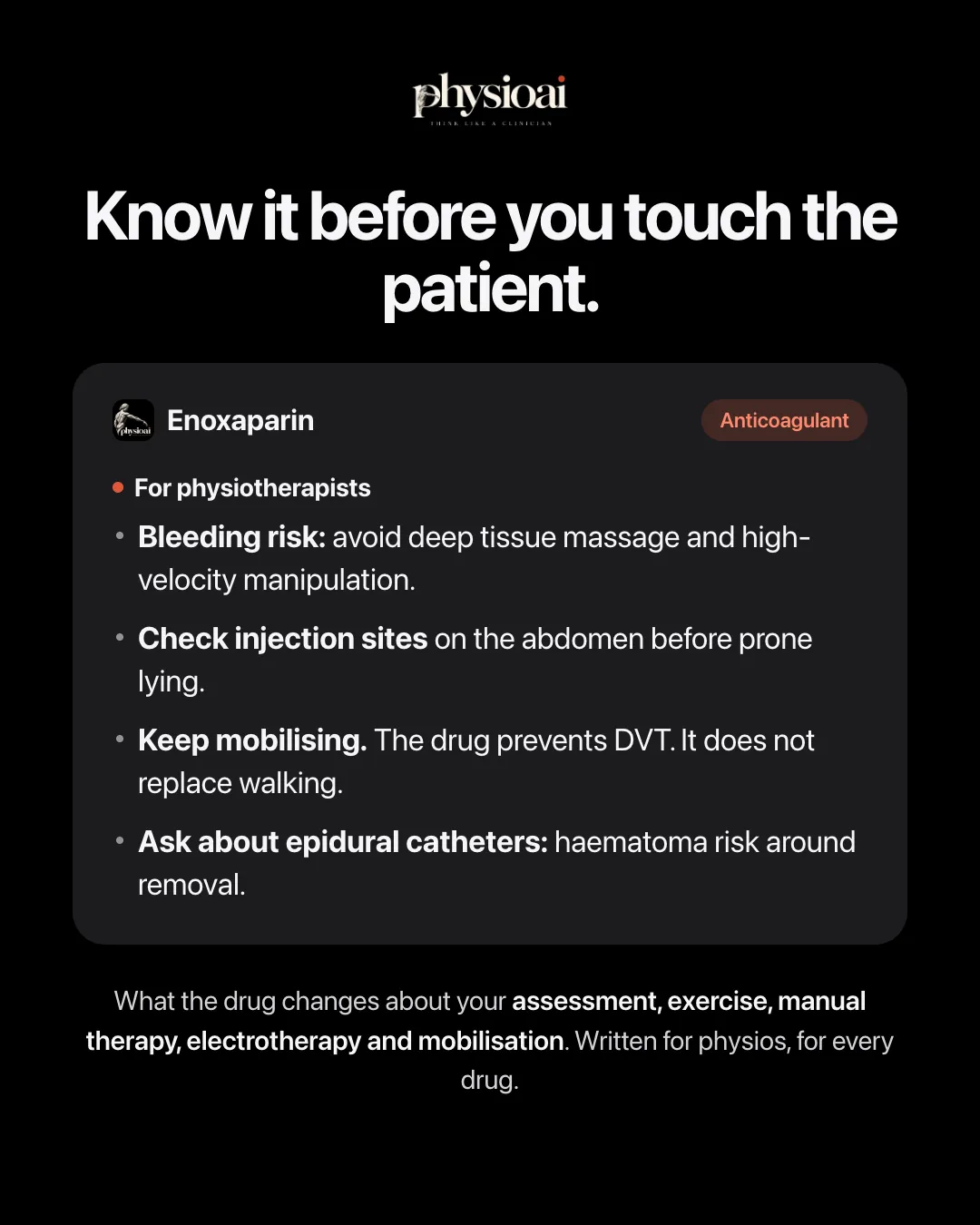
This section explains what the drug changes about your assessment, exercise, manual therapy, electrotherapy and mobilisation. For enoxaparin, for example, the guidance includes:
- Bleeding risk: avoid deep tissue massage and high-velocity manipulation.
- Check injection sites on the abdomen before prone lying.
- Keep mobilising. The drug prevents DVT. It does not replace walking.
- Ask about epidural catheters: haematoma risk around removal.
Watch during sessions
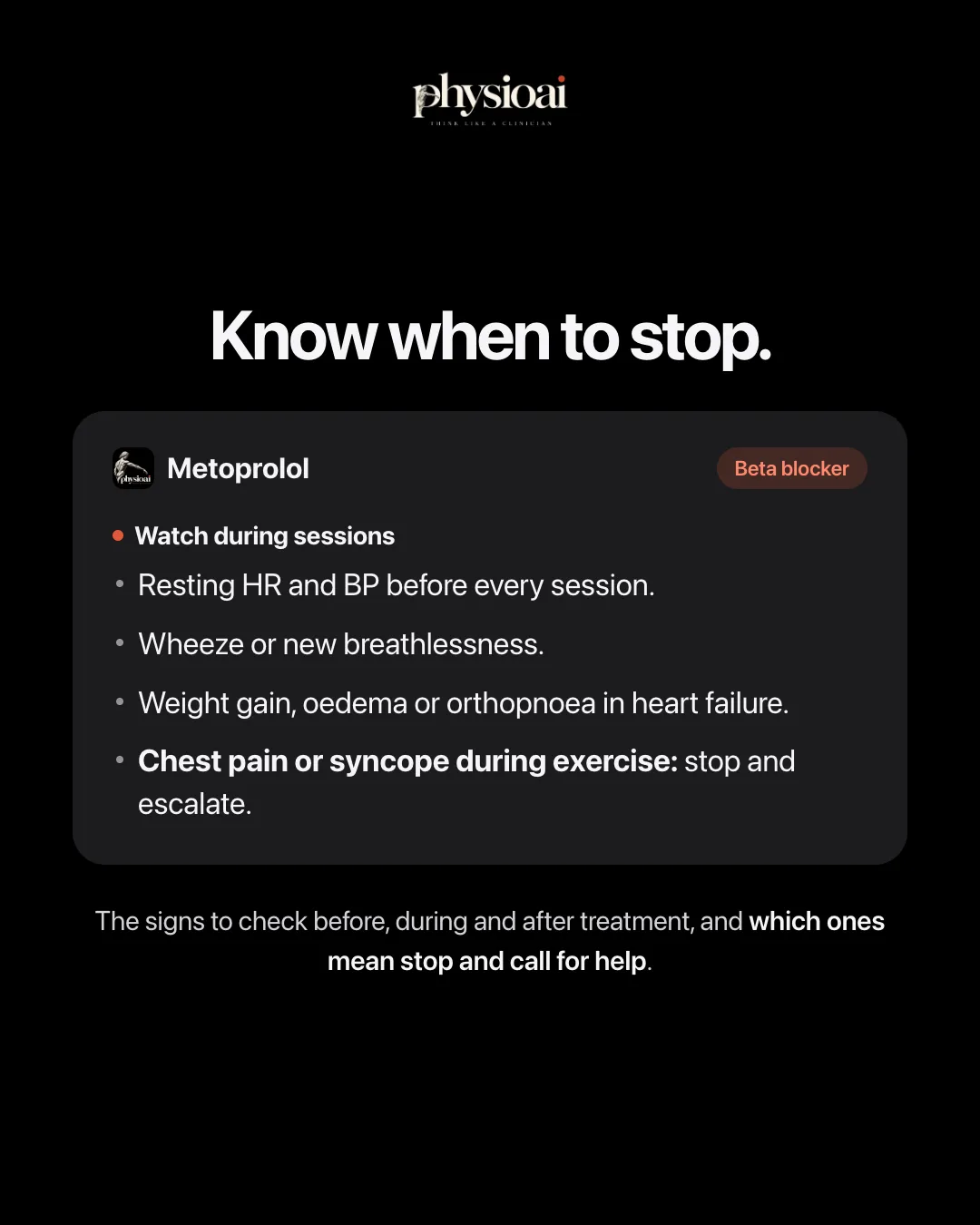
The signs to check before, during and after treatment, and which ones mean stop and call for help. For metoprolol, these include resting heart rate and blood pressure before every session, wheeze or new breathlessness, weight gain, oedema or orthopnoea in heart failure, and chest pain or syncope during exercise, which means stop and escalate.
Timing therapy
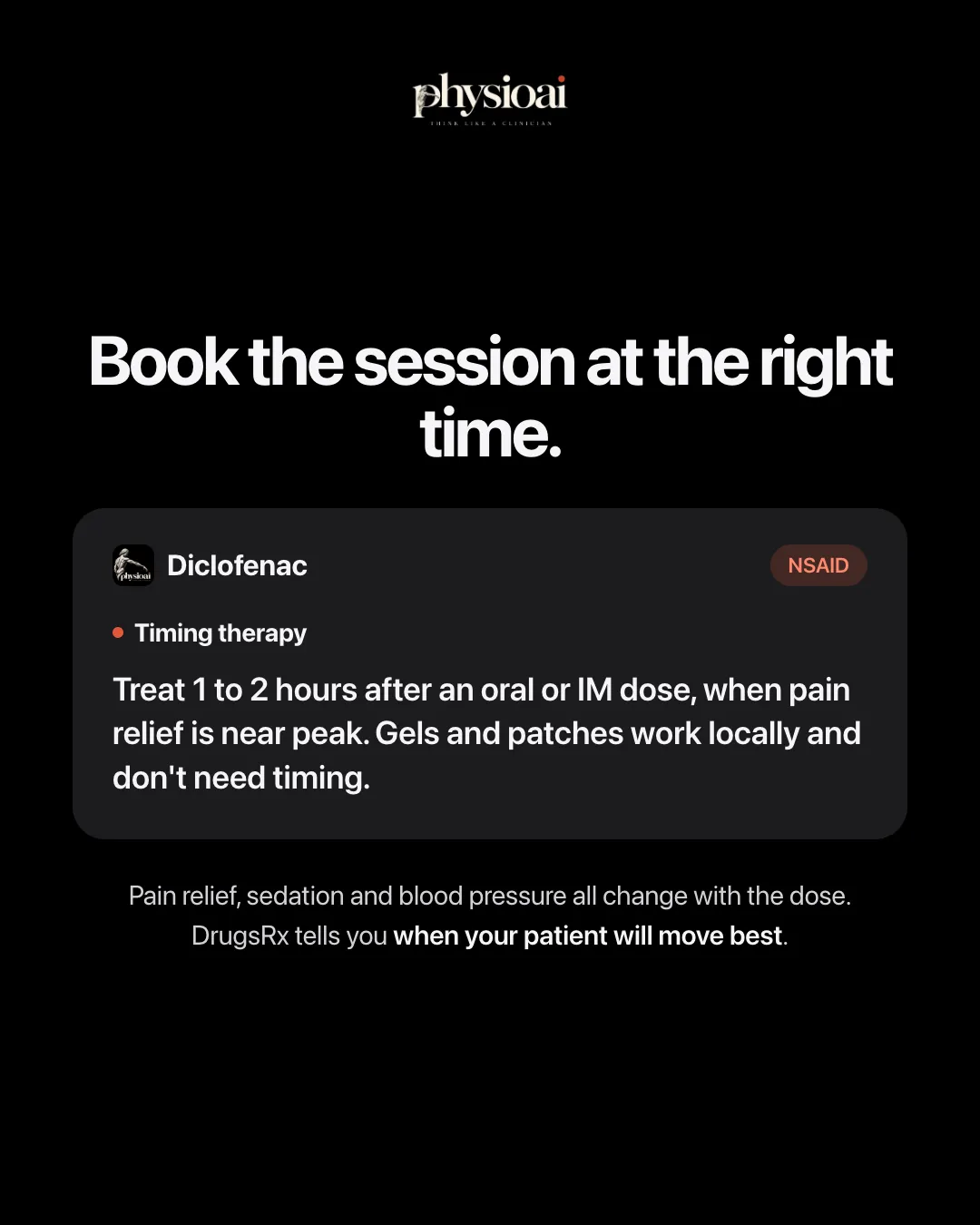
Pain relief, sedation and blood pressure all change with the dose. For diclofenac, DrugsRx suggests treating 1 to 2 hours after an oral or IM dose, when pain relief is near peak. Gels and patches work locally and don't need timing.
The full guide
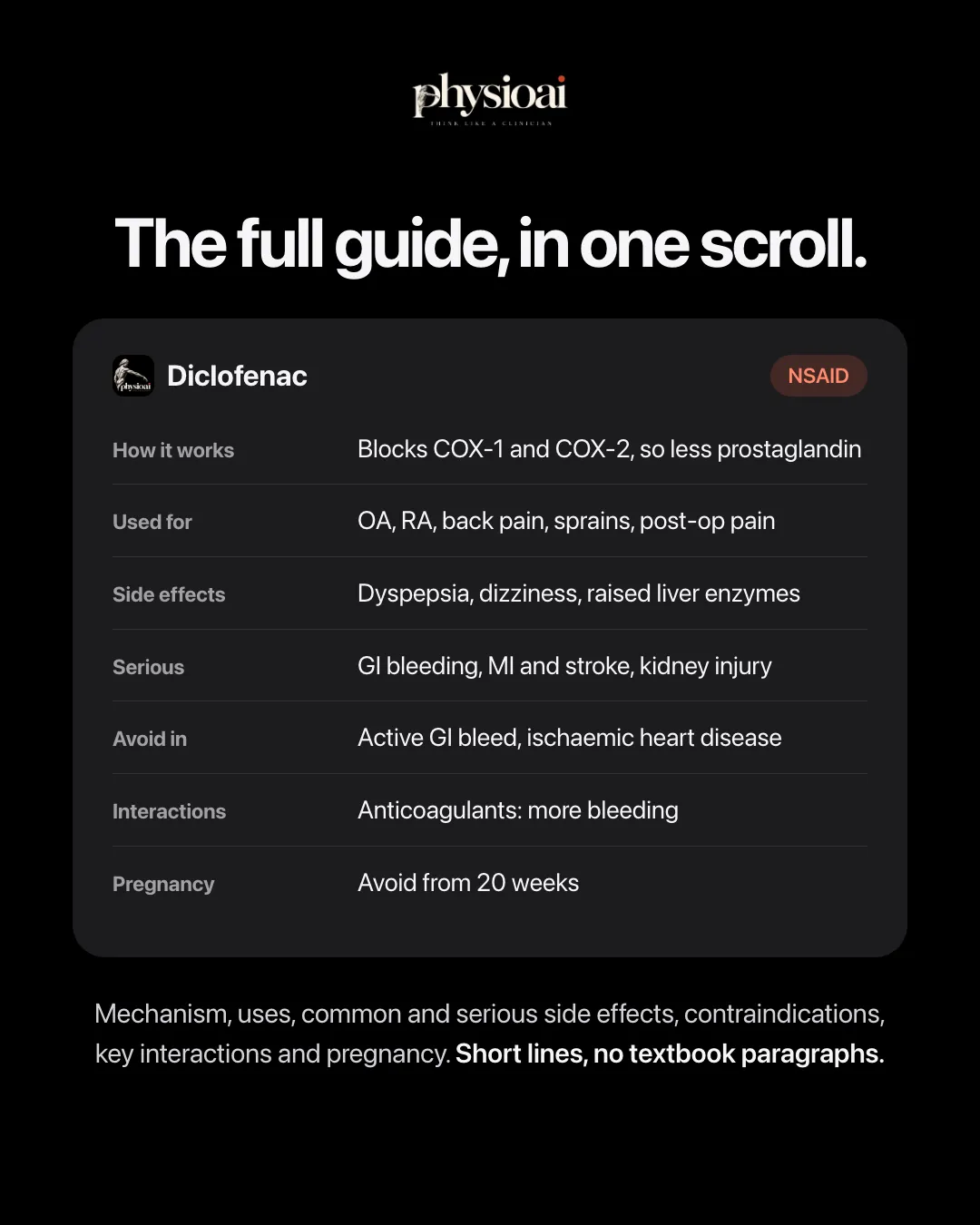
Mechanism, uses, common and serious side effects, contraindications, key interactions and pregnancy, in short lines rather than textbook paragraphs.
Exam pearls
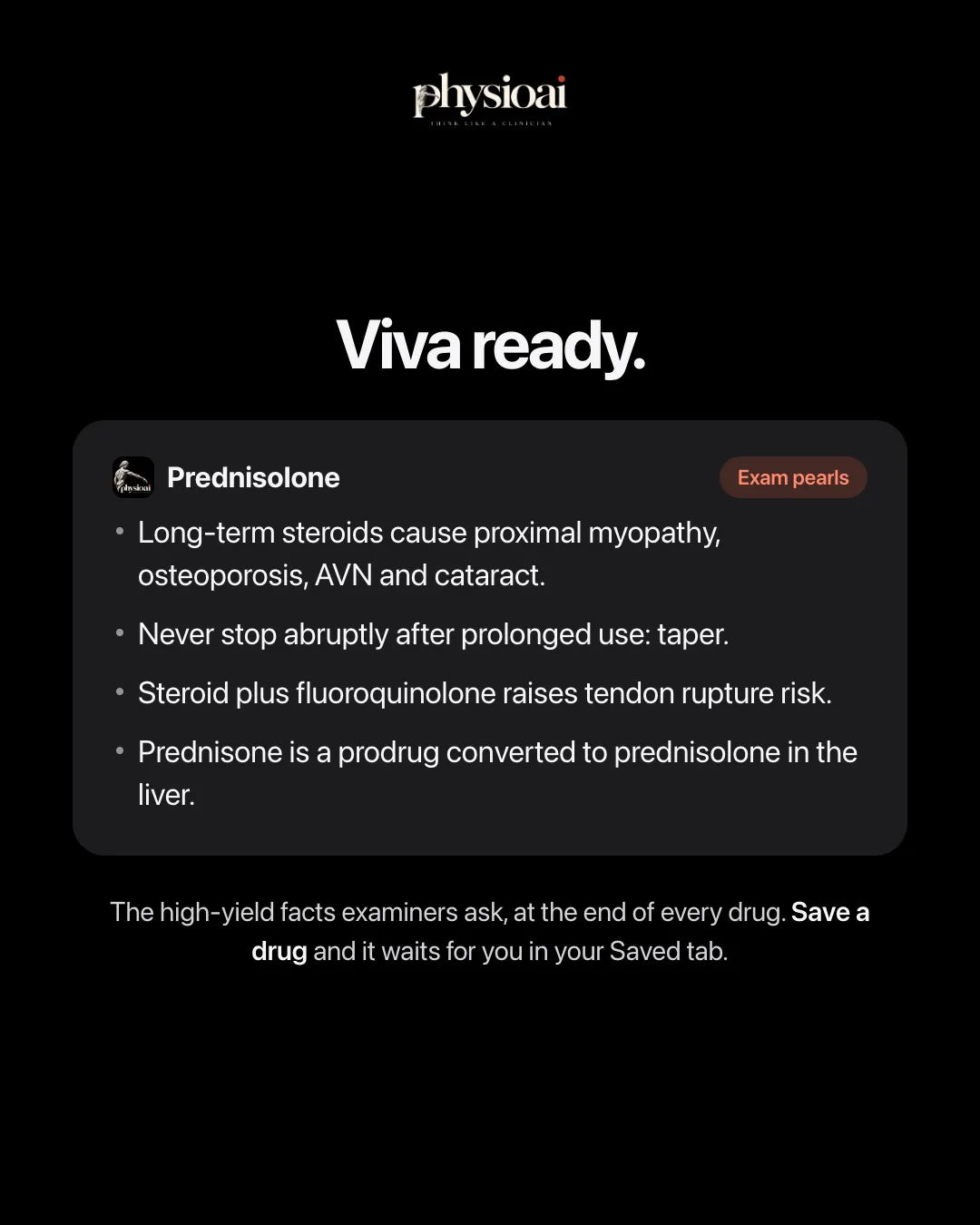
The high-yield facts examiners ask, at the end of every drug. For prednisolone, these include proximal myopathy, osteoporosis, avascular necrosis and cataract with long-term use, the need to taper rather than stop abruptly after prolonged use, and the raised risk of tendon rupture when a steroid is combined with a fluoroquinolone. Save a drug and it waits for you in your Saved tab.
When a drug is not in the library
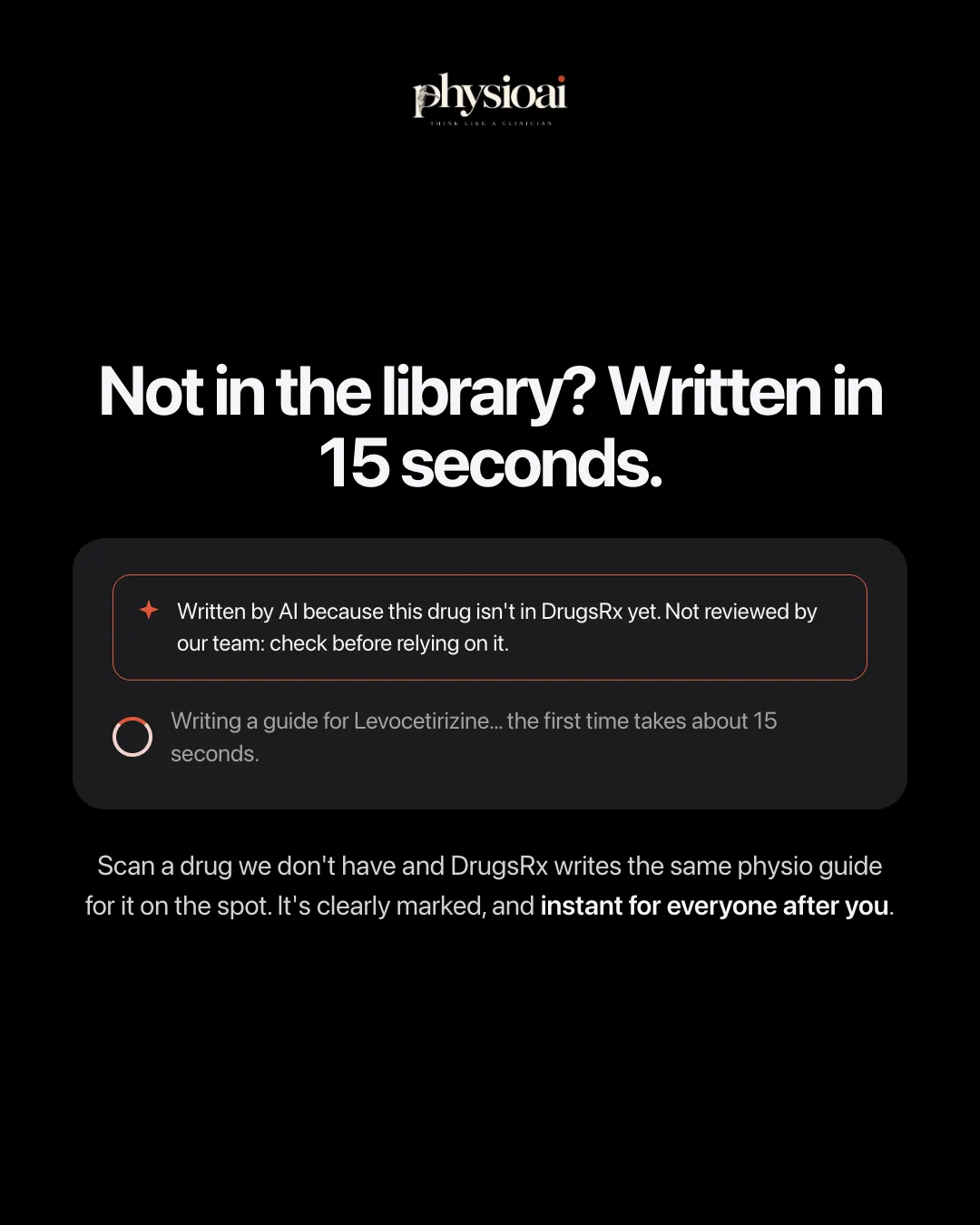
If you scan a drug that DrugsRx does not have yet, it writes the same style of physio guide on the spot. The first time takes about 15 seconds, and it is instant for everyone after you. These pages are clearly marked as written by AI and not reviewed by the PhysioAI team, so check them before relying on them.
Where the information comes from
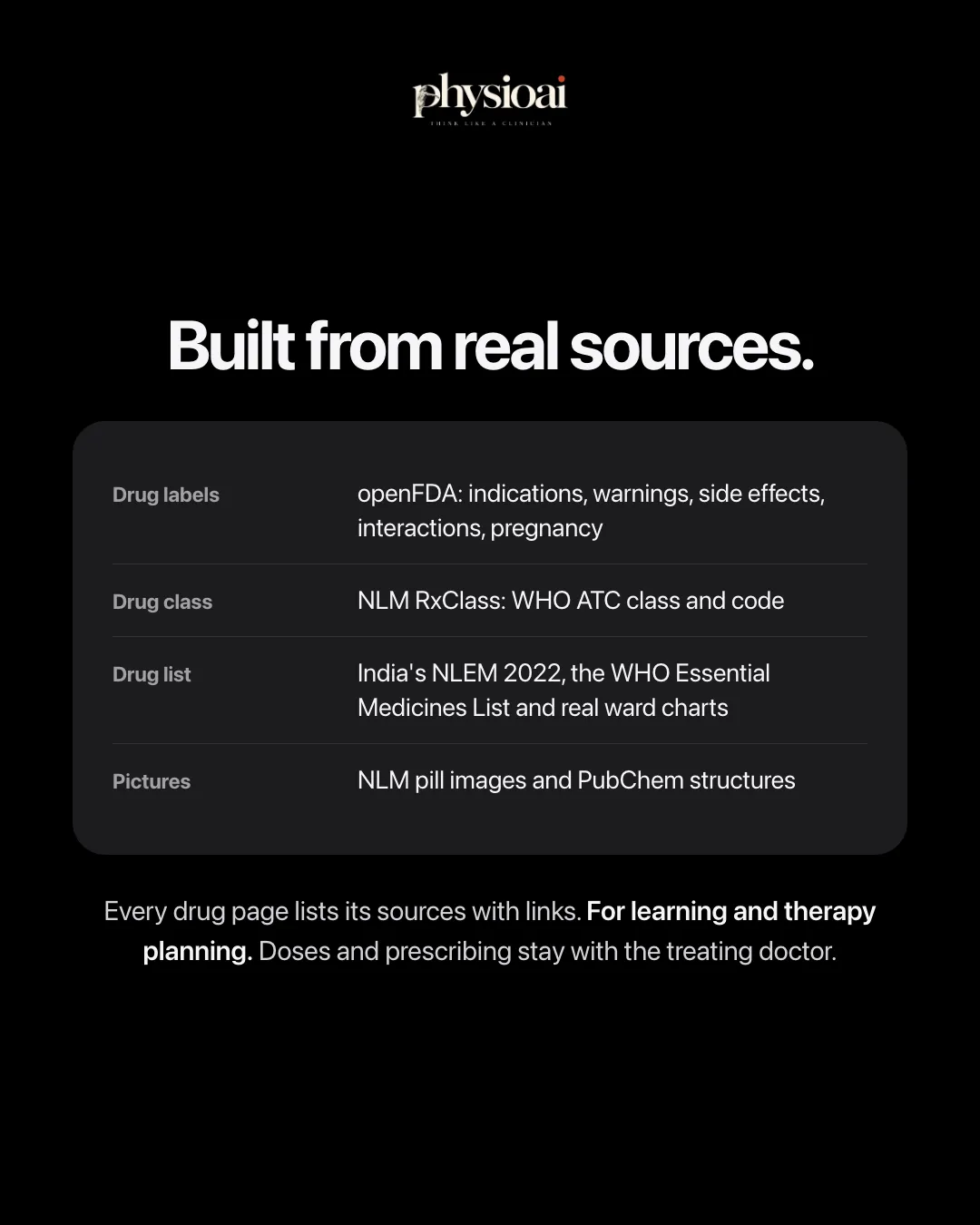
- Drug labels: openFDA, for indications, warnings, side effects, interactions and pregnancy.
- Drug class: NLM RxClass, for the WHO ATC class and code.
- Drug list: India's NLEM 2022, the WHO Essential Medicines List and real ward charts.
- Pictures: NLM pill images and PubChem structures.
Every drug page lists its sources with links.
How to open DrugsRx in PhysioAI
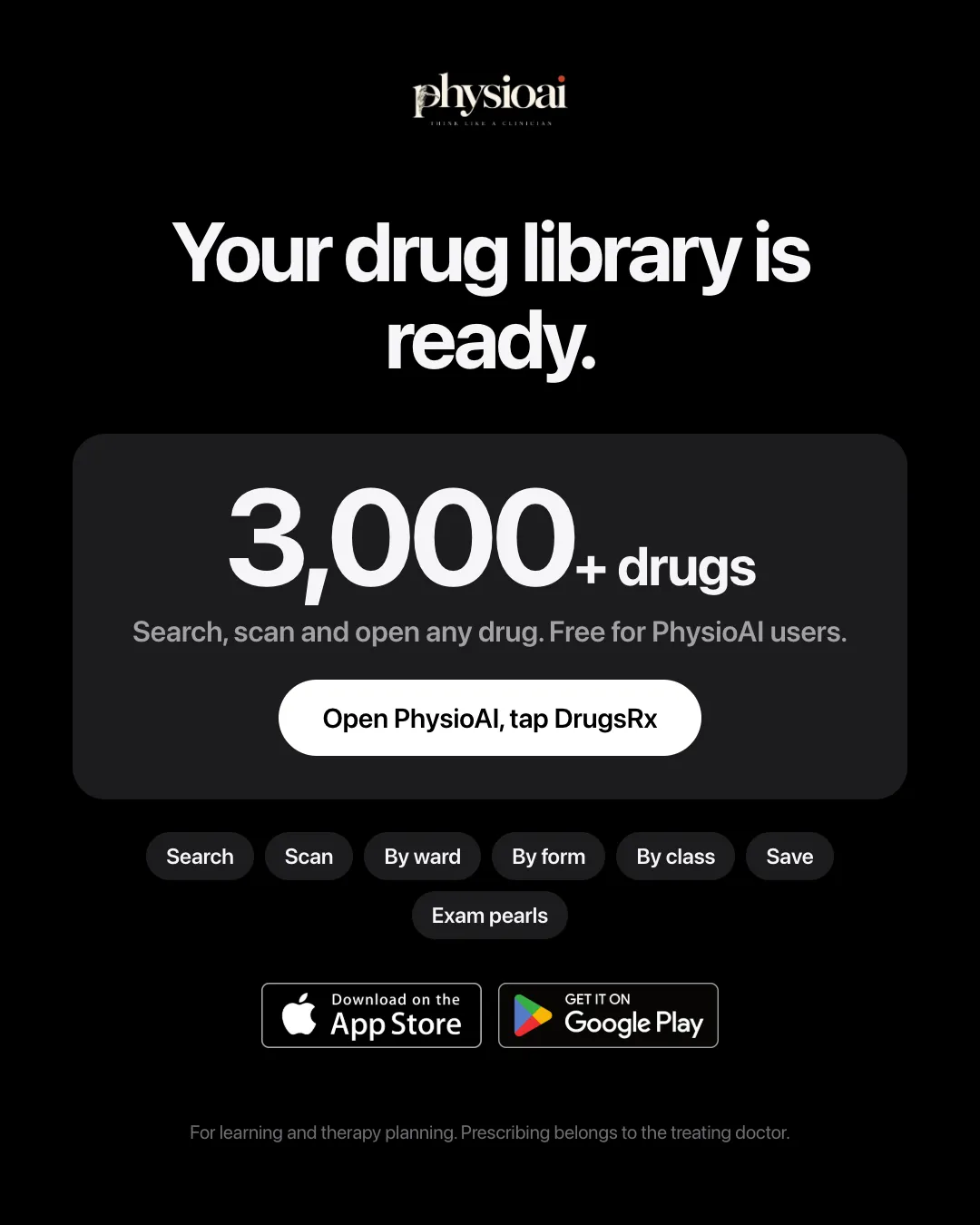
Download the PhysioAI app, open it and tap DrugsRx. You can search, scan, browse by ward, form or class, save drugs and read the exam pearls, free for PhysioAI users. Use it for learning and therapy planning. Prescribing belongs to the treating doctor.