Exam prep ·
DHA Physiotherapy Exam: A Step-by-Step Study Plan
How to prepare for the Dubai Health Authority physiotherapy exam: paperwork, the official syllabus, a weekly schedule, daily MCQs and exam-week checks.

physioai
Instagram post
1/10




This article is a step-by-step plan for the Dubai Health Authority (DHA) physiotherapy licensing exam, which physiotherapists need to pass to practise in Dubai. It covers the exam basics, the paperwork to start early, how to structure your study weeks and what to check in exam week.
Key takeaways
- The DHA exam is a computer-based multiple-choice test taken at Prometric centres; confirm the current format and booking steps with DHA.
- Start DataFlow verification and DHA registration early, because credential checks can take weeks.
- Study from the official DHA syllabus, not old forum lists.
- Take a timed baseline test in week one, then practise MCQs every day and read every rationale.
- Use exam week for weak areas, sleep and logistics: ID, booking confirmation and route.
Step 1: Know the exam before you study
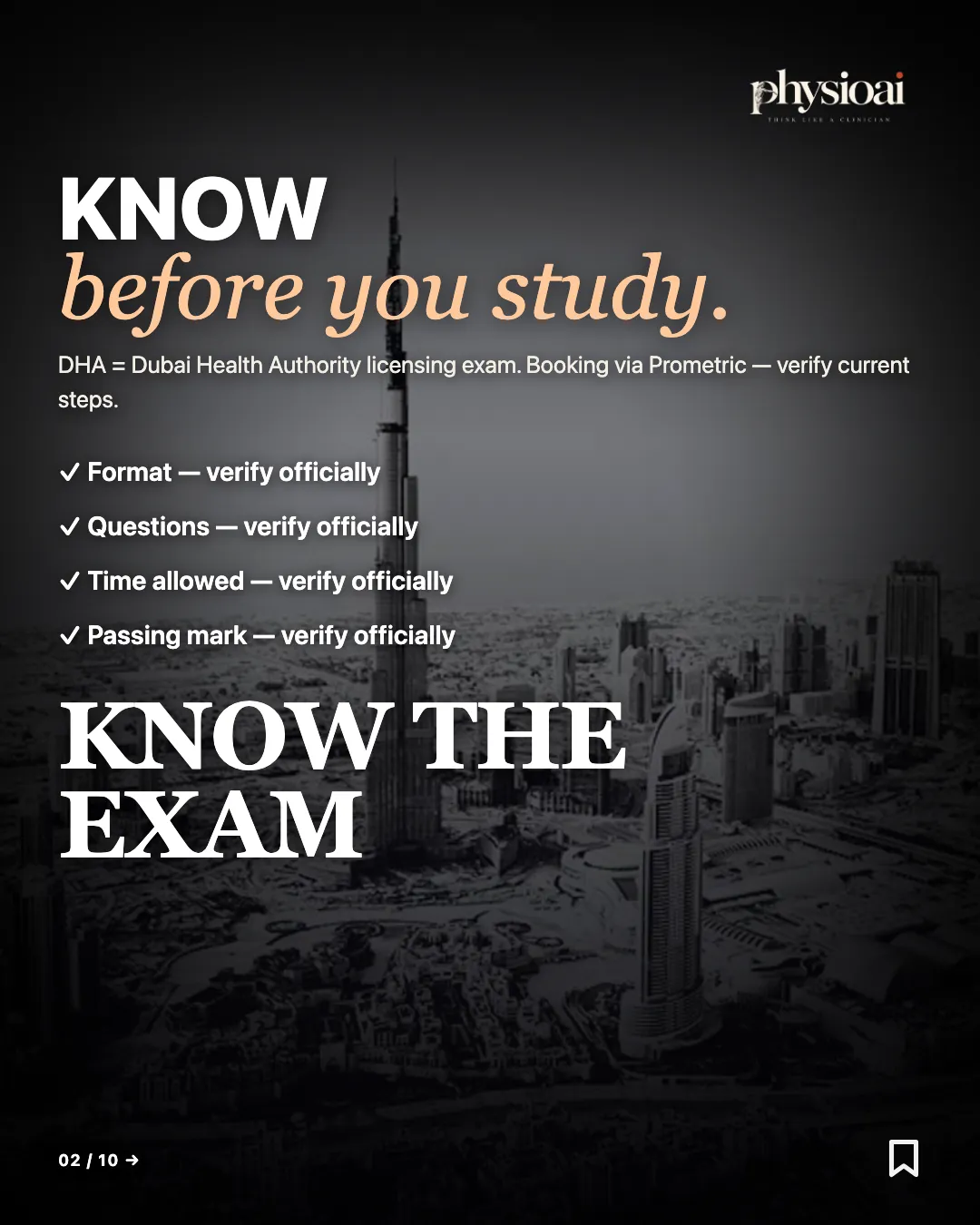
The DHA licensing exam is required for physiotherapists who want to practise in Dubai, UAE. It tests clinical knowledge and applied sciences, along with UAE healthcare regulations and professional ethics. It is a computer-based test taken at Prometric centres.
The format commonly described is 150 multiple-choice questions in 3 hours, which works out to roughly 72 seconds per question. Question counts, time allowed and the passing standard can change, so check the current candidate information on the DHA website before you build your plan. Do not rely on numbers from social media or older candidates.
Step 2: Sort your paperwork early
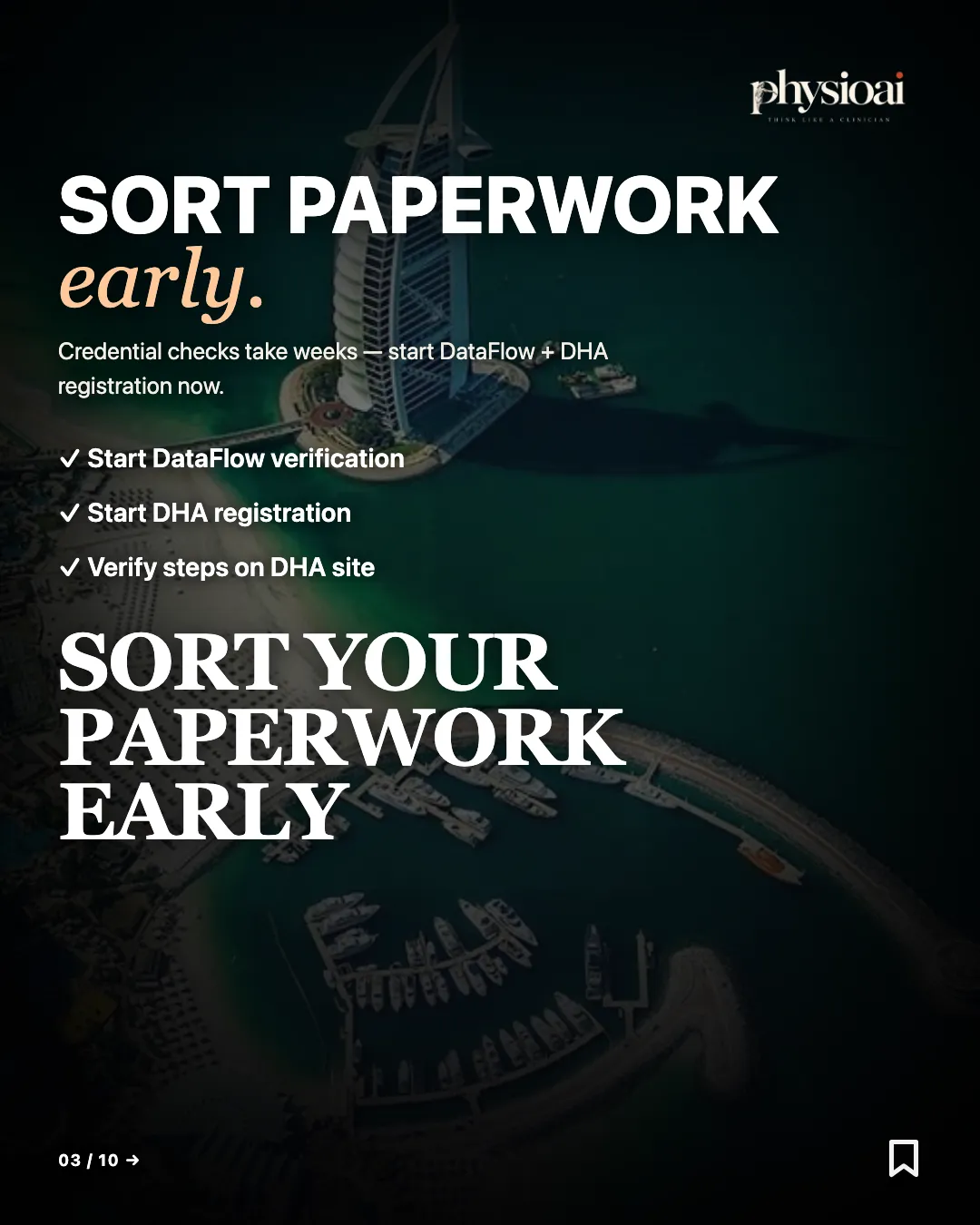
Credential checks take weeks, so start them before you start serious revision. The usual steps are:
- Create an account on the DHA Sheryan portal and begin your registration.
- Submit your credentials for primary source verification through the DataFlow Group.
- Pay the exam fee and schedule your exam at a Prometric centre.
Eligibility typically includes a bachelor's degree in physiotherapy from a recognised institution, relevant clinical experience, a valid licence from your home country and a good standing certificate. Requirements are set by DHA and can change, so verify every step on the official DHA site.
Step 3: Use the official syllabus
Find your topics in the official DHA candidate guide and map every topic onto your study plan. Ignore topic lists from old forum posts, which may be out of date or incomplete. The syllabus tells you what is examinable; your plan should follow it.
Step 4: Take a baseline test in week one
Sit a timed practice test under full exam conditions in your first week. The score does not matter yet. What matters is seeing which topics need the most work. Re-test every two to three weeks to track progress and adjust your schedule.
Step 5: Build a weekly schedule
Plan for 6 to 12 weeks, depending on your baseline. A simple weekly structure:
- One system per day: musculoskeletal, neurological, cardiorespiratory, paediatrics and so on.
- A short review block every day to revisit earlier topics.
- One full rest day each week.
Step 6: Practise MCQs every day
The DHA exam is multiple choice, so daily question practice is the core of preparation. Read the rationale for every answer, including the ones you got right. Learning why the wrong options are wrong is as useful as knowing the right one, because the exam often places plausible distractors next to the correct answer.
Step 7: Focus on high-yield topics
Some areas come up repeatedly in physiotherapy licensing exams. Prioritise:
- Common conditions and their assessment, including outcome measures.
- Exercise prescription and treatment principles.
- Red flags, contraindications and patient safety.
- Professional ethics and practice regulations.
Use flashcards for quick-recall facts such as special tests, red flags and normal values, reviewed a few minutes a day.
Step 8: Train under exam conditions
As the exam gets closer, practise timed sets with no notes and no phone. Build the habits you will use on the day:
- Answer, decide and move on.
- Flag hard questions and come back to them at the end.
- Keep an eye on pacing so you are not rushing the final section.
Step 9: Exam week, check everything
In the final week, revise weak areas only and do not start new topics. Sleep well. Check your identification documents, your Prometric booking confirmation, the test centre address and your route there.
Prepare for the DHA exam with PhysioAI
PhysioAI's DHA exam preparation includes full-length mock tests aligned to the DHA syllabus, clinical vignettes and clinic-based scenarios, flashcards covering clinical practice and UAE regulations, and analytics that show your weak domains. Every question has an explanation, and a free sample mock test is available to try first.