Synergist ·
Why PhysioAI teaches reasoning, not just answers
Any AI can give a physio student an answer. PhysioAI's Synergist, Patient Simulator, Patient Explainer and Case Workup teach the reasoning a patient needs.

physioai
Instagram post
1/11

Any AI tool can now give a physiotherapy student an answer in seconds. This article explains why PhysioAI is built around clinical reasoning instead, and how its four tools (Synergist, Patient Simulator (called Practice Room in the app), Patient Explainer and Case Workup) take you from learning the why to using it with real patients.
Key takeaways
- A correct fact is not enough in physiotherapy. A patient needs you to work out what is going on, what is dangerous, what to do next and how to explain it.
- Synergist's Deep Study breaks an answer into the concept, the practical steps, the exam focus and safety, then checks your understanding with a quick MCQ.
- Patient Simulator lets you make mistakes on a fictional patient, with a rating and a reason for every choice and a report on how you think.
- Patient Explainer scores how well you explain a condition in plain language. Case Workup brings the same reasoning, red flags first, into the clinic.
Answers are cheap. Reasoning is not.
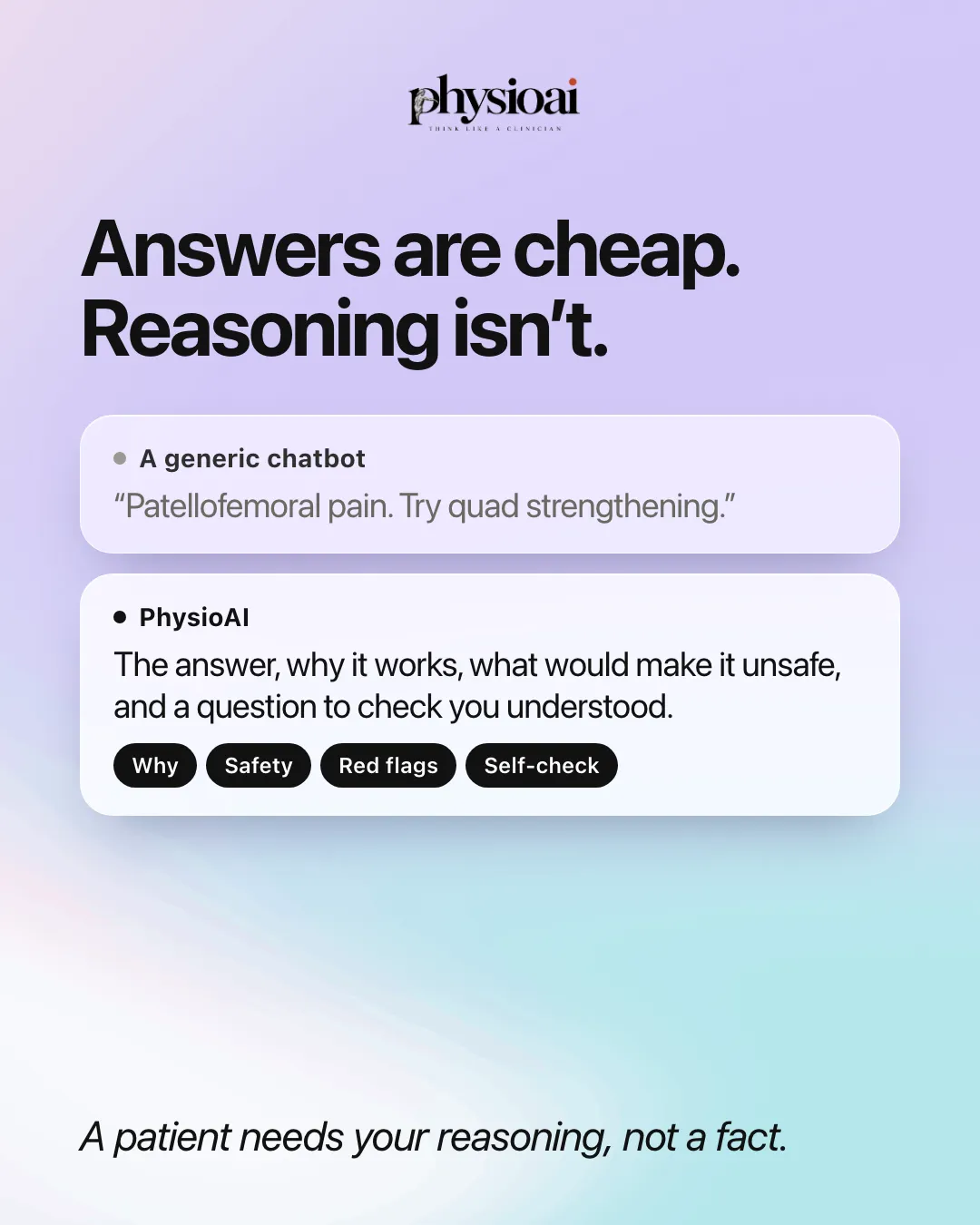
Ask a generic chatbot about patellofemoral pain and you may get one line: try quad strengthening. That is not wrong, but it is not enough to treat someone safely.
A physiotherapist also needs to know why the advice works, what would make it unsafe, which red flags change the plan, and whether they have really understood it. Exams reward the fact. Patients depend on the reasoning behind it.
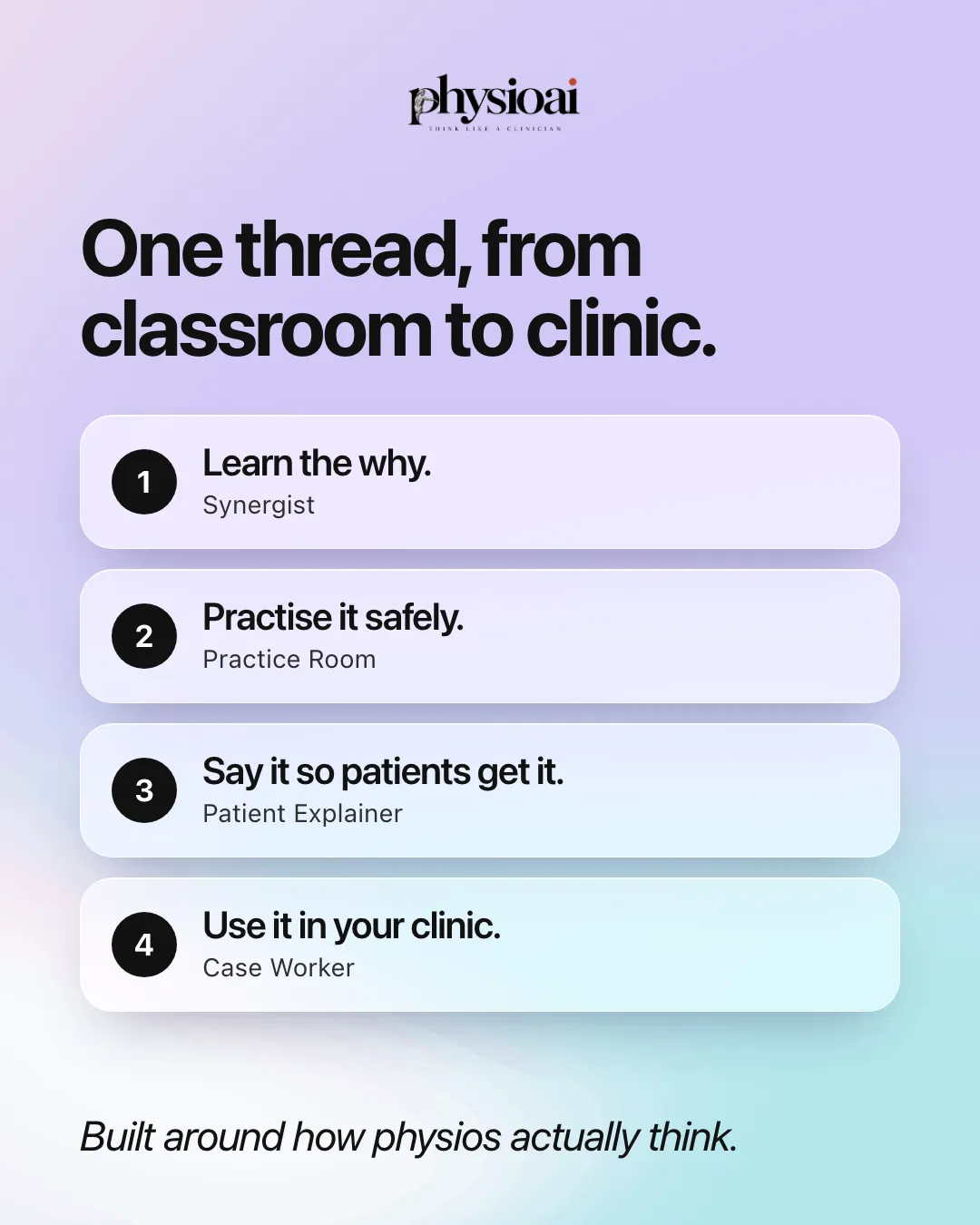
PhysioAI was designed around that gap. Its tools are meant to work as one thread: learn the why, practise it safely, say it so patients understand, and then use it in your clinic.
Synergist: learn the why
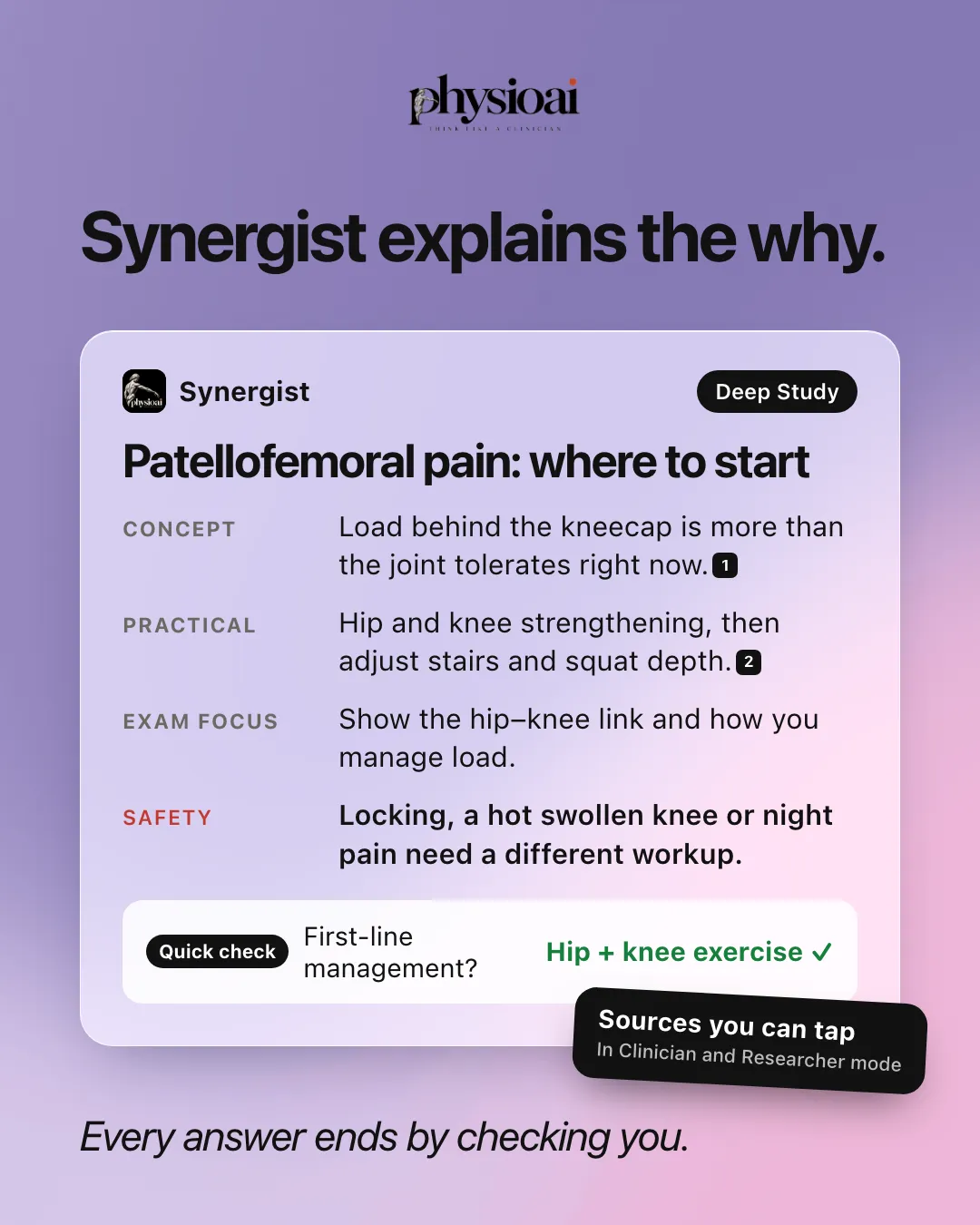
Synergist is PhysioAI's AI tutor. In Deep Study mode, an answer is not a single paragraph. Taking patellofemoral pain as an example, it is laid out in parts:
- Concept: the load behind the kneecap is more than the joint tolerates right now.
- Practical: hip and knee strengthening, then adjusting stairs and squat depth.
- Exam focus: show the hip–knee link and how you manage load.
- Safety: locking, a hot swollen knee or night pain need a different workup.
Red flags are taught as part of the answer, not left for you to look up later. Every answer then ends with a quick check, a short MCQ such as "First-line management?", with the reasoning behind the correct option. In Clinician and Researcher mode, the answer also comes with sources you can tap and open.
Patient Simulator: mistakes are safe here
Reading about clinical reasoning is different from doing it under pressure. Patient Simulator is a guided OSCE simulator with fictional patients.
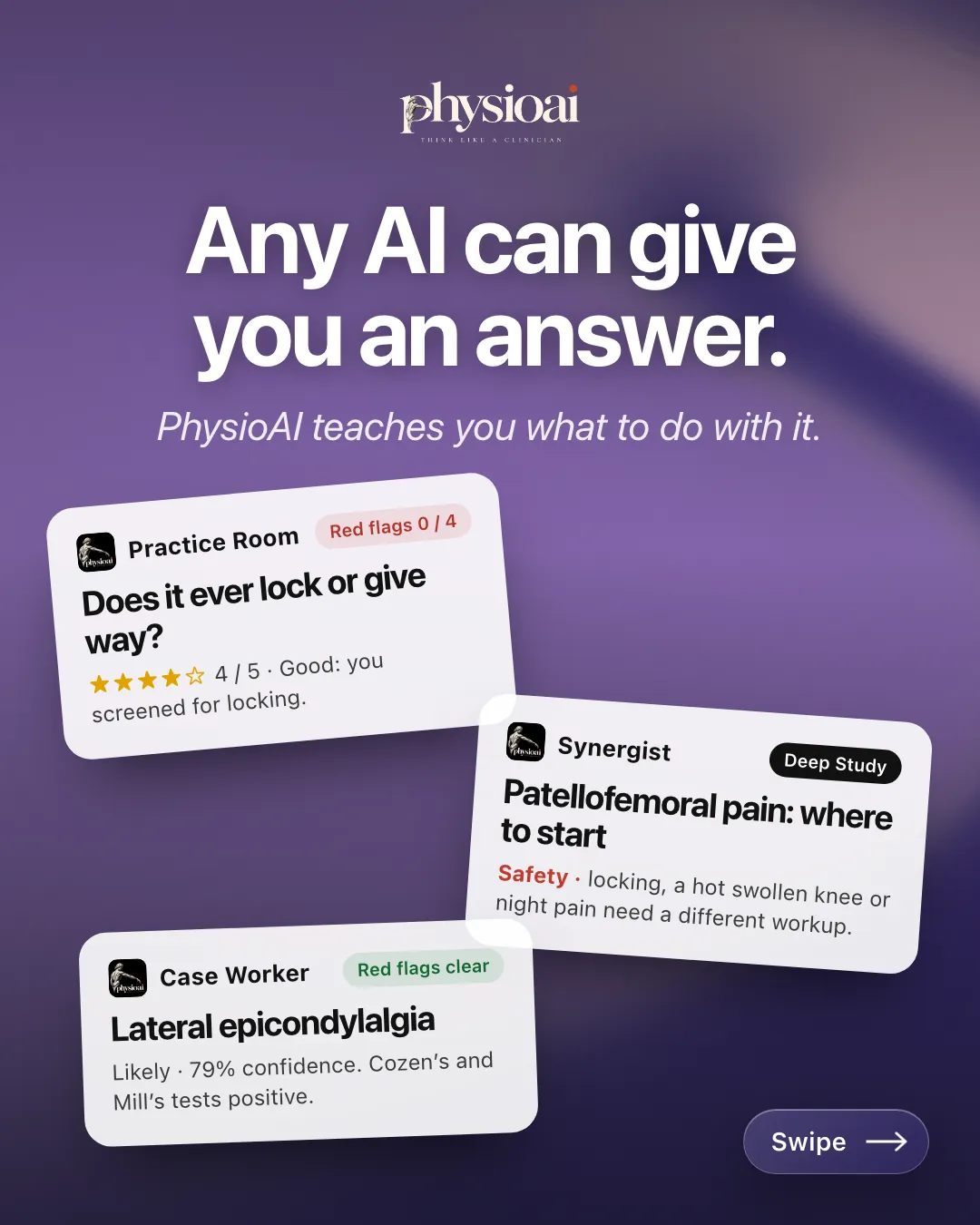
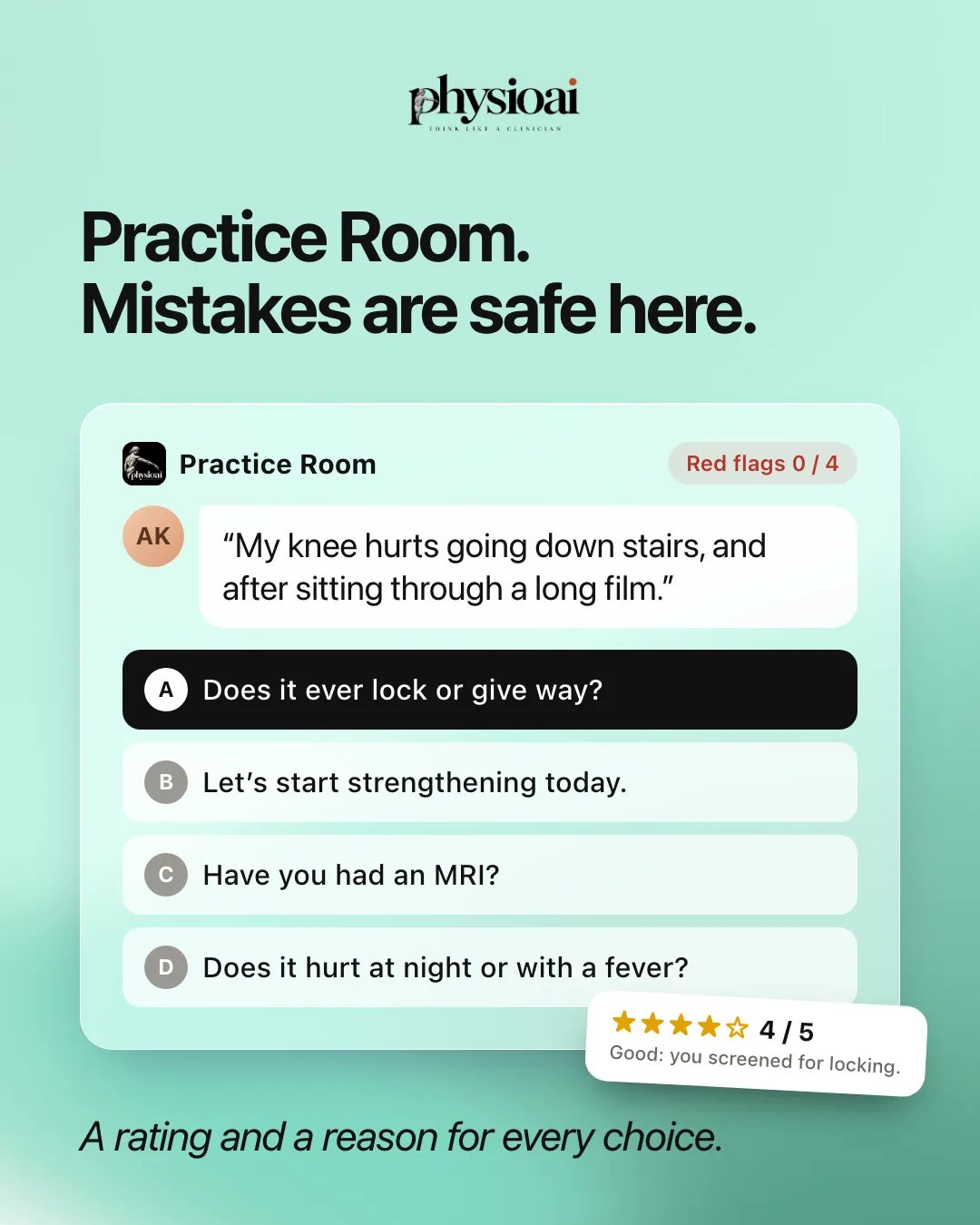
In one example, a fictional patient says their knee hurts going down stairs and after sitting through a long film. You choose your next move from four options: ask whether the knee ever locks or gives way, start strengthening today, ask about an MRI, or ask about night pain or fever. Each choice gets a rating and a reason. Screening for locking, for instance, is rated well because it checks for something that would change the plan.
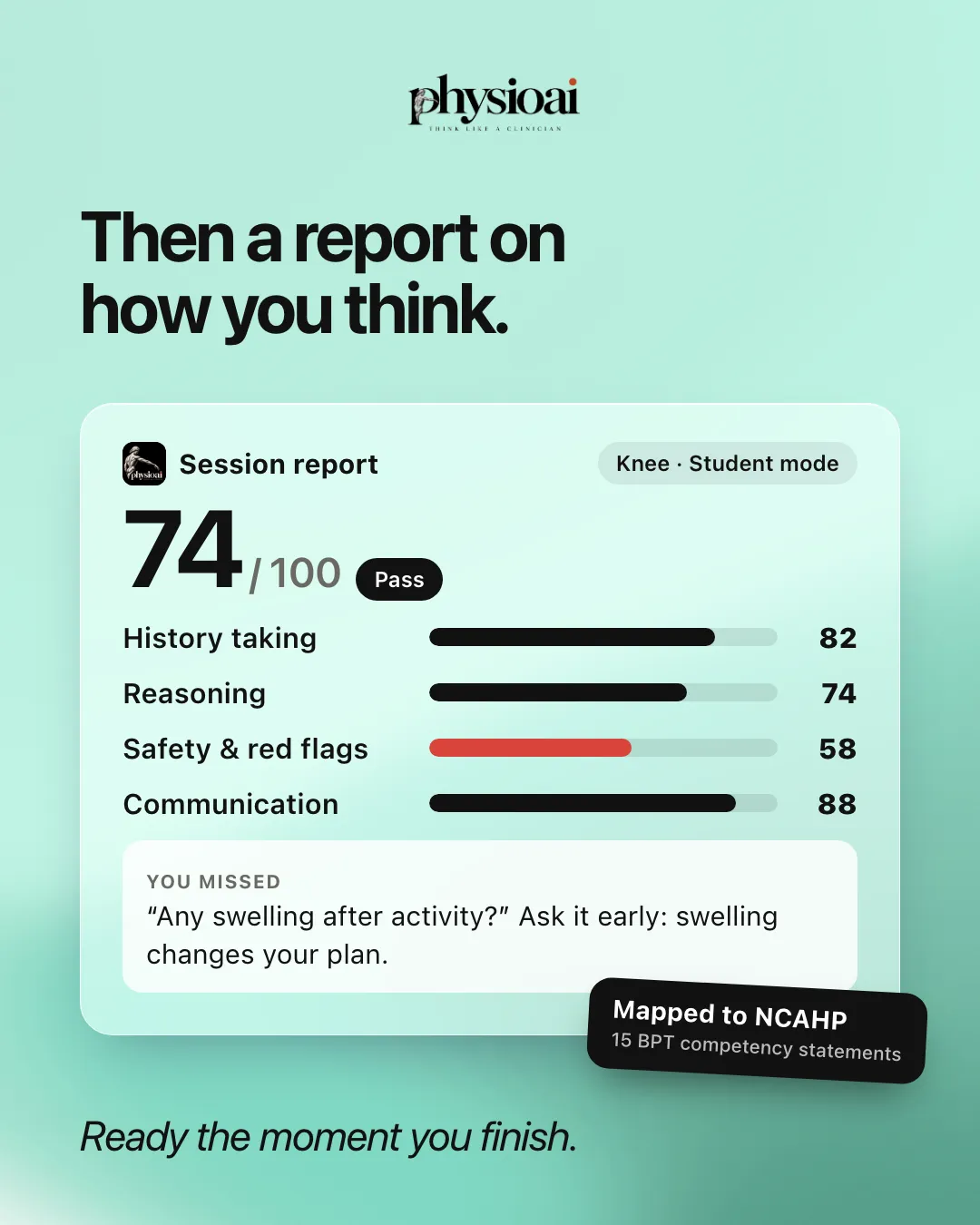
At the end you get an examiner-style report. It scores areas such as history taking, reasoning, safety and red flags, and communication, and it points out the questions you missed, such as asking about swelling after activity early, because swelling changes your plan. The report is mapped to the 15 NCAHP BPT competency statements.
Patient Simulator currently has 85+ live cases across the knee, shoulder, hip, spine and chest, and is available through a waitlist in the app.
Patient Explainer: if they do not get it, they will not do it
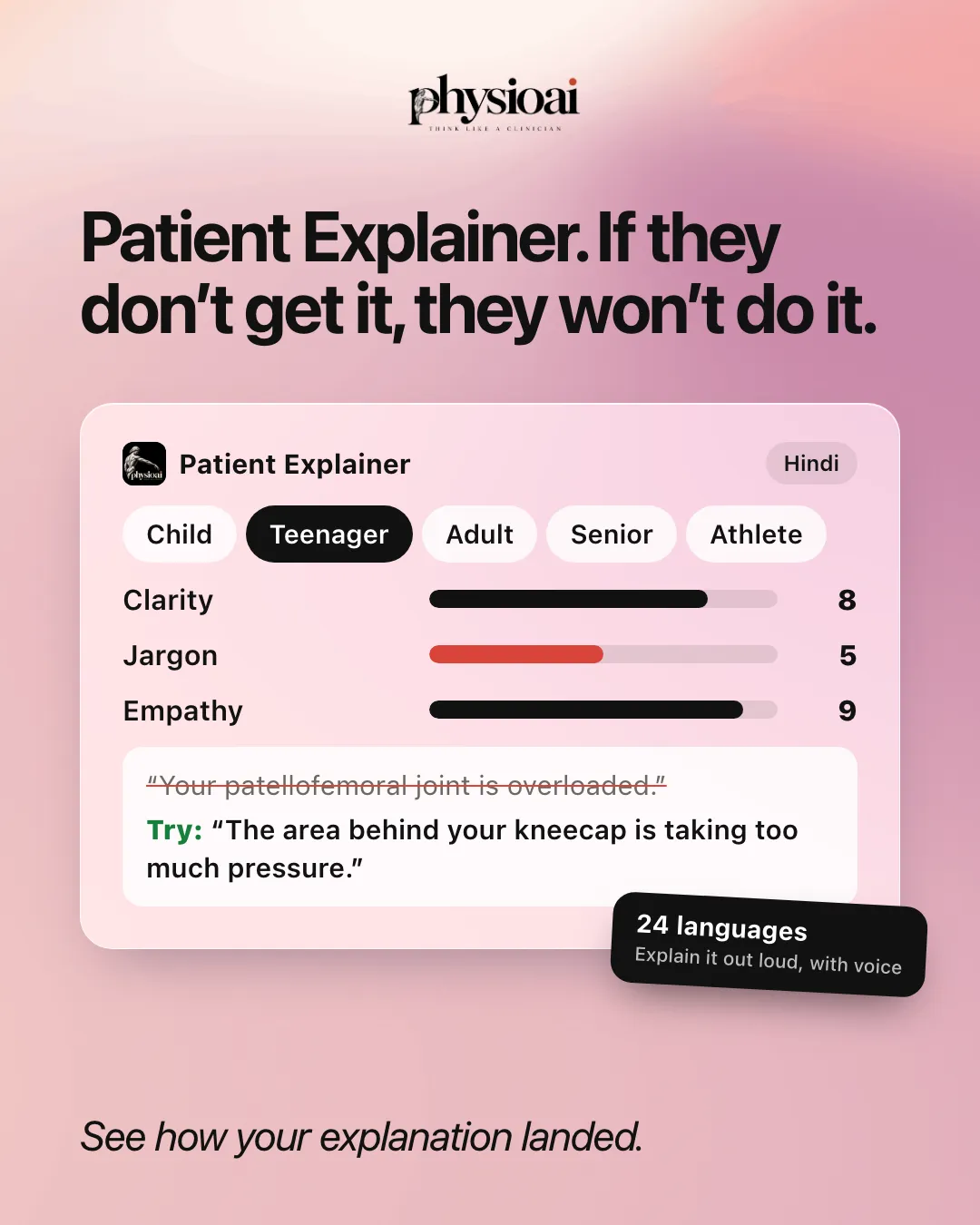
A plan only works if the patient understands it. Patient Explainer lets you practise explaining a condition to different kinds of patients, such as a child, a teenager, an adult, a senior or an athlete.
You are scored on clarity, jargon, accuracy, empathy and checking for understanding, and you get suggested rewrites. For example, "Your patellofemoral joint is overloaded" becomes "The area behind your kneecap is taking too much pressure." You can also practise saying it out loud.
Case Workup: red flags first, in the clinic
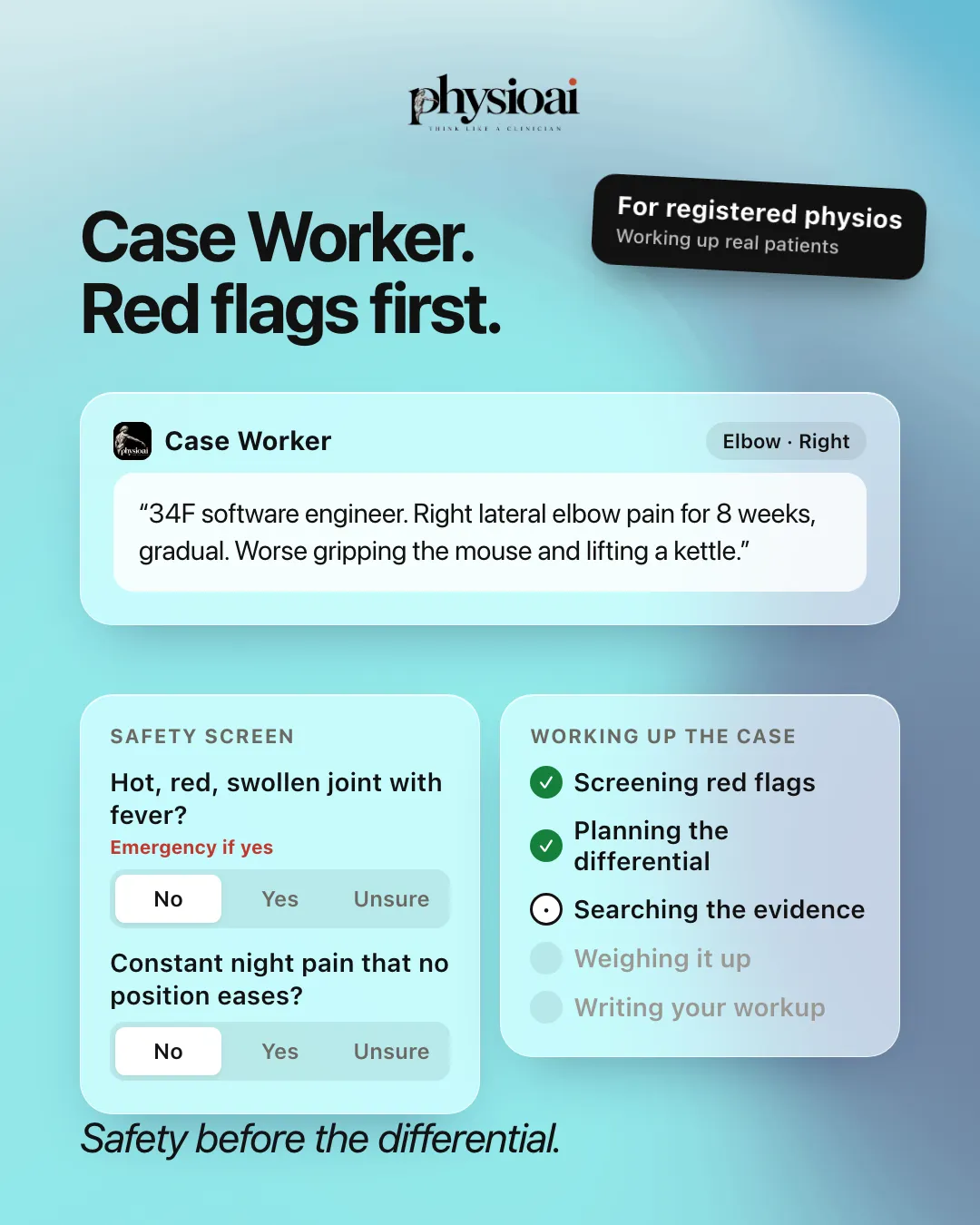
Case Workup is for practising physiotherapists working up real patients. You enter the case once, and it runs a safety screen before anything else: for example, a hot, red, swollen joint with fever, or constant night pain that no position eases.
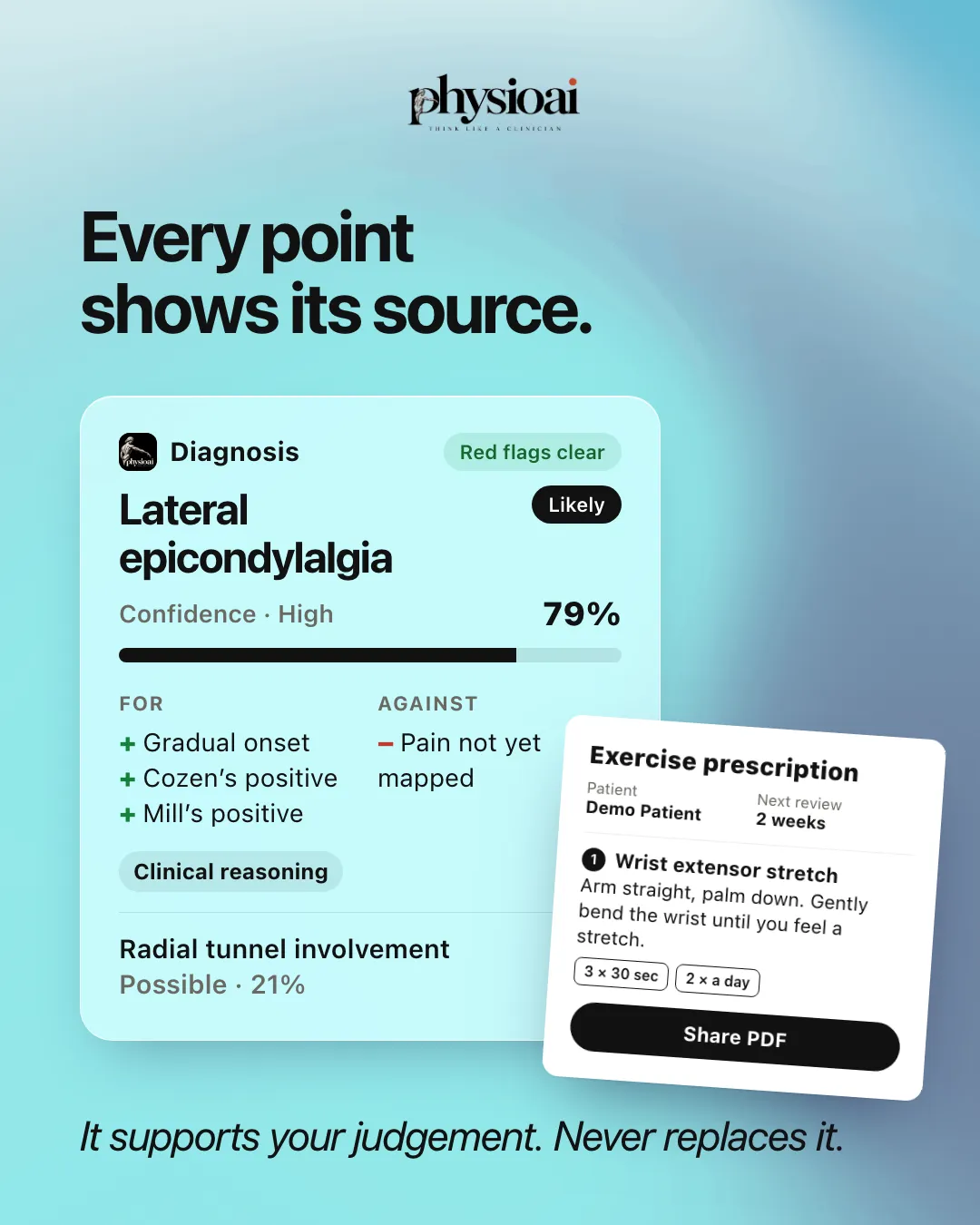
Only then does it plan the differential and search the evidence. In a fictional example of right lateral elbow pain in a software engineer, the output lists the likely diagnosis with a confidence level, the findings for and against it, and a less likely alternative. Every point shows where it came from. It can also produce patient-ready documents, such as an exercise prescription you can share as a PDF.
Case Workup supports your clinical judgement. It never replaces it.
Why this matters for students and clinicians
Answers get you through exams. Reasoning gets your patients better. A tool that only hands you the answer trains you to recall. A tool that asks you to justify, screen for danger and explain in plain words trains you to think like a clinician.
Synergist, Patient Simulator and Patient Explainer are for education and exam practice. Case Workup is clinical decision support for registered physiotherapists.
How to try it in PhysioAI
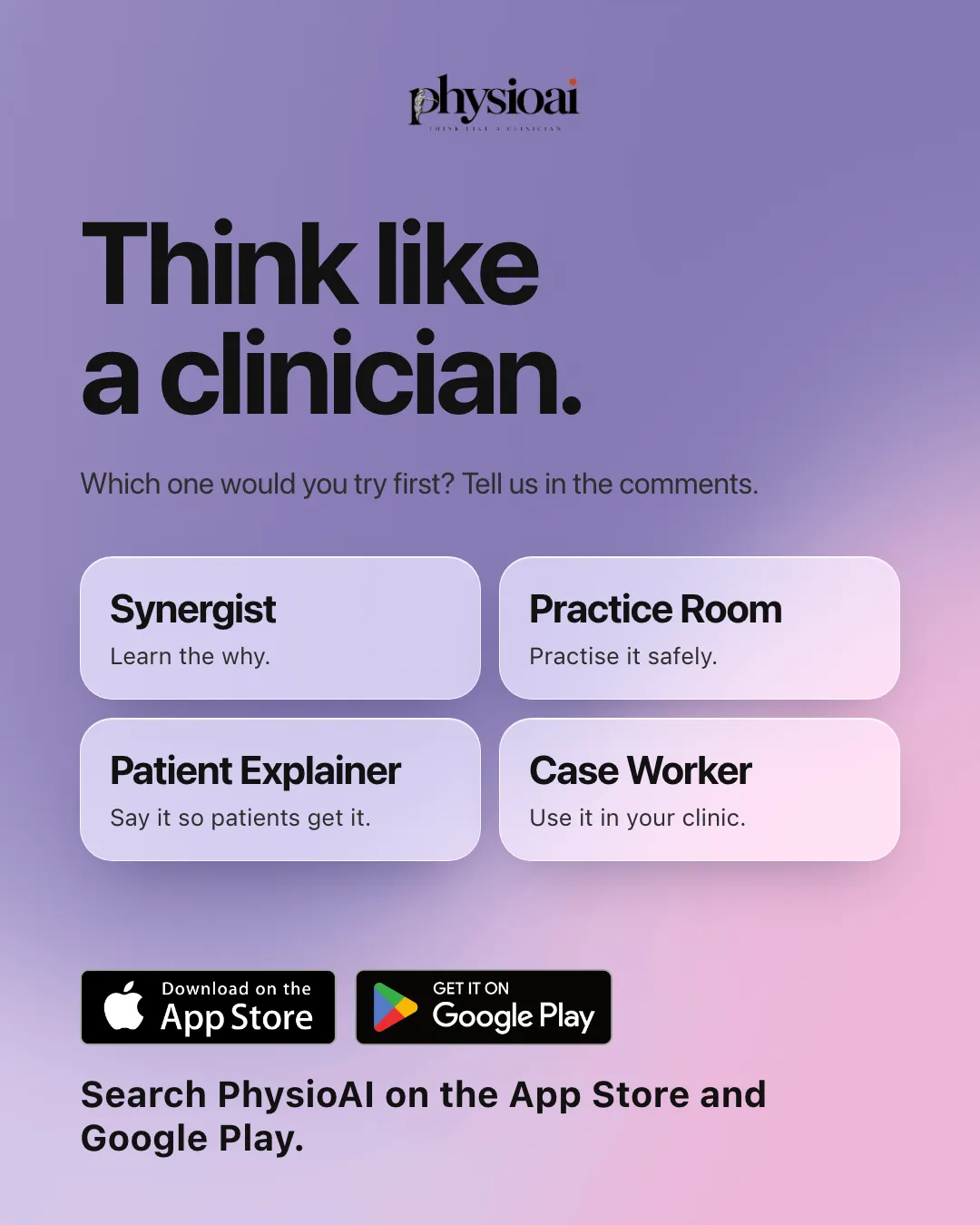
Download PhysioAI on Android or iOS, or use it on the web at app.physioai.in. Start with Synergist and ask one "why" you have been stuck on, or join the Patient Simulator waitlist to practise on a fictional patient. Clinicians can find Case Workup in the same app.